
Reviewed · WIELICZKA SALT MINE TOURS
Wieliczka Salt Mine Tour Including Hotel Pick-Up
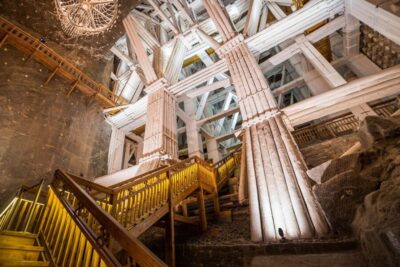
Wieliczka Salt Mine takes you 140 meters underground, into a working mine that has produced table salt for more than 700 years. The route is not just a line of dark tunnels: it passes salt-carved statues, chapels, mining machines, an underground lake, and the enormous Chapel of the Blessed Kinga. I like the way the tour turns industrial history into something you can see and touch, and I like the included hotel pickup, which removes a layer of Krakow transport hassle.
The main drawback is physical: you will walk more than 2.5 kilometers and tackle hundreds of steps. You descend 378 wooden stairs to the first level, and the full route can involve roughly 800 steps. The mine is fascinating, but this is not a gentle sightseeing stop. Wear proper shoes, carry water, and think twice if enclosed spaces or cramped lifts cause you serious worry.
Key points at a glance
- 140 meters below ground: Reach nine underground levels, with the public route passing through a small part of the vast mine.
- The Chapel of the Blessed Kinga: See altars, statues, chandeliers, and reliefs carved from salt more than 100 meters underground.
- 378 stairs at the start: The first descent is by a wooden staircase, with many more steps during the walking route.
- Door-to-door Krakow transport: A van collects you in Krakow, drives about 30 minutes to Wieliczka, and returns you after the tour.
- English tour with headphones: The mine guide leads the walk and uses a headset system so you can follow in a group.
- $83 value for a four-hour outing: The cost covers transport, entry, the guide, and headphones, making it convenient if you want a ready-made visit.
Why Wieliczka feels unlike an ordinary mine tour
Salt mining sounds plain until you see what miners made underground. At Wieliczka, the rock was not only extracted and hauled away. Over generations, miners carved religious figures, reliefs, altars, and whole chapels from the salt itself.
That human touch gives the tour its power. You are not simply looking at machinery in a cave. You are seeing a workplace that also became a place of worship and art. The mine includes nine underground levels, special-purpose rooms, a museum, and a sanatorium once used for people with respiratory ailments.
The route covers more than 2.5 kilometers, yet it represents only a small section of the mine. That helps explain why the visit feels so large even though the organized tour lasts only around 2.25 to 2.5 hours. You move from chamber to chamber, with the guide explaining how the mine operated and how its underground customs developed.
I especially like the contrast between the rough working areas and the carefully shaped chapels. One moment you are looking at mining equipment and rock walls. The next, you are in a vast religious room far below the surface.
More trips down the Wieliczka Salt Mine:
- From Krakow: Wieliczka Salt Mine Tour
★ 4.6 · 9,393 reviews - Krakow: Auschwitz-Birkenau and Salt Mine Guided Tour
★ 4.7 · 9,020 reviews - Krakow: Wieliczka Salt Mine Guided Tour with Transport
★ 4.4 · 7,429 reviews
Hotel pickup from Krakow: easy, but allow time
The tour begins with pickup in Krakow, followed by about a 30-minute van ride to Wieliczka. Door-to-door transport is included, along with the return drive. That is useful if you do not want to work out local transport, find the mine entrance, and coordinate admission on your own.
Pickup details arrive with your final confirmation, and you should wait outside your property at the stated local time. Allow up to 15 minutes for traffic. The departure may involve a taxi or smaller vehicle collecting you before you meet the main van, depending on the arrangement for your day.
Timing has generally been handled well. Drivers have included Paul and other friendly, helpful staff, and some drivers have shared basic information about Krakow while collecting people. One useful feature is the possibility of being dropped somewhere in Krakow after the return, though you should confirm the available drop-off arrangement rather than assume it.
There have been occasional transport complaints, including hurried driving and a vehicle change. Those issues appear separate from the mine visit itself, but they are worth keeping in mind if you are sensitive to road travel. The biggest advantage remains convenience: you can leave the transport planning to the operator and concentrate on the attraction.
The first descent: 378 stairs into the mine
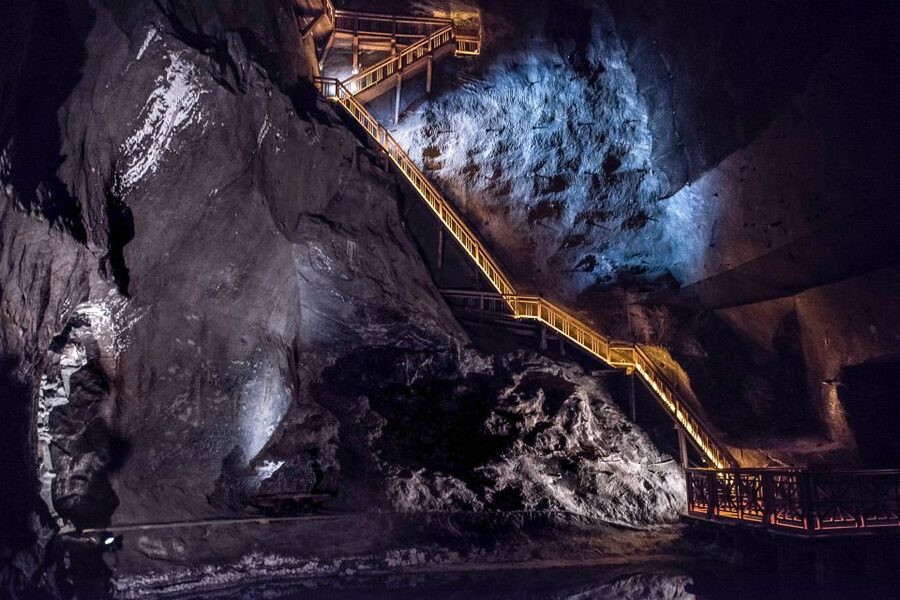
At the mine, an English-speaking guide takes over. To reach the first level, you descend a wooden staircase with 378 steps, ending about 64 meters below the surface.
The stairs are solid, but the descent takes effort. You will be walking with a group, so the pace is controlled rather than athletic. If you prefer not to feel boxed in, leaving a little space in front of you can help. The stairwell can feel enclosed, especially at the beginning, although the open chambers later feel much more spacious.
The full visit includes many additional steps. Practical reports put the total at around 800, while the official description specifically identifies the initial 378-step descent. Either way, plan for a serious walk. Comfortable shoes are essential, and a small drink is sensible. Food and drink stops can be found underground, but you may walk for more than an hour before reaching one.
The temperature can feel cool when you first go down, then become more comfortable as you walk. Bring a light layer if you tend to feel cold, but do not arrive with a large bag or luggage. Large bags are not permitted for this activity.
Chambers, sculptures, and the working mine
Once below, the route becomes a succession of chambers connected by corridors and stairs. Your guide explains the mining process, the lives of the workers, and the way salt was removed over the centuries.
The sculptures are the feature most likely to surprise you. Miners shaped religious scenes and life-size figures from the salt walls. Some pieces are polished and detailed, while others retain the rough character of the mine. Look closely at the surfaces: what appears gray or stone-like may be salt rock.
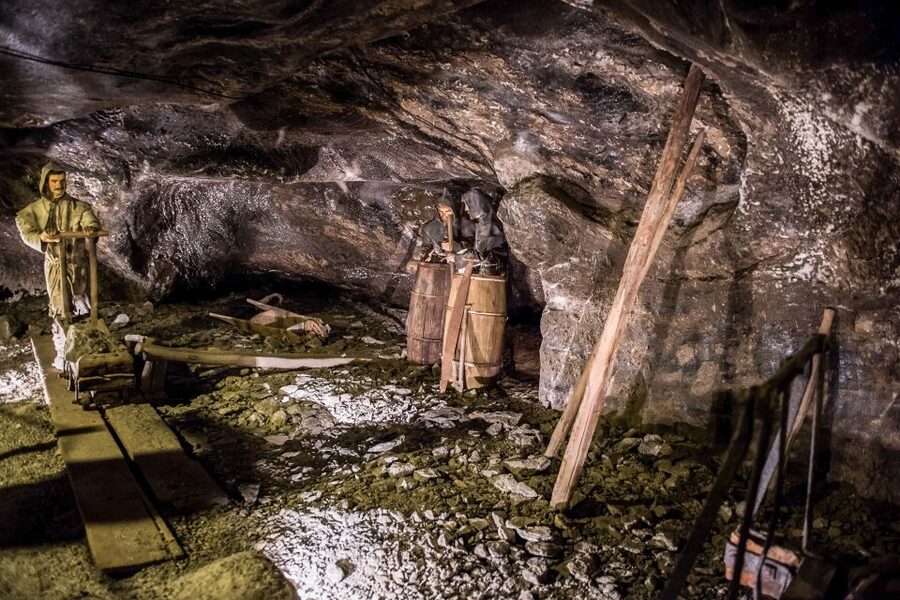
Mining machines and equipment add practical context. Without them, the chapels could feel like isolated works of art. The tools and machinery show the labor behind the mine and help you understand how people worked in darkness, at depth, and with limited technology.
The English guides can make a major difference. Simon has led engaging tours with humor, while Tomas has been praised for explaining exactly what to expect and where to go. Christopher, who worked at the mine for 15 years, has also guided visitors. Your guide may be someone else, but the best part of the format is having a person connect the rooms rather than leaving you to guess what you are seeing.
Headphones are included. They matter in a group because the rooms can be echoing and the walking pace can spread people out. Headset quality may vary, and occasional crackling or signal loss is possible, but without audio equipment it would be much harder to catch the guide’s explanation.
Same city, a completely different sort of day:
- From Krakow: Auschwitz-Birkenau Guided Tour & Hotel Pickup
★ 4.5 · 33,358 reviews - From Krakow: Auschwitz-Birkenau Guided Tour & Hotel Pickup
★ 4.5 · 29,340 reviews - Krakow: Auschwitz Guided Tour with Optional Hotel Pickup
★ 4.5 · 15,280 reviews - Krakow–Zakopane: Cable Car, Chocholow Baths, Cheese & Vodka
★ 5.0 · 10,720 reviews
The Chapel of the Blessed Kinga
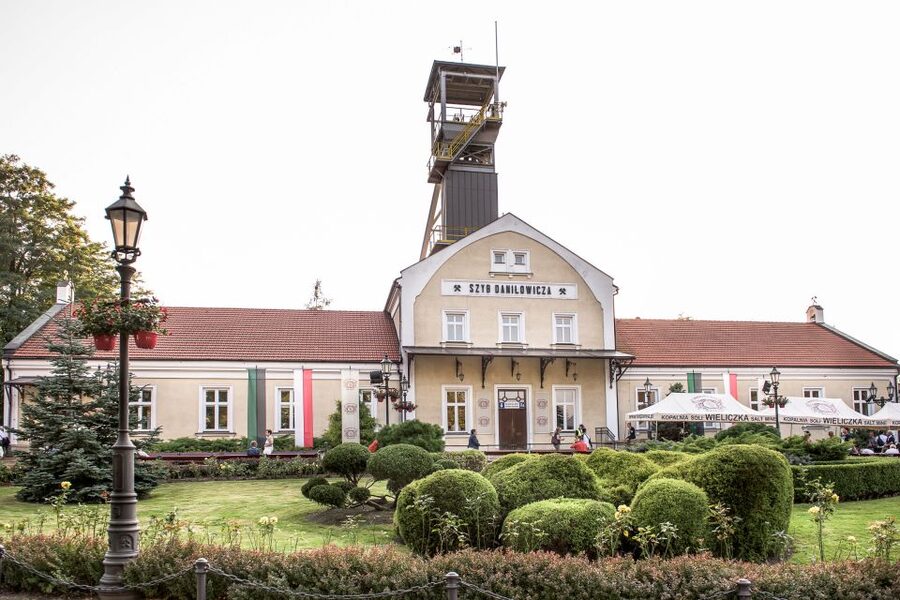
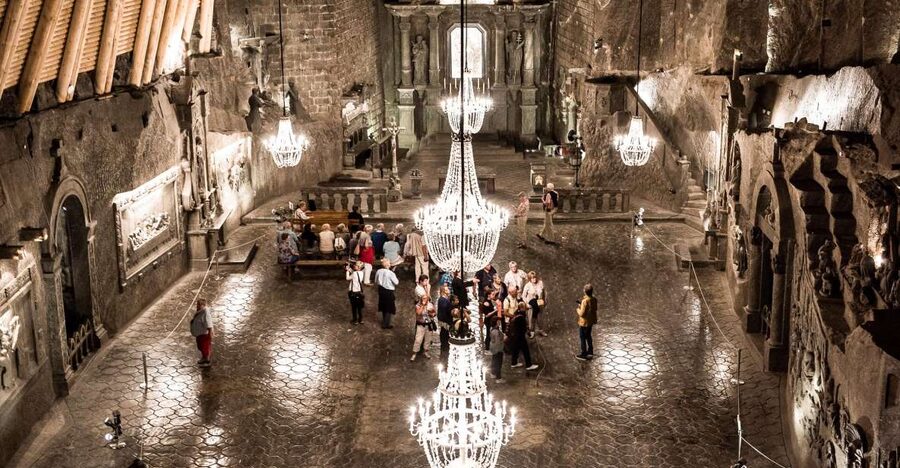
The Chapel of the Blessed Kinga is the emotional center of the visit. It lies more than 100 meters underground and is the largest chapel on the route.
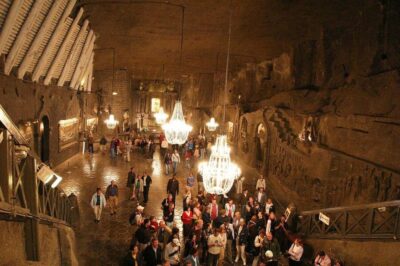
Here, salt becomes architecture. You see carved statues, altars, reliefs, and other decorative work made by miners. The scale is the surprise: this is not a tiny shrine squeezed into a tunnel, but a substantial underground church with enough room for a group to pause and take in the details.
You do not need to be religious to appreciate the workmanship. The chapel shows how mining, faith, and local tradition became linked over many generations. The walls carry the marks of hand labor, and the setting makes every detail feel more improbable.
Photography requires a separate photo permission, costing 10 zł and payable on the spot. If you want pictures inside, bring the small additional payment. Even with permission, do not let the camera distract you from looking up and around. The height and scale of the chapel are part of what makes it memorable.
The underground lake and the route’s surprises
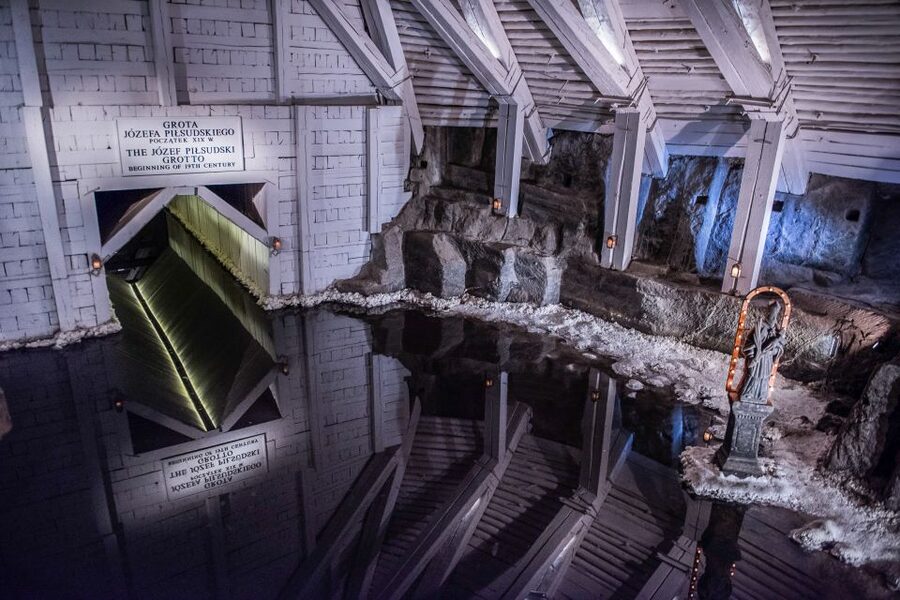
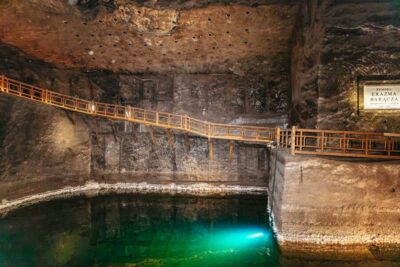
The tour also reaches a subterranean lake that has been open to visitors since the early period of mining operations. It gives the route a change of mood after the tight corridors and carved rooms.
The mine includes more than chapels. You may see special-purpose chambers, museum material, mining equipment, and spaces connected to health treatment. The former sanatorium is a reminder that underground conditions were not viewed only as dangerous. The mine’s air and stable environment were also used for people with respiratory problems.
The route can feel almost theatrical in its variety. You begin with stairs and working spaces, pass through art-filled chambers, reach a religious centerpiece, and then continue through rooms shaped by practical mining needs. That variety is why the experience does not feel like a single long tunnel.
One caution: the standard visit does not necessarily include every part of the mine or every museum area. A past booking experience specifically noted disappointment at missing the museum. If the underground museum is your priority, check the exact route and ticket details before paying, since the main tour focuses on the visitor route and its major chambers.
Returning to the surface in a working miners’ lift
At the end, you return to the surface by elevator rather than retracing all those stairs. This is good news for your legs, but the lift is a working miners’ lift and can feel cramped.
The ride takes about 30 seconds, according to practical guidance from the tour experience. If you are claustrophobic, this is the moment to prepare yourself. Standing toward the back or looking at the ceiling can give you a stronger sense of space, and the short ride is over quickly.
You then meet the transport for the return to Krakow, another trip of about 30 minutes. The entire activity lasts roughly four hours, although traffic, pickup arrangements, or a delayed entry can alter the timing slightly. Keep this in mind if you are booking another fixed appointment afterward.
Is $83 a fair price?
At $83 per person, this is not the cheapest way to visit Wieliczka, but it bundles the parts that often create trouble. You get the entrance ticket, hotel pickup and return, an English-speaking mine guide, and headphones. You also skip the ticket line, which can matter at a major attraction with timed entry.
The value is strongest if you are staying in Krakow and want a simple half-day plan. You do not need to arrange a separate ride to Wieliczka, find the right entrance, or buy admission on arrival. For a family or small group, that saved planning time can be worth as much as the transport itself.
The value is weaker if you already have easy transport and prefer exploring at your own speed. This is a guided route, not an independent wander. You follow the mine’s set path, keep with the group, and spend about 2.25 to 2.5 hours underground.
The $83 price also excludes photo permission, which costs 10 zł on site. That is a small extra, but budget for it if taking pictures matters to you.
Who should book this Wieliczka tour?
I would choose this tour if you want to visit the mine from Krakow without spending a morning sorting out transport. It suits first-time visitors, families with older children, and anyone who prefers a guide to explain the unusual rooms and working methods.
It is also a good fit for people who enjoy places that combine engineering, art, religion, and social history. The mine gives you all four in one visit. You will leave with a better sense of how a workplace can become a cultural site over hundreds of years.
I would be cautious if you have serious mobility limits, dislike stairs, or cannot tolerate enclosed spaces. The initial descent alone is substantial, and the return lift is cramped. You should also avoid bringing luggage or a large bag, since these are not allowed.
The pickup service makes this easier than arranging the visit alone, and the consistently strong overall rating of 4.6 from 2,629 ratings reflects how well the core experience works. Transport can occasionally be less polished than the mine tour, but the attraction itself and the English guiding are the main reasons to go.
Final verdict: book it if you can manage the stairs
Book this tour if you want Wieliczka Salt Mine with the practical work handled for you. The Chapel of the Blessed Kinga, the salt sculptures, the underground lake, and the mining machinery give you far more than a quick look at an old industrial site.
Just treat the physical demands as part of the deal. Wear comfortable shoes, carry water, leave large bags behind, and prepare for hundreds of stairs and a short cramped lift ride. If that sounds manageable, $83 is a fair price for a four-hour Krakow outing that is unusual, well organized, and genuinely memorable.
FAQ
How long does the Wieliczka Salt Mine tour last?
The full activity lasts about four hours, including roughly 30 minutes of travel each way from Krakow. The guided visit inside the mine takes about 2.25 to 2.5 hours.
How far underground does the tour go?
The tour descends to about 140 meters underground. The first level is 64 meters below the surface.
How many stairs are there?
You descend 378 wooden stairs to reach the first level. The full route includes many more, with practical guidance placing the total at roughly 800 steps.
Is hotel pickup included?
Yes. Door-to-door transportation from Krakow is included, with return transport after the mine visit. You should wait outside your property at the time shown on your final confirmation.
How much traffic delay should I allow at pickup?
Pickup can be delayed by up to 15 minutes because of traffic problems. Be ready outside at the confirmed local time.
Is the tour conducted in English?
Yes. The mine tour has an English-speaking live guide, and headphones are provided so you can hear the commentary more clearly.
Are entrance tickets included?
Yes. Admission to Wieliczka Salt Mine is included in the tour price, and the activity provides skip-the-ticket-line access.
Can I take photographs inside the mine?
Photography requires a separate permission costing 10 zł, payable on the spot. The photo permission is not included in the tour price.
Can I bring luggage or a large bag?
No. Luggage and large bags are not allowed. Bring only what you need for the walk, such as comfortable shoes and a drink.
What happens at the end of the mine visit?
You return to the surface by elevator. The lift is a working miners’ lift and can feel cramped, but the ride takes about 30 seconds.
Just added around Krakow
- From Krakow: Zakopane Full-Day Tour with Lunch Option★ 4.4 · 62 reviews
- From Krakow: Zalipie and Painted Village Guided Tour★ 4.0 · 4 reviews
- From Krakow: Zakopane and Dunajec River Rafting Tour★ 4.6 · 31 reviews
- From Krakow: Zakopane and the Tatra Mountains★ 4.7 · 36 reviews
- From Krakow: Zakopane and Gubałówka Cable Car Private Tour★ 4.3 · 12 reviews
- From Krakow: Zakopane Tatra Mountains & Hot Springs Tour★ 3.0 · 29 reviews
- From Krakow: Zakopane & Tatra Mountains Tour★ 3.8 · 42 reviews
- Zakopane & Tatra Mountains Private Full-Day Tour from Krakow★ 4.5 · 33 reviews
Wieliczka Salt Mine Tours, compared.
Wieliczka Salt Mine Guided Tour with Transport
Read our review →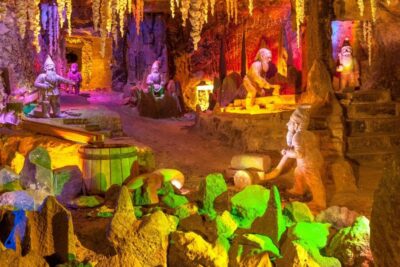
Wieliczka Salt Mine Fast-Track Ticket & Guided Tour
Read our review →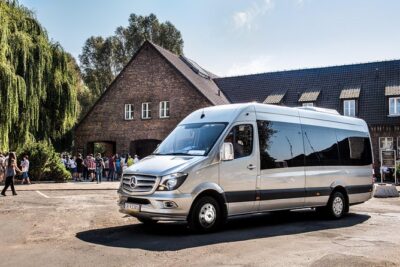
Day Trip: Auschwitz-Birkenau and Wieliczka Salt Mine from Krakow
Read our review →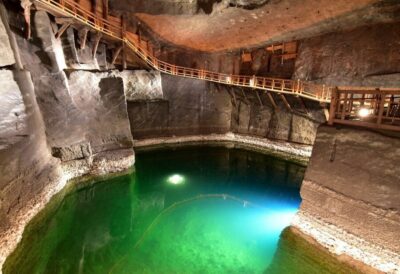
Wieliczka Salt Mine Tour & Skip the Line Ticket
Read our review →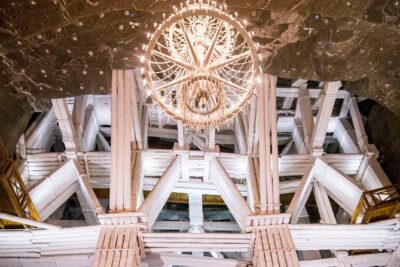
Auschwitz-Birkenau & Salt Mine Full-Day Guided Tour
Read our review →Browse the lists this tour appears in