

Reviewed · KRAKOW CHOPIN CONCERTS
Krakow: Frédéric Chopin Classical Music Candlelight Concert
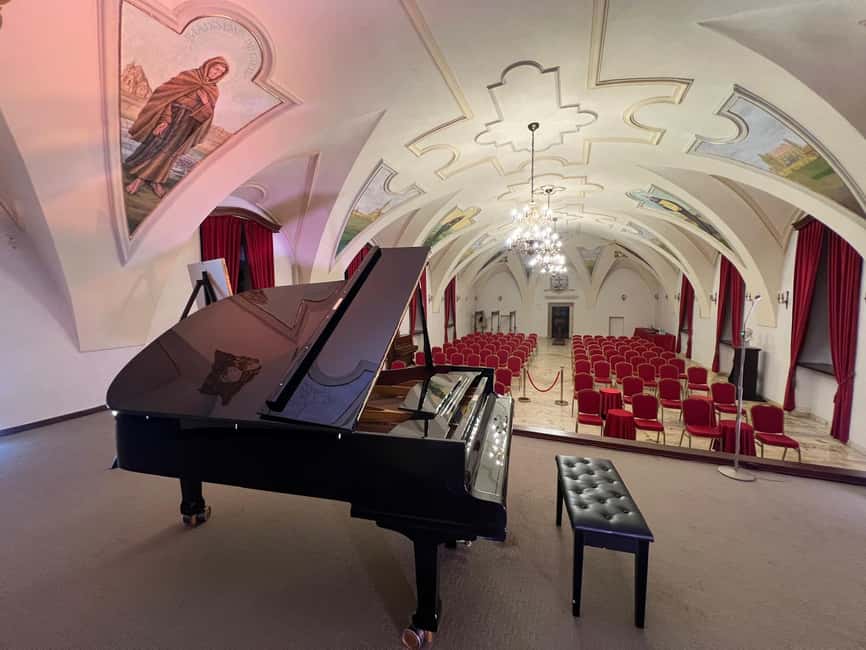
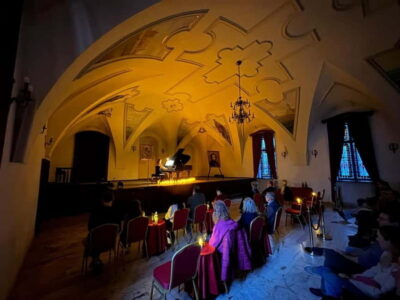
Krakow’s Chopin concert offers something better than a standard concert hall: live piano music by candlelight inside the Bernardine Monastery, a 17th-century venue normally closed to the public. The setting is intimate, atmospheric, and right at the foot of Wawel Castle.
I like the $20 price, which makes a polished classical performance easy to add to an evening in Old Town. I also like the short one-hour format, the introduction to Chopin’s life, and the chance to hear accomplished pianists such as Pawel Kubica and Radoslaw Gozdziskowski. The main consideration is that seats are not assigned, so arriving 15 minutes early matters. The program and pianist can also change.
Key points to know before booking
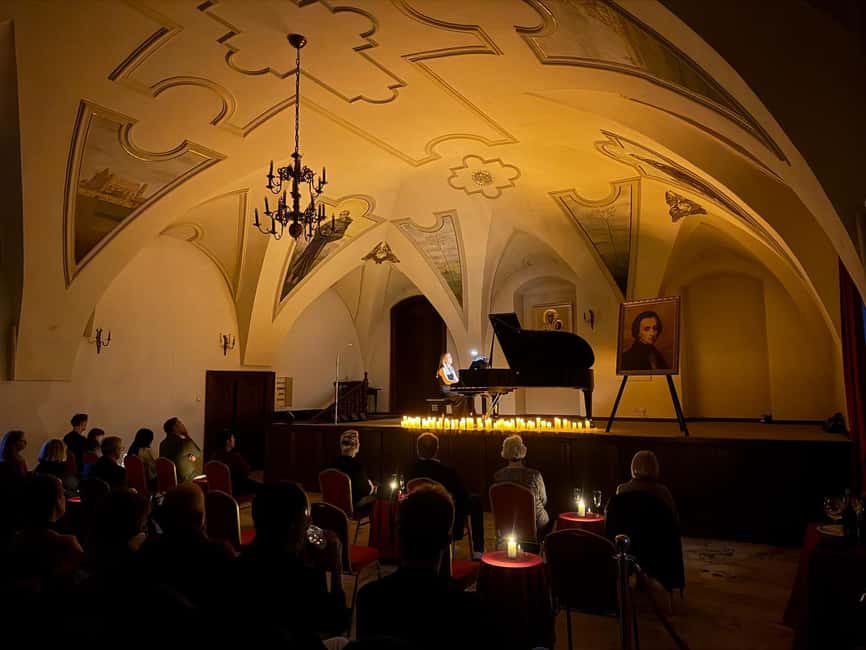
- A rare historic setting: The concert takes place in the Bernardine Monastery, in a 17th-century hall normally closed to the public.
- A focused Chopin program: Expect familiar pieces such as the Minute Waltz, Fantaisie-Impromptu, Raindrop Prelude, nocturnes, and polonaises.
- One hour, not a full evening: The compact format works well before dinner or after sightseeing at Wawel Castle.
- Award-winning piano talent: Pianists are selected for high-level performance, with Pawel Kubica and Radoslaw Gozdziskowski among the names associated with the program.
- Simple value at $20: The ticket includes the concert, venue access, and Prosecco, but not transport or food.
- Arrive early for the best choice of seats: Seating is open, and the small setting makes position in the room important.
Why this Chopin concert works so well in Krakow
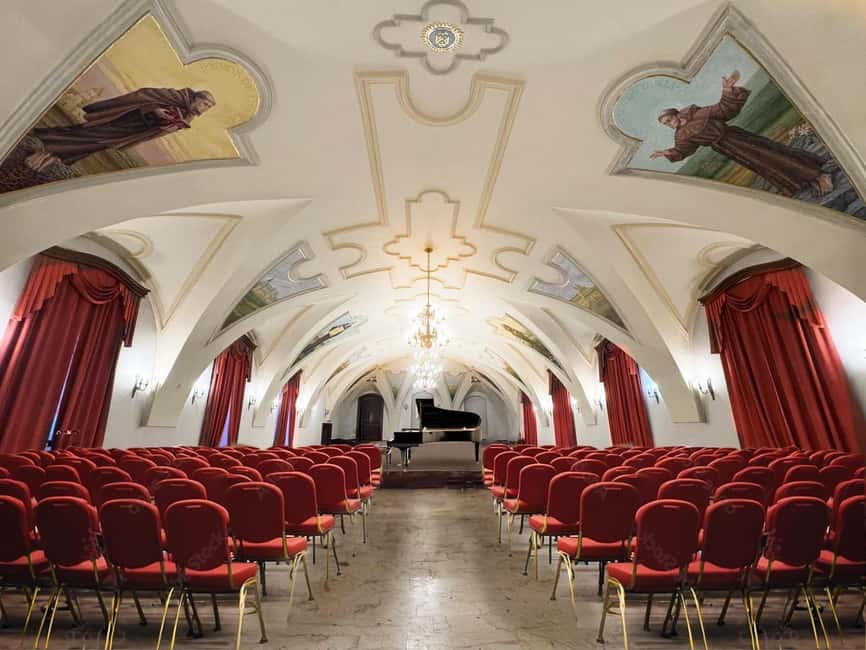
The appeal begins with the location. You are not being sent to a modern auditorium on the edge of town. The Bernardine Monastery sits at the foot of Wawel Castle, in the heart of Krakow’s historic center. Its hall gives the evening a sense of place before the pianist even touches the keys.
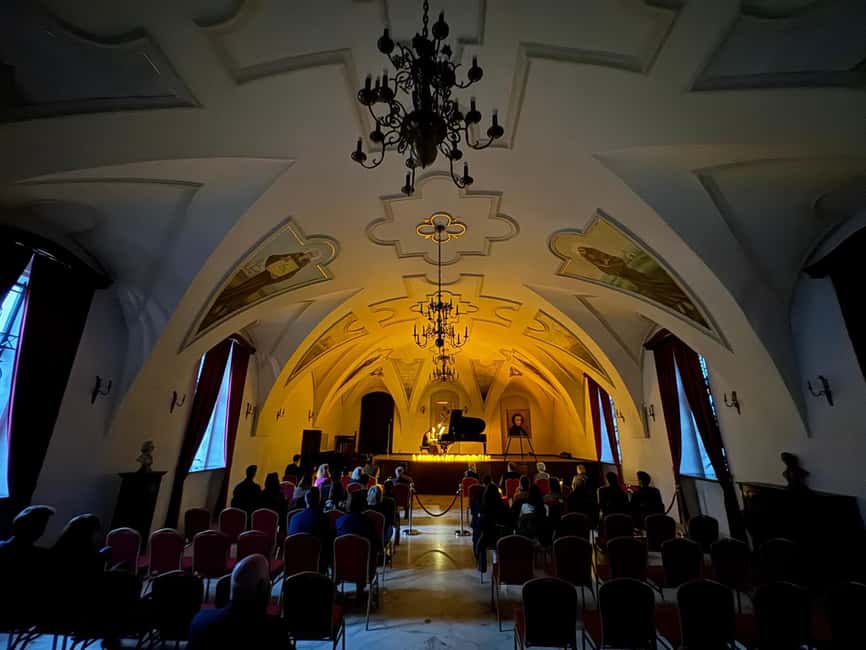
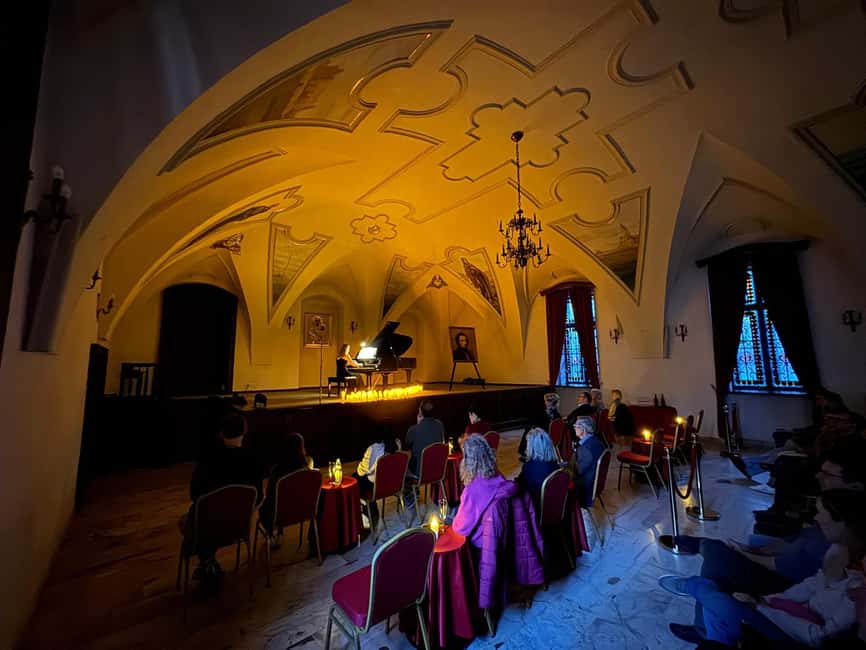
The concert uses candles and reflective surfaces to shape the room’s mood. That matters with Chopin. His music can be delicate, restless, romantic, and dramatic within the space of a few minutes. A candlelit historic room suits those changes better than a bright, impersonal venue.
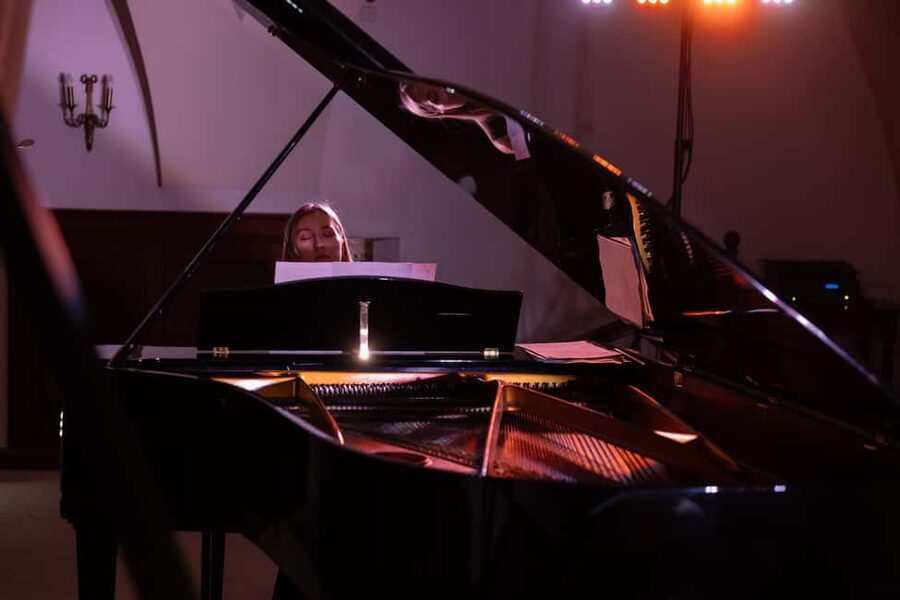
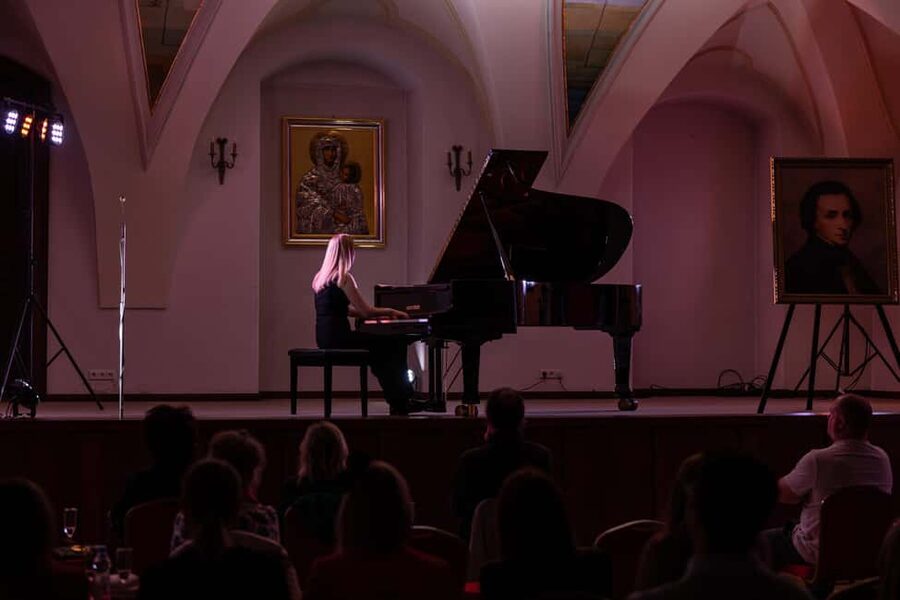
I would think of this as a small recital rather than a grand concert production. The atmosphere is closer to hearing a pianist in an elegant drawing room than sitting in a large theater. That intimacy lets you watch the performer closely and hear the details of the playing without the distance of a big stage.
There is also a useful cultural connection here. Chopin was Polish, and Krakow offers plenty of chances to encounter his music. You do not need to know classical music to enjoy this performance. The familiar melodies provide an easy way in, while the more subtle preludes and nocturnes reward close listening.
More Chopin concerts in Krakow:
- Krakow: Chopin Piano Recital at Chopin Concert Hall
★ 4.7 · 2,330 reviews - Chopin Piano Concert at Chopin Gallery with a Glass of Wine
★ 4.5 · 283 reviews - Krakow: Chopin Piano Concert in St. Bernardine Church
★ 4.5 · 219 reviews
Arriving at the Bernardine Monastery
Plan to reach the meeting point at least 15 minutes before the scheduled start. The venue is at the foot of Wawel Castle, so it fits neatly into an Old Town evening, especially if you have already spent time around the castle, the Vistula riverfront, or the city center.
The entrance is part of the experience. The hall is normally not open to the public, so this ticket gives you access to a place you would not simply wander into during a normal day of sightseeing. That private access adds value beyond the music itself.
Your ticket includes skip-the-line entry, but that does not mean you should arrive at the last moment. Seats are not assigned. If you care about your view of the pianist, arrive early and choose your place before the room fills.
The venue is historic rather than purpose-built. You might find the setting less uniform than a professional concert hall, and one review specifically wished the background curtain had been arranged more neatly. That is a minor point, but it helps set expectations. You are paying for atmosphere, access, and music, not a glossy stage production.
The welcome and introduction to Chopin
The evening begins with a welcome and a short introduction to Chopin’s life and work. This opening is useful if you are new to his music because it gives you a little context before the performance starts.
You also receive an introduction to the pianist. Names associated with the concerts include Pawel Kubica and Radoslaw Gozdziskowski. The performers are presented as accomplished musicians with experience in prestigious international competitions, and the program may feature a different pianist on your date.
That changeability is worth noting. Do not book with the expectation that one named performer is guaranteed unless your booking details specifically confirm it. The standard of the performance is the main promise, while the individual artist and exact repertoire can change.
The introduction is brief, not a lecture. One useful criticism is that the opening provides context, but there may not be much spoken explanation between pieces. If you want a guided music class, this is not that. If you want a graceful start followed by uninterrupted piano playing, the format should suit you.
The first half: familiar Chopin with room to listen
The program draws from Chopin’s best-known piano works. You may hear the Polonaise in A Major, Op. 40 No. 1, a piece with a proud, confident character and a strong Polish identity.
The Fantaisie-Impromptu in C-sharp Minor, Op. 66 brings fast movement and contrast. It is one of those pieces many people recognize even if they do not know its name. Hearing it performed live gives you a better sense of the control required to keep its flowing passages clear.
The waltzes add a lighter turn. Possible selections include the Grande Valse Brillante in E-flat Major, the Waltz in B Minor, and the Waltz in D-flat Major, Op. 64 No. 1, better known as the Minute Waltz. The nickname is playful but misleading if you expect a one-minute performance. The piece is a compact showpiece, not a stopwatch challenge.
You might also hear the posthumous Nocturne in C-sharp Minor, No. 20. Here, the mood becomes more inward and tender. This contrast between the lively waltzes and quieter nocturne is one reason the program works for newcomers. You get several sides of Chopin without needing to sit through a long, specialized recital.
The pianist’s skill matters more than the number of pieces. Chopin’s music can sound simple because the melodies are so natural. In reality, the balance between melody, rhythm, speed, and touch is demanding. A strong performance keeps the music expressive rather than merely fast.
Same city, a completely different sort of day:
- From Krakow: Auschwitz-Birkenau Guided Tour & Hotel Pickup
★ 4.5 · 33,358 reviews - From Krakow: Auschwitz-Birkenau Guided Tour & Hotel Pickup
★ 4.5 · 29,340 reviews - Krakow: Auschwitz Guided Tour with Optional Hotel Pickup
★ 4.5 · 15,280 reviews - Krakow–Zakopane: Cable Car, Chocholow Baths, Cheese & Vodka
★ 5.0 · 10,720 reviews
The break and the second half
The format includes a short intermission before the second part. The timing can vary, and one useful point for buyers is that the break may not fall exactly where you expect. If you prefer a pause in the middle of a longer recital, remember that the total performance lasts about one hour.
During the second half, the program may turn to Chopin’s Preludes from Op. 28. The Prelude in E Minor, Op. 28 No. 4 is brief, spare, and emotionally direct. The Prelude in D-flat Major, Op. 28 No. 15, known as the Raindrop Prelude, begins with a repeated note that gives the music its familiar character.
The Prelude in C Minor, Op. 28 No. 20 provides another sharp contrast. It is short and weighty, with a more serious tone than the waltzes. These compact works show how much feeling Chopin could shape in only a few lines of music.
The second half continues with the same close-up feeling as the opening set. You are not moving between attractions or waiting for a large ensemble to reset. The evening stays centered on one pianist, one instrument, and a room designed to keep your attention on the performance.
An encore is not guaranteed. Even with generous applause, the pianist may finish after the planned program. That is not a flaw, but it is worth knowing if you expect an extra piece at the end.
What the candlelight setting adds
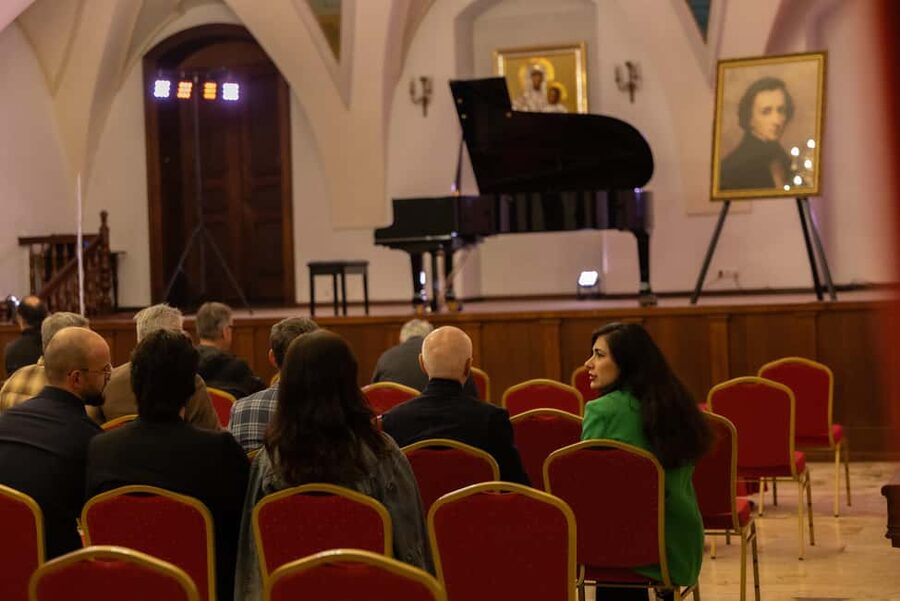
The candles are not just decoration. They soften the room and make the performance feel separate from the busy streets outside. Reflective surfaces add a little visual sparkle, while the old hall provides the sense that you are attending something special rather than ticking off another scheduled activity.
This setting also changes your expectations. The event is not a theatrical show with elaborate lighting, narration, or scenery. Its strength is restraint. You sit close to the piano, watch the player’s hands, and let the music carry the hour.
I would choose this concert for an evening when you want a calm cultural stop. It pairs well with a day spent walking around Krakow because the one-hour length does not take over your schedule. You can attend before dinner, after visiting Wawel Castle, or as a gentle final activity before returning to your hotel.
The intimate room can be a drawback for anyone expecting a large, formal production. Background presentation may be plain, and the exact seating experience depends on where you arrive and where you are placed. Still, the historic venue and close view are the reason many people prefer this kind of recital to a larger hall.
Is $20 good value?
At $20 per person, this is one of the easier cultural purchases in Krakow to justify. The price includes the live concert, entry to a venue normally closed to the public, and Prosecco. Food and transport are not included, but neither is needed for the event itself.
The value is especially good if you already plan to be in Old Town. Since the monastery is near Wawel Castle, you can reach it as part of your regular sightseeing rather than arranging a separate transfer. You will need to make your own way there, so leave enough time if you are coming from outside the central area.
The included drink is a pleasant extra, though service may not be perfectly consistent. One attendee was not offered the expected wine, while others found the drink a nice touch. The safest way to view the Prosecco is as a bonus, not the main reason to book.
The strongest value comes from the combination of professional piano playing and unusual access to the venue. Comparable classical performances can cost more, especially when they involve a historic setting and an established performer. Here, you get a focused program without committing to a full-length evening.
Who will enjoy it most?
This concert suits adults and older children who enjoy piano music, historic buildings, or quiet evening activities. Children under 10 are not accepted, so families with younger children should choose another performance.
You do not need a background in Chopin. The familiar waltzes and the Minute Waltz make the program approachable, while the nocturnes and preludes give experienced listeners something more reflective. First-time concertgoers can follow the melody and atmosphere without studying the pieces in advance.
It is also a good choice for a couple or solo visitor looking for a simple cultural evening. The one-hour schedule leaves room for a meal afterward, and the setting feels more personal than a large concert.
The event is not suitable for wheelchair users, people with epilepsy, people with significant hearing loss, or anyone over 140 kilograms, or 309 pounds. Baby strollers, vaping, alcohol and drugs beyond the provided refreshment, and nudity are not allowed. These restrictions are practical matters to check before paying.
Practical tips for a better evening
Arrive 15 minutes early. This is the most useful advice because seats are not assigned, and early arrival gives you a better choice of position in the hall.
Check the starting time carefully when booking. The concert lasts about one hour, but available start times can vary by date.
Wear something comfortable enough for quiet sitting, but remember that the venue is a historic monastery hall rather than a casual bar. The atmosphere is respectful and focused on the music.
Do not plan a meal as part of the ticket. Prosecco is included, but food is not. If you want dinner before or after, allow time outside the one-hour concert.
Keep your expectations flexible about the exact repertoire and pianist. The listed works are program highlights, but artists and selections can change. Pawel Kubica and Radoslaw Gozdziskowski are names connected with the performances, yet your date may feature another accomplished pianist.
If you are sensitive to candlelight or reflective surfaces, consider the venue details carefully. The setting relies on both to create its atmosphere, and the activity is not suitable for people with epilepsy.
Should you book the Krakow Chopin concert?
I would book it if you want an affordable, atmospheric introduction to Chopin in a central Krakow setting. The music is the main event, but the Bernardine Monastery and candlelight make the hour feel more distinctive than a routine piano recital.
I would skip it if you need guaranteed seating, a fully accessible venue, detailed commentary throughout the music, or a long concert lasting well beyond an hour. You should also avoid booking if you are counting on one specific pianist or an exact program.
For most visitors who can sit comfortably in the venue, the balance is strong: talented piano players, a memorable historic room, a compact schedule, and a $20 ticket. Arrive early, treat the drink as an extra, and let the setting do its quiet work.
FAQ
Where does the Chopin concert take place?
The concert takes place in the Bernardine Monastery, in a historic 17th-century hall at the foot of Wawel Castle in Krakow’s Old Town.
How long does the concert last?
The activity lasts one hour. Check the available dates for the exact starting time.
What music is performed?
The program can include Chopin’s Polonaise in A Major, Fantaisie-Impromptu, several waltzes, the posthumous Nocturne in C-sharp Minor, and selected Preludes from Op. 28, including the Raindrop Prelude.
Is the pianist always the same?
No. The artists and repertoire can change. Pianists associated with the concerts include Pawel Kubica and Radoslaw Gozdziskowski.
Are seats assigned?
No. Seating is not assigned, so arrive early if you want a better choice of seat.
Is Prosecco included?
Yes. Prosecco is included with the concert ticket. Food is not included.
Is transportation included?
No. You must arrange your own transportation to and from the Bernardine Monastery.
Can children attend?
Children under 10 are not permitted to join this activity.
Is the venue wheelchair accessible?
The activity is not suitable for wheelchair users. It is also not suitable for people with epilepsy, hearing-impaired people, or people over 140 kilograms, or 309 pounds.
Just added around Krakow
- From Krakow: Zakopane Full-Day Tour with Lunch Option★ 4.4 · 62 reviews
- From Krakow: Zalipie and Painted Village Guided Tour★ 4.0 · 4 reviews
- From Krakow: Zakopane and Dunajec River Rafting Tour★ 4.6 · 31 reviews
- From Krakow: Zakopane and Gubałówka Cable Car Private Tour★ 4.3 · 12 reviews
- From Krakow: Zakopane Tatra Mountains & Hot Springs Tour★ 3.0 · 29 reviews
- From Krakow: Zakopane and the Tatra Mountains★ 4.7 · 36 reviews
- Zakopane & Tatra Mountains Private Full-Day Tour from Krakow★ 4.5 · 33 reviews
- From Krakow: Hot Springs and Zakopane with Gubałówka★ 4.7 · 25 reviews
Krakow Chopin Concerts, compared.
Chopin Piano Concert at Chopin Gallery with a Glass of Wine
Read our review →
VIP Candlelight Concert The Music of Fryderyk Chopin
Read our review →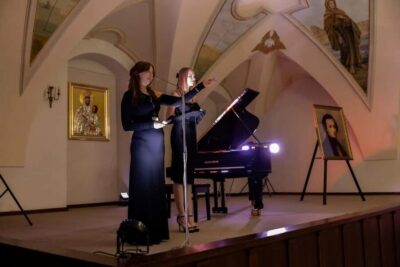
Browse the lists this tour appears in