
Reviewed · KRAKOW GOLF CART TOURS
Krakow: Extended City Sightseeing Tour – Eco Buggy Golf Cart
Krakow packs three very different districts into one easy ride: the royal Old Town, Jewish Kazimierz, and Podgórze, the former ghetto area. This 135-minute eco golf cart tour gives you a fast, useful introduction without asking your feet to cross the whole city.
I like the chance to hear clear audio in your own language while the driver adds local stories and directions. I also like the short stops, which can give you a better look at places such as Wawel Castle, the old synagogues, and Ghetto Heroes Square. The main drawback is that seating is assigned, and a full vehicle can feel close, especially if fellow passengers talk over the headsets.
Key points
- Three major districts in one ride: Cover the Old Town, Kazimierz, and Podgórze in a single outing.
- Live guide plus audio: Drivers such as Olivia, Jacob, Conrad, and Natalie add personal comments to the recorded narration.
- Useful for limited mobility: You see a wide stretch of Krakow without a long walk, with some chances to get out at key places.
- Strong value at $13: The price is modest for a 2-hour-plus city orientation with transport and multilingual audio.
- Small-vehicle format: The cart carries up to 13 people, but seating is assigned and rows hold up to three.
- Rain-friendly sightseeing: The covered vehicle can save your feet and keep you moving during a wet afternoon.
Why a golf cart works well in Krakow
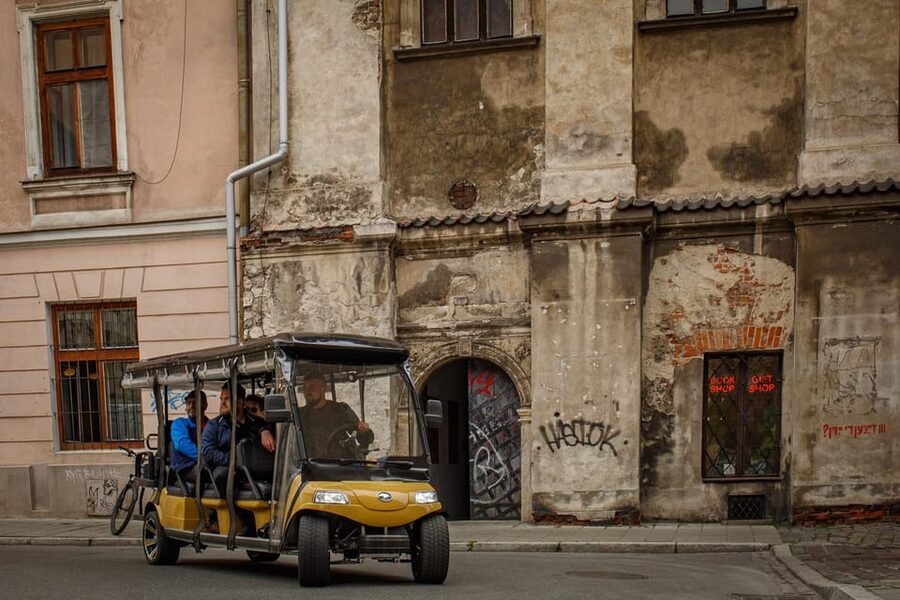
Krakow is compact in the center, but the story does not stop at the Main Square. The Old Town, Kazimierz, and Podgórze sit close enough to connect, yet far enough apart that walking between every stop takes time and energy.
This is where the golf cart earns its keep. You get a moving overview of the city, then pause at selected places for a closer look. It is not a substitute for entering museums or spending an hour inside a church, but it helps you decide where to return later.
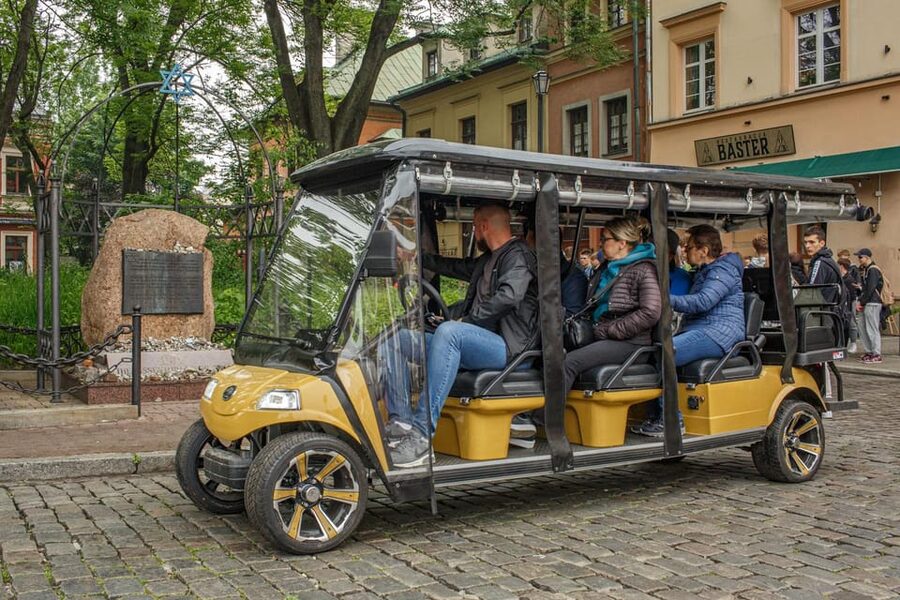
The open-sided design also gives you a street-level view. You are not looking through a coach window high above the pavement. The tradeoff is exposure to weather, traffic noise, and occasional bumps. Bring a layer, even in mild weather, and do not expect the quiet of a private walking tour.
The company describes the activity as lasting 135 minutes, while the route is also presented as roughly two hours or two and a half hours. Allow around two hours and fifteen minutes in your day, with a little flexibility for traffic and group arrangements.
More electric golf cart tours in Krakow:
- Krakow: City Sightseeing Tour by Electric Golf Cart
★ 4.5 · 3,264 reviews - Krakow: City Sightseeing Tour Eco Electric Buggy Golf Cart
★ 4.7 · 3,143 reviews - Krakow: Electric Car Sightseeing Tour
★ 4.4 · 450 reviews
Starting at the Żabka meeting point
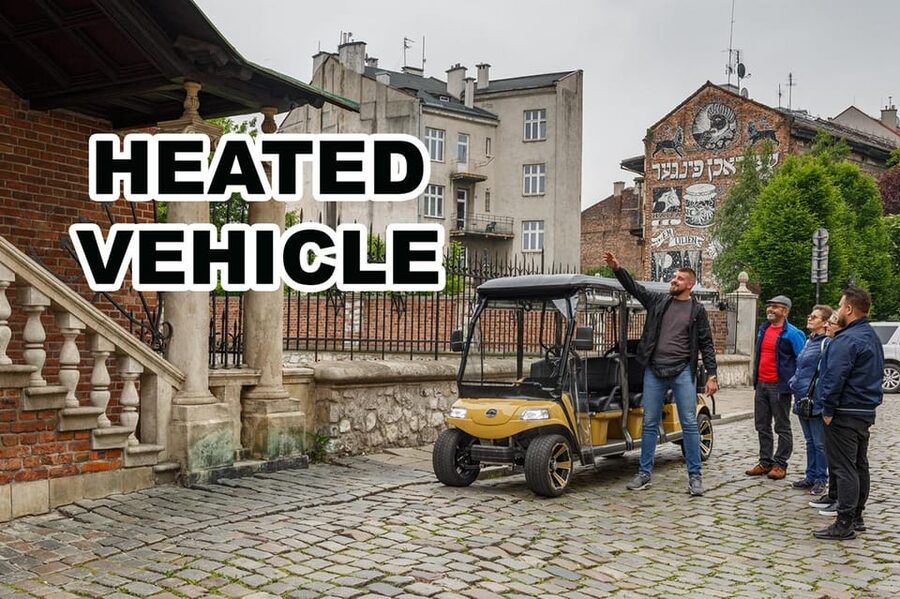
The meeting point is in front of a Żabka shop at the kiss and ride parking area. Arrive a few minutes early and look for the eco golf cart rather than assuming the vehicle will wait directly outside the shop entrance.
Some departures have started a little after the stated time, including one reported ten-minute delay. That is not unusual for a city tour collecting a group, but it matters if you have a tight booking afterward.
Once seated, you receive headphones for the audio system. The driver speaks English or Polish, while the recorded guide offers a long list of languages, including English, German, French, Spanish, Italian, Portuguese, Dutch, Czech, Slovak, Ukrainian, Chinese, Japanese, Korean, and several others.
The vehicle carries up to 13 passengers. Each row can hold up to three people, and the driver assigns seats. If your party must sit together, a private or small-group option may be the safer choice, since adjacent seating is not guaranteed on a shared departure.
The Old Town: walls, churches, and royal Krakow
The first section builds a useful map of central Krakow. You pass along the Planty, the green belt that follows the line of the former medieval walls. It is a pleasant way to understand the shape of the Old Town before the cart threads past its monuments.
The route includes the Church of St. Cross, the Słowacki Theater, and remnants of the former city walls. You then reach the Barbican, one of Krakow’s most recognizable defensive structures. Nearby Jan Matejko Square and the Church of St. Florian connect the old fortifications with the northern entrance to the city.
The cart continues along Sławkowska Street toward the Czartoryski Museum, then passes St. John’s Street and its church. You will hear an overview of Krakow’s development as you move toward the Main Square, the city’s central stage for markets, ceremonies, and daily life.
The route also takes in Plac Szczepański, the Palace of Art, St. Anne’s Church, the Town Hall, and the Franciscan Church. These stops give you a broad mix of civic buildings, university connections, religious architecture, and public spaces.
The Old Town portion is best treated as an orientation rather than a detailed architecture lesson. The vehicle keeps moving, and you may not have enough time to study every facade. Still, it is an efficient way to spot places you can revisit on foot.
Wawel Castle forms one of the major highlights. The castle complex sits above the Vistula and carries centuries of royal and religious importance. From the cart, you get the setting and the broad story. If the castle is high on your list, plan a separate visit for the interiors, cathedral, and grounds.
Kazimierz: from Jewish city hall to old synagogues
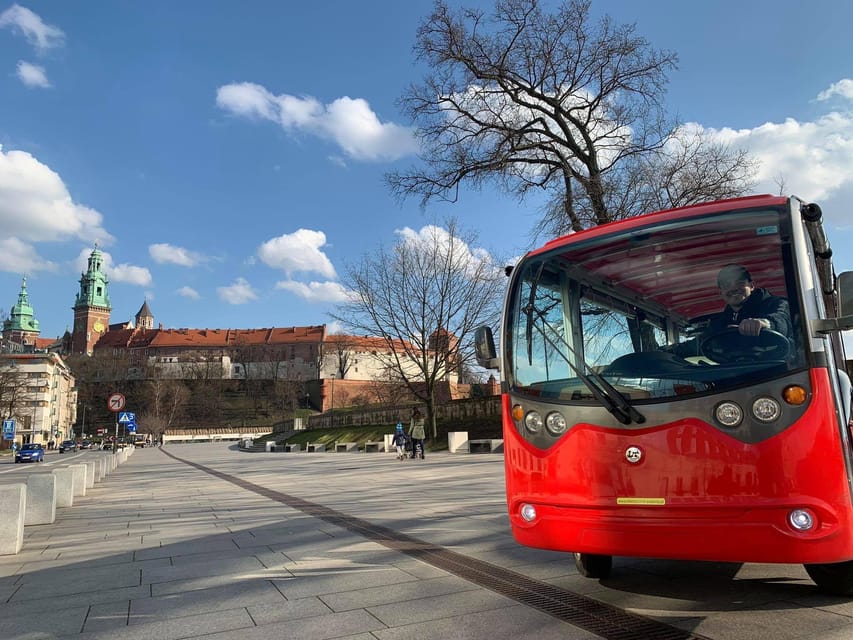
The route then shifts into Kazimierz, the former Jewish district. Here the tone changes. Instead of treating the area as a row of pretty streets, the guide connects its squares, synagogues, shops, and religious buildings to the Jewish community that shaped this part of Krakow.
You pass Skałka Church and the Church of St. Catherine before reaching Wolnica Square, once the center of the separate medieval town of Kazimierz. The old Jewish City Hall stood here, and the square remains a useful place to understand that Kazimierz was not always simply another Krakow neighborhood.
The Church of Corpus Christi follows, then the route moves through the synagogue quarter. You see the Tempel, Kupa, and Isaac synagogues, followed by Ciemna Street, the Old Synagogue, and the Popper Synagogue.
You also pass the former family home of Helena Rubinstein, the cosmetics entrepreneur born in Krakow, along with the Remuh Synagogue and its old cemetery. The Memorial Stone of the Nissembaum Family Foundation and the old Jewish shops add further reminders that this was a living neighborhood, not just a collection of historic facades.
This section carries some emotional weight. The audio gives you the basic background, while the driver may add small stories or point out details that are easy to miss from a moving vehicle. Drivers including Jacob, Conrad, Olivia, and others have been praised for adding personal explanations rather than leaving the recorded narration to do all the work.
The limitation is important: seeing a synagogue from the cart is not the same as entering it. You will get a strong first look at the district, but you should return independently if you want time inside the Old Synagogue, Remuh cemetery, or other sites.
More sightseeing tours of the city in Krakow:
- Krakow: Sightseeing Cruise by Vistula River
★ 4.1 · 1,897 reviews - Krakow: Vistula River Sightseeing Cruise with Audio Guide
★ 4.4 · 820 reviews - Krakow: Sightseeing Cruise on Vistula River with Audio Guide
★ 4.4 · 480 reviews - Krakow: Guided City Tour by Golf Buggy (with hotel pickup)
★ 5.0 · 426 reviews
Podgórze and the former ghetto
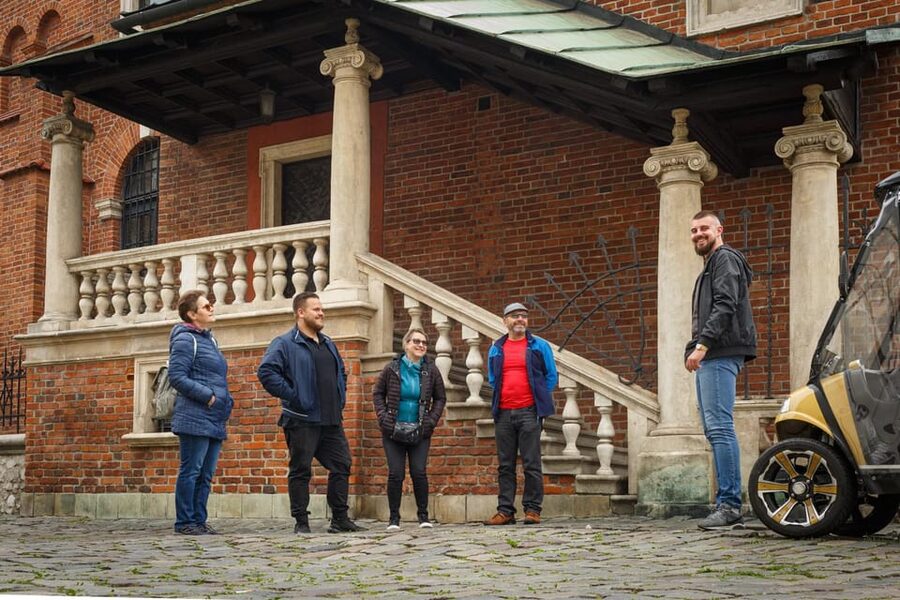
The final district is Podgórze, across the river from Kazimierz. This is the former ghetto area, where the tour becomes more focused on the Second World War and the fate of Krakow’s Jewish population.
At Ghetto Heroes Square, the guide explains the meaning of the square’s empty chairs. The memorial is simple and difficult to forget. It rewards a short stop, and several passengers have appreciated having time to get out and look around.
You then see the Pharmacy Under the Eagle, the former workplace and residence of Tadeusz Pankiewicz. The pharmacy served people trapped in the ghetto and is now a museum connected with that period.
The route also covers Oskar Schindler and the history linked to his factory. You can see the area around Schindler’s Factory and get a useful introduction before deciding if you want to visit the museum separately. One driver even helped a passenger take a photograph of the factory gates, a small service that can make a quick stop more worthwhile.
The tour continues with an explanation of daily life in the ghetto, traces of the ghetto wall, and the Church of St. Joseph. This part is not light sightseeing. The subject calls for attention, and the recorded narration may feel condensed compared with a dedicated Holocaust or wartime history tour.
That is the right way to judge this segment. The cart offers context and access to several important locations, but it cannot provide the same depth as a museum visit or specialist walking tour. Use it as a first layer, not the final word.
The guide matters as much as the audio
The audio system is a central part of the experience, and it appears to be clear when passengers wear the headsets correctly. English-speaking drivers add live commentary, answer questions, and help point out what you are approaching.
Several driver names appear repeatedly in the feedback: Olivia, Jacob, Conrad, Natalie, Philip, Andrew, and others. Their styles differ, but the strongest pattern is the combination of recorded narration and human explanation. Olivia is noted for adding small stories before stops, while Jacob is described as mixing commentary with practical help and patience. Conrad is remembered for an upbeat manner and extra information.
Do not assume the audio alone will carry the whole tour. The driver’s voice can be useful when traffic forces a change or when a landmark passes quickly. It is also worth keeping your headset on during the ride, since loud conversation from other passengers can make the narration hard to hear.
One drawback of a shared vehicle is group behavior. A single passenger talking or laughing loudly without using the headset can affect everyone. The driver can remove someone for aggressive or disruptive conduct, but a little courtesy from the group is the best solution.
Comfort, weather, and mobility
The cart offers a practical break from Krakow’s cobbled streets. If you have mobility concerns, limited time, or a full schedule of other excursions, you can see much more than you would comfortably cover on foot.
The vehicle is listed as wheelchair accessible, though you should still confirm the exact arrangements when booking if you use a wheelchair or have specific transfer needs. The tour includes some opportunities to get out, but it is not a hop-on, hop-off service where you can leave whenever you like.
Rain can make the cart especially useful. A covered ride lets you continue sightseeing without spending two hours walking in wet shoes. On the other hand, winter or windy weather may feel cold in an open-sided vehicle, so dress for the conditions.
Wear comfortable shoes even though you are not walking the full route. You may get out at several locations, and the best photographs often require a few minutes on foot.
The vehicle rules are strict. Pets, bicycles, scooters, large bags, oversize luggage, glass objects, alcohol, smoking, drugs, weapons, and sharp objects are not allowed. Do not plan to use the cart as luggage transport on the way to or from a hotel.
Is $13 good value?
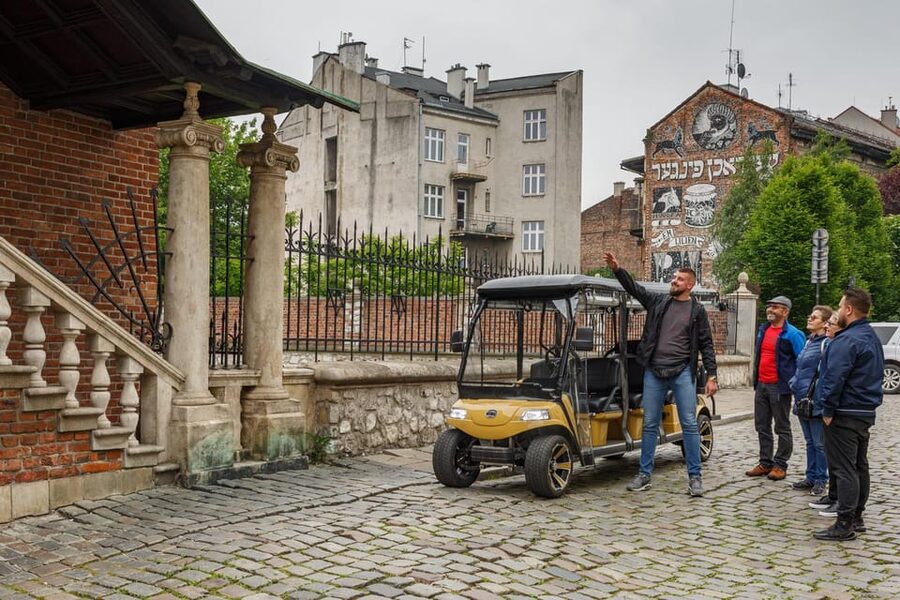
At $13 per person, this is one of the easier Krakow sightseeing costs to justify. You receive transport, a driver, a multilingual audio guide, and a route covering three major districts for more than two hours.
The value is strongest if you have only a weekend, are visiting after a tiring day trip, or want a first look before choosing which museums and churches deserve more time. One person described using it after Auschwitz, when a seated city tour offered a welcome rest.
It is less useful if you already know Krakow well or prefer slow, detailed walks. The cart cannot stop at every landmark, and the audio cannot answer every historical question. A private tour costs more but gives you more control over stops and seating.
The free cancellation policy allows cancellation up to 24 hours before departure for a full refund, and you can reserve now and pay later. Those terms help if your Krakow schedule is still changing.
Who should book it?
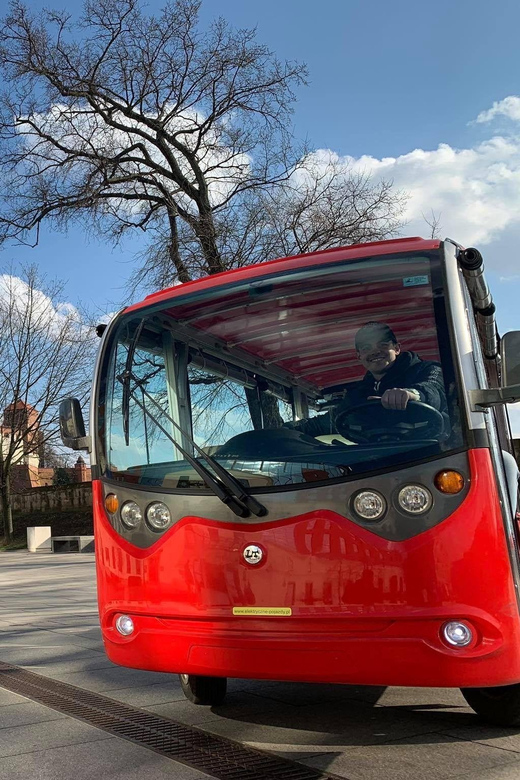
I would put this near the start of a Krakow visit. It gives you a city map, introduces the relationship between the Old Town, Kazimierz, and Podgórze, and helps you choose where to return.
It suits first-time visitors, families, older passengers, people with limited walking stamina, and anyone trying to cover Krakow in a short stay. It also works well after a demanding day trip, when a moving seat is more appealing than another long walk.
I would choose something else if you want deep access to the synagogues, Wawel interiors, Schindler’s Factory, or wartime history. In that case, use this tour for orientation and book separate visits for the places that matter most to you.
FAQ
How long is the Krakow golf cart tour?
The activity lasts 135 minutes. It is also described as roughly two hours, so allow about two hours and fifteen minutes, with some flexibility for traffic and group arrangements.
Which parts of Krakow does the tour visit?
The route covers Krakow’s Old Town, Kazimierz, the former Jewish district, and Podgórze, the former ghetto area.
Is an audio guide included?
Yes. A multilingual audio guide is included. Available languages include English, Polish, German, French, Spanish, Italian, Portuguese, Dutch, Czech, Slovak, Ukrainian, Chinese, Japanese, Korean, and others.
Can I choose where I sit?
No. The driver assigns seats. The vehicle carries up to 13 passengers, and each row can accommodate up to three people. Sitting beside another member of your party is not guaranteed.
Is the tour wheelchair accessible?
Yes, the activity is listed as wheelchair accessible. If you have particular access needs, confirm the arrangements when booking.
What is not allowed on the golf cart?
Pets, weapons, sharp objects, oversize luggage, large bags, smoking, alcohol, drugs, bicycles, scooters, skateboards, glass objects, and explosive substances are not allowed.
Should you book this Krakow tour?
Book it if you want a low-cost city overview with useful historical context, clear audio, and a chance to rest your feet. The mix of Old Town landmarks, Kazimierz synagogues, and Podgórze memorial sites gives you a broad first look at Krakow in one ride.
Choose a private or small-group option if seating and personal attention matter to you. Otherwise, the shared eco golf cart is a practical $13 introduction, especially on your first day, in rainy weather, or when your time in Krakow is short.
Just added around Krakow
- From Krakow: Zakopane and Dunajec River Rafting Tour★ 4.6 · 31 reviews
- From Krakow: Zakopane Full-Day Tour with Lunch Option★ 4.4 · 62 reviews
- From Krakow: Zalipie and Painted Village Guided Tour★ 4.0 · 4 reviews
- From Krakow: Zakopane and the Tatra Mountains★ 4.7 · 36 reviews
- From Krakow: Zakopane and Gubałówka Cable Car Private Tour★ 4.3 · 12 reviews
- From Krakow: Zakopane Tatra Mountains & Hot Springs Tour★ 3.0 · 29 reviews
- Zakopane & Tatra Mountains Private Full-Day Tour from Krakow★ 4.5 · 33 reviews
- From Krakow: Hot Springs and Zakopane with Gubałówka★ 4.7 · 25 reviews
Krakow Golf Cart Tours, compared.
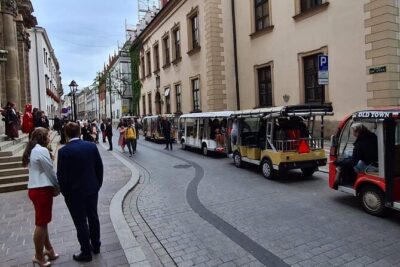
City Sightseeing Tour Eco Electric Buggy Golf Cart
Read our review →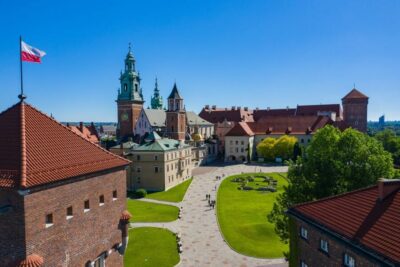
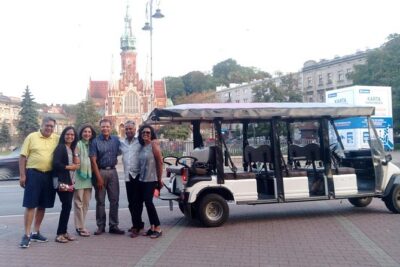
Guided City Tour by Golf Buggy (with hotel pickup)
Read our review →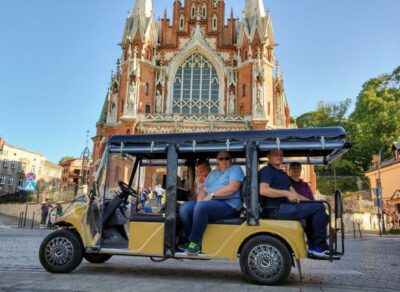
Jewish Quarter and Ghetto Electric Golf Cart Tour
Read our review →City Sightseeing Tour Eco Electric Buggy Golf Cart
Read our review →
Krakow Grand City Tour by golf cart – All 3 districts
Read our review →
Browse the lists this tour appears in