
Reviewed · SCHINDLER'S FACTORY TOURS
Krakow: Schindler’s Factory Guided Tour with Ticket
Schindler’s Factory is less a museum about one heroic businessman than a carefully staged account of Krakow under Nazi occupation. The tour leads you from the 1939 invasion through the ghetto, propaganda, executions, resistance, and survival before reaching Oskar Schindler’s own story. That broader focus gives the visit its real weight.
I like the way a guide turns rooms filled with text, photographs, and objects into a clear story. I also like the chance to see Schindler’s original office and hear about the Jewish people he saved. The main drawback is simple: if you come expecting two hours focused on Schindler alone, you may be surprised by how little of the museum is devoted directly to him.
Key points
- The museum covers far more than Schindler: Expect a detailed account of Krakow during the German invasion and occupation.
- A guide helps you read the museum: Guides such as Victoria, Max, Lucy, Jacob, and Magda have been praised for clear explanations and thoughtful storytelling.
- The 90-minute route moves quickly: A guide helps you see the main displays without getting stuck in every panel.
- You visit Schindler’s original office: His story appears alongside accounts of the Jewish people he protected.
- The experience can be emotionally heavy: Ghetto life, public executions, persecution, and wartime propaganda are presented directly.
- The ticket is included: You meet the guide by the yellow umbrella or Walkative sign, with no hotel pickup or drop-off.
What Schindler’s Factory really tells you
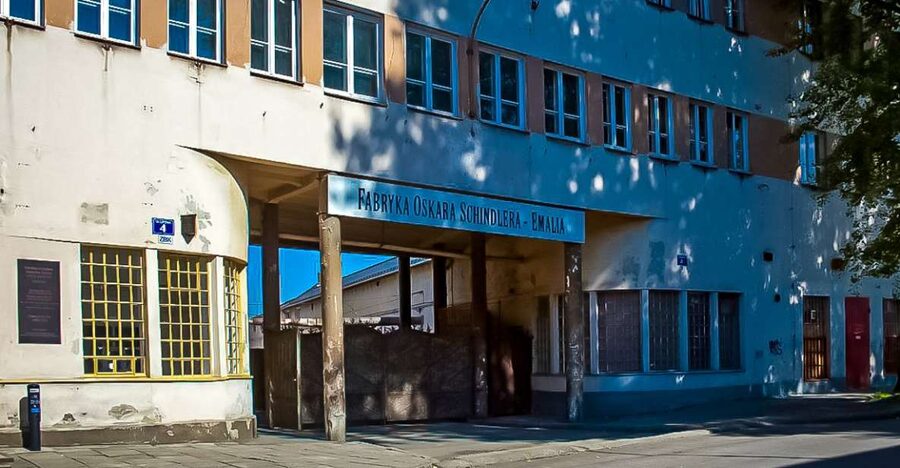
The museum occupies the former enamelware factory associated with Oskar Schindler, but it is not a working factory tour. You will not spend the visit watching enamelware being produced or examining industrial machinery. Instead, the building holds a historical museum about Krakow between the outbreak of the Second World War and the years that followed.
That distinction matters when you decide if this tour suits you. The title may suggest a narrow portrait of Schindler, like a museum built around the film Schindler’s List. In practice, Schindler is one part of a larger account of how German occupation changed daily life for Polish and Jewish residents.
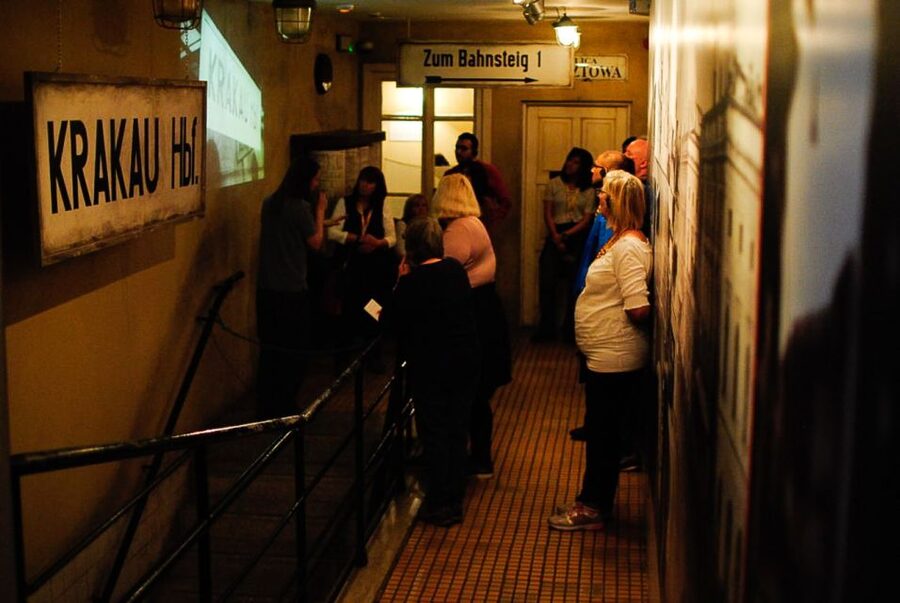
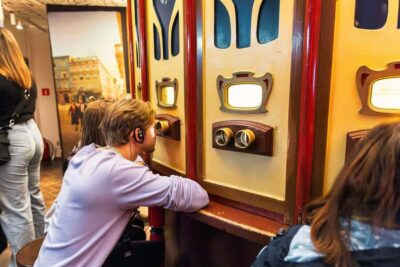
The museum uses reconstructions, photographs, documents, signs, rooms, and personal stories to create a chronological route. You might move from a recreation of the 1939 battlefield to wartime streets, a railway station, the Jewish ghetto wall, and sites connected with public executions. These scenes help you understand how quickly ordinary life was replaced by control, fear, and persecution.
I find this wider approach more useful than a simple hero story. Schindler’s actions gain meaning only when you understand the system around him, including Nazi officials, collaborators, underground fighters, and the people forced to make impossible choices.
More ways into Schindler's Factory in Krakow:
- Krakow: Oskar Schindler’s Factory Entry Ticket & Guided Tour
★ 4.2 · 3,793 reviews - Krakow: Schindler’s Factory Tour with Entrance Ticket
★ 4.5 · 3,182 reviews - Krakow: Schindler’s Factory Skip-the-Line Ticket
★ 4.4 · 3,105 reviews
Meeting the guide outside the factory
Your guide waits with a yellow umbrella or a Walkative sign. That detail is useful in a busy part of Krakow, especially if several groups are gathering near the museum. Arrive with enough time to find the meeting point without rushing. Hotel pickup and drop-off are not included, so you make your own way there.
The guided visit lasts 90 minutes. That is long enough to follow the museum’s main argument, but short enough to fit into a day that also includes the Old Town, Kazimierz, or other wartime sites. The pace matters because the museum contains a lot of written material. Without a plan, you could spend too long on early displays and have little time for the final sections.
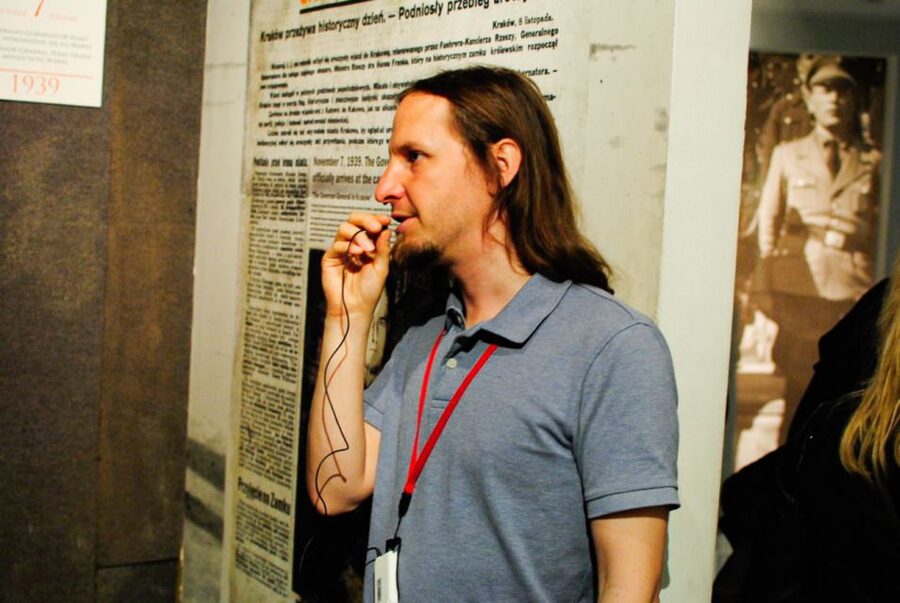
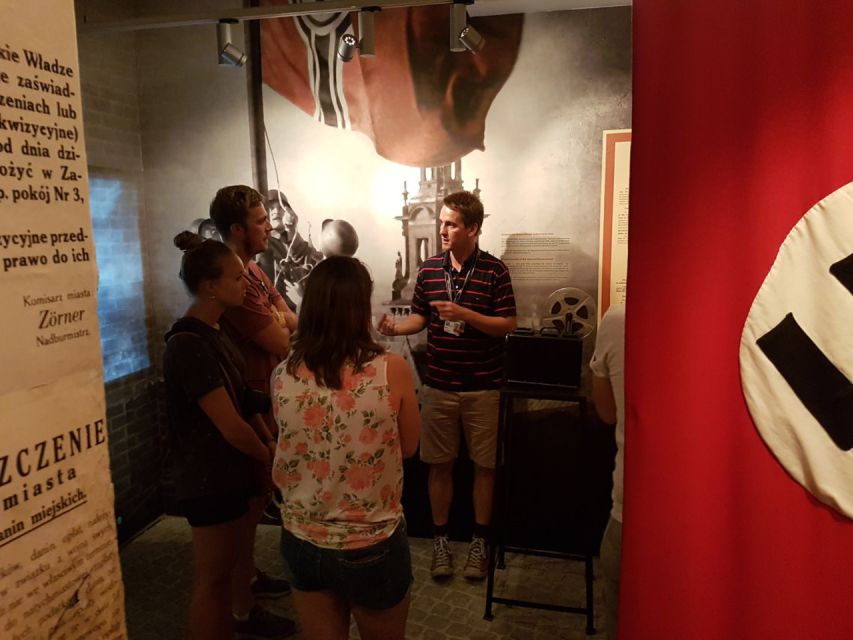
Several guides have received especially warm praise for their presentation. Victoria has been described as engaging and insightful, while Max has been valued for helping visitors understand displays they might have missed alone. Lucy, Jacob, Magda, Ana, Matthew, and Damian have also led tours praised for clear English, patience, and a good sense of pace.
Names can change with the date and language of your booking, so you should not reserve this experience solely to request one particular guide. Still, the repeated pattern is useful: the tour depends heavily on the individual guide, and this operator has a broad pool of guides who know how to handle a serious subject.
Some groups are very small. One booking had only two people, and another group had four. Group size can vary, but a small group gives you more room to ask questions and discuss difficult points. The tradeoff is that you cannot count on a private tour.
Following Krakow from 1939 into occupation
The first major part of the route establishes what happened to Krakow when Germany invaded Poland in 1939. The museum does not treat the occupation as a distant military event. It connects the invasion to changes in streets, jobs, identity, movement, and family life.
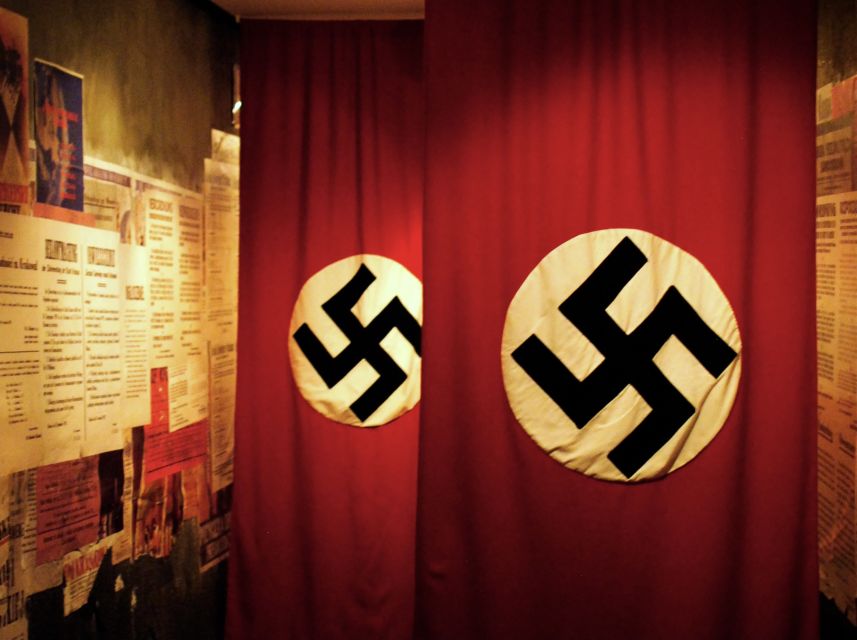
The reconstructed battlefield and city scenes give the opening section a physical quality. You are not just reading dates on a wall. You are being shown how the city looked and how power was made visible through uniforms, signs, restrictions, and public authority.
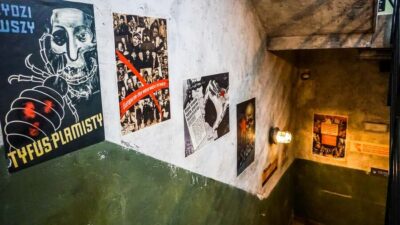
A guide is particularly useful here because the museum’s posters and official notices may be in Polish or German. One guide translated Nazi propaganda for the group and explained how the wording was designed to shape public opinion. That is the sort of detail easy to miss when you walk through alone.
The museum also introduces major figures active in Krakow during this period. You encounter Hans Frank, the Nazi governor of occupied Poland, along with Amon Goeth, Polish and Jewish resistance figures, collaborators, and people later recognized among the Righteous Among the Nations. These names help place Schindler within a crowded and dangerous network of power.
The subject matter is grim. You will encounter accounts of persecution, public executions, forced separation, and the destruction of Jewish life. A good guide keeps the story precise without turning the suffering into spectacle. Several guides have been praised for compassion and balance, which is important during a visit that can become emotionally exhausting.
Seeing daily life behind the historical dates
The museum’s strongest feature is its attention to daily life. It shows how occupation affected people beyond the battlefield and political offices. You learn about the pressure placed on Jewish residents, the restrictions imposed by German authorities, and the choices facing Polish people who lived under occupation.
Reconstructions of streets, the railway station, and the ghetto wall make the city itself part of the story. These displays help you connect events with places. The railway station, for instance, is not simply a transport setting. In the museum’s wider account, transport and movement become part of the machinery of control.
The Jewish ghetto section is especially important because it explains the setting in which Schindler’s rescue efforts took place. You see how people were confined, watched, and stripped of normal security. The ghetto was not an abstract stage for one man’s actions. It was a place where thousands of people faced danger, deprivation, and the loss of family and community.
This is also where the guide’s storytelling makes a difference. A good explanation links an object or photograph to a larger human question: how did people find food, work, shelter, information, or a way to protect relatives? The museum cannot answer every question in 90 minutes, but the guide can point you toward the displays that matter most.
A handful more Krakow trips to weigh up
- Krakow to Auschwitz Birkenau Guided Tour with Transfer and Ticket
★ 5.0 · 8,197 reviews - Krakow: Wieliczka Salt Mine Fast-Track Ticket & Guided Tour
★ 4.5 · 5,872 reviews - Auschwitz Birkenau Guided Tour with Ticket Hotel Pickup Small Van
★ 5.0 · 4,769 reviews - From Krakow: Wieliczka Salt Mine Tour & Skip the Line Ticket
★ 4.4 · 3,925 reviews
Finding Oskar Schindler’s office
Schindler’s own story comes later in the route. You see his original office and learn about his life before the war, his business interests, and his changing role during the occupation. The museum presents him as a complicated man, not a spotless figure who began as a hero.
That complexity is one of the most worthwhile parts of the visit. Schindler was a German industrialist and member of the Nazi Party who used his factory and connections to protect Jewish workers. His motives and methods developed within a corrupt system, and the museum gives you room to consider that contradiction.
The office has special power because it connects the famous name to a real workplace. You can picture Schindler operating within the same structures that endangered the people he later tried to save. The guide explains how his factory became connected with Jewish workers and how his actions helped some of them survive.
You also hear accounts of the people he saved. That shift in focus is vital. Schindler’s story is not only about his decisions. It is about the workers, families, and survivors whose lives were affected by those decisions.
Do not expect the office to take up most of the tour. The section devoted directly to Schindler is relatively small compared with the museum’s full account of Krakow during the war. If you want a concentrated biography, this may feel too broad. If you want to understand why his actions mattered, the surrounding material makes the story stronger.
Why a guide adds value to this museum
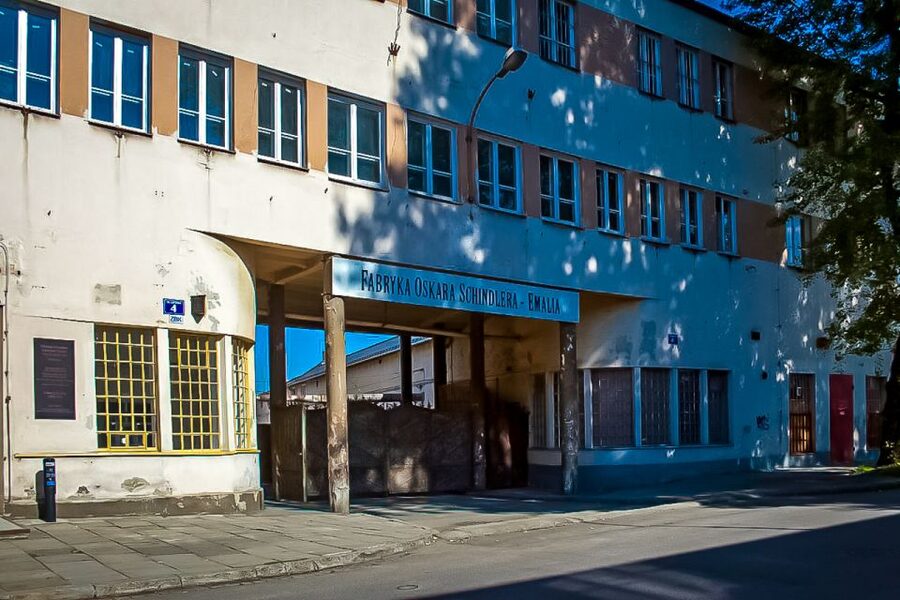
You can read the displays yourself, and the museum contains enough text to provide a useful visit without a guide. One person who toured alone found the museum’s explanations strong. Still, a guided visit saves time and helps you understand the order and meaning of what you see.
The best guides do three things well:
- They explain the historical sequence before you get lost in details.
- They point out objects and propaganda that need context.
- They keep the group moving without rushing past important rooms.
This balance came up repeatedly in the feedback about guides. Damian was praised for maintaining a suitable pace. Ana used phones so everyone could hear clearly. Lucy made sure the group had time to examine objects and take photographs. Jacob added family stories connected with the war, giving the account a personal dimension without losing its historical focus.
There is one small caution. One visitor found that a guide spoke too quickly, making some sections harder to follow despite very good English. A 90-minute schedule can encourage guides to pack in a lot of information. If you need a slower pace, say so early and stay near the guide.
The tour is offered in English and Spanish. It is also wheelchair accessible, though the activity details do not explain the exact route or facilities, so you may want to confirm any specific access needs before booking.
Handling an emotional 90-minute visit
This is not a light museum stop. The displays cover Nazi occupation, anti-Jewish persecution, public executions, the ghetto, forced labor, and the choices made by people living under threat. You should allow yourself some quiet time afterward rather than placing this immediately before a rushed meal or another demanding activity.
The guides appear to understand the tone required. The strongest accounts describe tours that were compassionate, balanced, and thought-provoking. The aim is not to shock you at every turn. It is to help you understand how ordinary places and ordinary routines became part of a system of persecution.
That makes the museum useful preparation for a visit to Auschwitz and Birkenau. One visitor specifically found that the Krakow tour supplied important background before going there. The sites are not interchangeable, but this museum can help you understand the occupation and the position of Krakow within the wider wartime story.
Families with older children may find the visit useful, but the subject is serious and the tour is not designed as a children’s activity. Adults interested in Jewish history, Polish history, Nazi Germany, wartime ethics, or the film connection will get the most from it.
Is $46 a fair price?
At $46 per person, this is not the cheapest way to enter the museum. A self-guided visit costs less, and the museum already provides written context. The price pays for the pre-arranged museum ticket and the guide’s organization, explanation, language help, and time management.
I think the value is strongest if you have only one chance to visit. The museum is dense, and a guide can keep you from spending half the tour on one room. You also skip the ticket line, though there is an important practical detail: the pre-booked tickets are purchased directly from the museum on the spot. Museum delays or ticketing problems are outside the tour company’s control.
If you are a serious museum reader who wants to move slowly and examine every panel, you may prefer to go alone. One particularly committed visitor did both: first with the guide, then returned later for a self-guided visit. That is a smart plan if you have the time and want both the clear overview and the freedom to linger.
The included ticket and professional guide make the price reasonable for a first visit, especially when dates are busy and admission is hard to secure independently. The tour is less worthwhile if your only interest is Schindler himself, since the museum gives more space to the occupation of Krakow than to his biography.
Practical details before you book
The tour allows free cancellation up to 24 hours before the start for a full refund. You can also reserve now and pay later, which helps if your Krakow schedule is still shifting.
English and Spanish departures are available. Check the starting time carefully because the 90-minute duration is fixed and availability changes by date. Meet at the yellow umbrella or Walkative sign, not at your hotel.
Bring patience for a serious museum rather than expecting a quick film-themed attraction. If you want to take photographs, the guide should allow time, but keep listening because many of the most useful explanations concern small details in posters, maps, and documents.
Who should book this Krakow museum tour?
I recommend it to you if you want a clear introduction to Krakow during the Second World War, prefer explanation over wandering, or plan to visit Auschwitz and Birkenau later. It also suits anyone who wants to understand Schindler in context rather than treat him as a simple movie hero.
I would choose a self-guided visit instead if your main goal is to read every display at your own speed or spend most of your time on Schindler’s personal story. For most first-time visitors, though, the guide is worth the extra cost. The museum is detailed, the subject is demanding, and a strong guide can help you leave with a coherent understanding rather than a pile of disconnected facts.
FAQ
How long does the Schindler’s Factory guided tour last?
The guided tour lasts 90 minutes.
What is included in the price?
The price includes a professional guide and a ticket to Schindler’s Factory museum.
Is hotel pickup included?
No. Hotel pickup and drop-off are not included, so you must make your own way to the meeting point.
How do I find the guide?
Look for a guide holding a yellow umbrella or a Walkative sign.
What languages are available?
The tour is offered in English and Spanish.
Is the tour wheelchair accessible?
Yes, the activity is listed as wheelchair accessible.
Does the tour focus only on Oskar Schindler?
No. Schindler’s story is included, along with his original office and the people he saved, but most of the museum covers Krakow during Nazi occupation and the experiences of Jewish and Polish residents.
Can I cancel for a full refund?
Yes. You can cancel up to 24 hours in advance for a full refund. You can also reserve the tour and pay later.
Just added around Krakow
- From Krakow: Zakopane Full-Day Tour with Lunch Option★ 4.4 · 62 reviews
- From Krakow: Zalipie and Painted Village Guided Tour★ 4.0 · 4 reviews
- From Krakow: Zakopane and Dunajec River Rafting Tour★ 4.6 · 31 reviews
- From Krakow: Zakopane and the Tatra Mountains★ 4.7 · 36 reviews
- From Krakow: Zakopane and Gubałówka Cable Car Private Tour★ 4.3 · 12 reviews
- From Krakow: Zakopane Tatra Mountains & Hot Springs Tour★ 3.0 · 29 reviews
- Zakopane & Tatra Mountains Private Full-Day Tour from Krakow★ 4.5 · 33 reviews
- From Krakow: Hot Springs and Zakopane with Gubałówka★ 4.7 · 25 reviews
Schindler's Factory Tours, compared.
Oskar Schindler’s Factory Entry Ticket & Guided Tour
Read our review →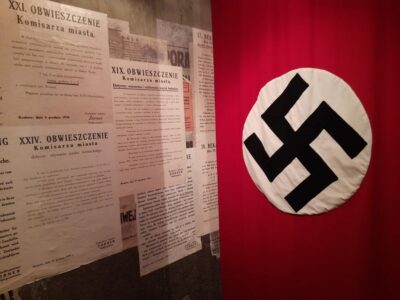
Schindler’s Factory Tour with Entrance Ticket
Read our review →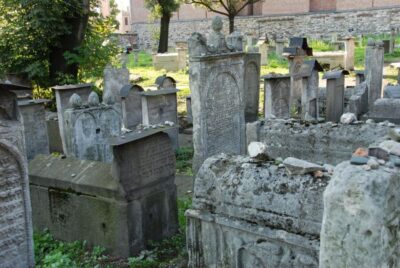
Schindler’s Factory Tour with Entrance Ticket
Read our review →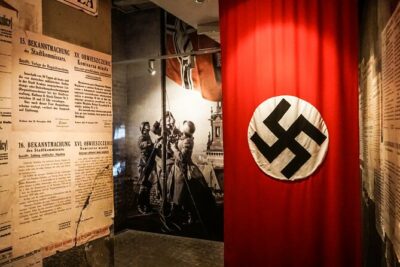
Schindler’s Factory in Krakow: Guided Tour & Skip the Line Ticket
Read our review →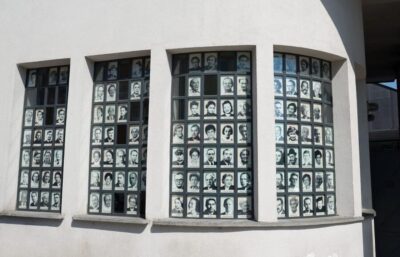
Schindler’s Factory Ticket with Guided Tour Option
Read our review →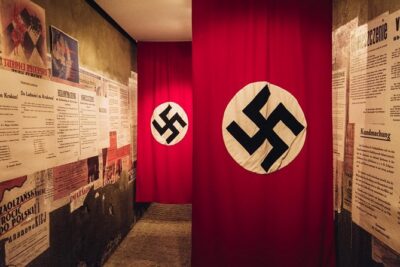
Krakow Schindler’s Factory Guided Tour with Admission Ticket
Read our review →Browse the lists this tour appears in