Reviewed · PRIVATE
Nikiszowiec Industrial District Private Tour
Nikiszowiec is not just a pretty old neighborhood. It is a carefully planned mining district where brick housing, inner courtyards, a former mine, schools, art, and political history fit together. This walking tour helps you read the place as a living record of Silesian life, not just a photogenic stop.
I like the small private format, since your guide can explain the district at your pace. I also like the way the route joins everyday details with bigger events, including the Silesian Uprisings, both world wars, and the changes brought by communism. The guide, Malwina, is praised for clear and cheerful explanations.
The main consideration is location: the experience is listed under Krakow, but it begins and ends in Katowice. At $93.45 per person, it makes the most sense for a private group that values focused guiding, rather than for someone seeking a quick, low-cost stroll.
What makes this Nikiszowiec walk worth your time
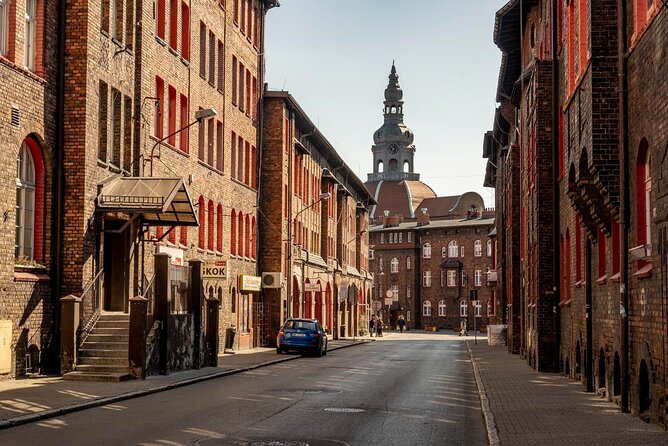
- A complete picture of a mining district: You see workers’ housing, courtyards, a former mine, railway facilities, a school, murals, and museum interiors.
- Silesian identity takes center stage: The route explains local ethnicity, the Autonomous Region of Silesia, the Silesian Uprisings, and wartime and communist-era changes.
- The Zillmann architects provide the starting point: Their square introduces the planning ideas behind Nikiszowiec before you walk through the district itself.
- Art is part of the neighborhood story: You see Janów Group artwork, contemporary watercolors, murals, Silesian legends, and surreal scenes of local life.
- The tour is genuinely private: Only your group takes part, with an English-speaking guide and group discounts available.
- The final museum stop adds indoor context: A preserved Nikiszowiec flat and original artwork give you details that streets alone cannot show.
Start at St. Anne’s Church in Katowice
The meeting point is Kościół pw. św. Anny, at plac Wyzwolenia 21 in Katowice. This is also where the walk finishes, so you do not need to arrange a second pickup point at the end.
The first stop lasts only about three minutes and has no admission charge. Treat it as a quick orientation to Nikiszowiec and its role as a place tied to local ethnicity and memory. The short timing tells you that the church is a marker for the route, not the main attraction of the experience.
One practical detail matters right away: the tour information names Krakow as the location, but the meeting address is in Katowice. Check your transport plans carefully. Katowice and Krakow are different cities, and arriving in the wrong one would be a costly mistake.
A handful more Krakow trips to weigh up
- Krakow Airport Private Transfer
★ 5.0 · 2,227 reviews - Private Departure Transfer: Krakow City To Krakow Airport Balice
★ 4.5 · 367 reviews - Legendary Private Nowa Huta Communism Tour with Crazy Guides
★ 5.0 · 262 reviews
The Zillmann plan behind Nikiszowiec
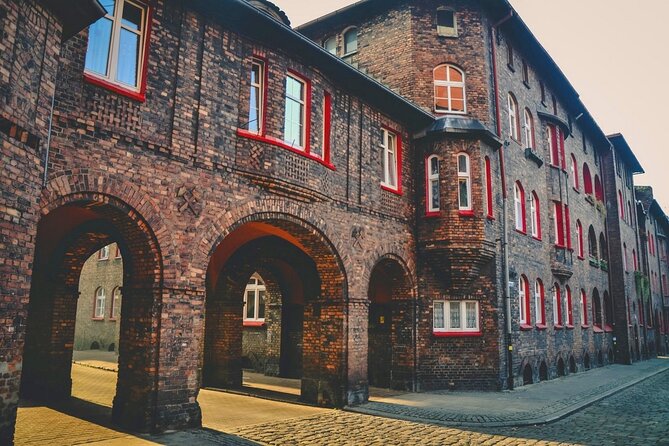
At the square named for Emil and Georg Zillmann, you begin to understand why Nikiszowiec feels different from an ordinary residential district. The architects designed the area with a general plan, divided quarters, and a clear purpose connected to industrial life.
Your guide explains how the district and nearby areas were arranged. This is useful early in the walk because the architecture makes more sense once you know it was planned around the needs of mining families, rather than built as a random collection of streets.
The stop lasts roughly ten minutes. You will not get a long architectural lecture, but you should come away with a map in your head. That makes the next sections easier to follow.
Liberation Square and the rhythm of daily life
The route then passes through common portals in Liberation Square. These entrances lead into the structure of the district and help show how public streets connected with residential quarters.
The guide explains the division of the neighborhood, the purpose of different sections, and the structure of the buildings. Just as important, you hear about the daily routines of the people who lived here. That shift from buildings to people is one of the tour’s best features.
You spend about 15 minutes here. The stop is short, so pay attention to the relationship between the portals, the square, and the housing blocks. Nikiszowiec is easiest to understand when you notice how its shared spaces encouraged a close community life.
Inside the residential quarters
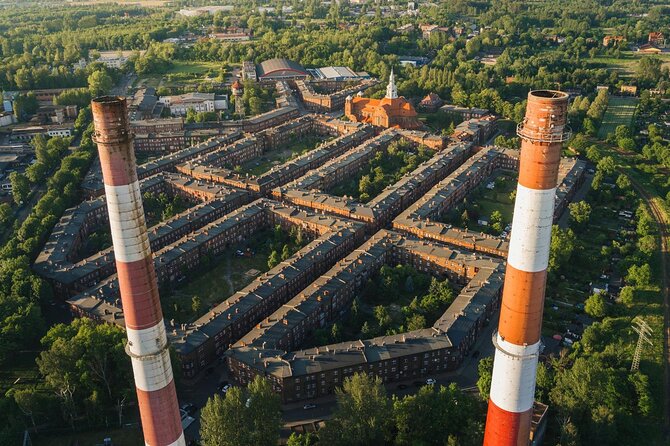
The longest outdoor portion takes you into the residential area and several quarters with interior gardens. This is where the district changes from an architectural idea into a place where families actually lived, worked, raised children, and marked holidays.
Your guide discusses how life used to look and how it looks now. You also hear about Nikiszowiec during World War I and the Silesian Uprisings. Those subjects give the brick buildings a political setting. Silesia was not simply a background region in Polish history, and the tour makes that clear without leaving the streets where those changes affected ordinary households.
This section lasts about 30 minutes and is likely to be the core of the walk. You have time to see several quarters rather than only one postcard view. The private format should help if you want to pause for photographs or ask about a detail in the housing layout.
Keep in mind that this is still a walking tour through a lived-in district. You are looking at shared spaces and historic buildings, not entering every home or seeing a recreated version of the whole neighborhood.
Same city, a completely different sort of day:
- From Krakow: Auschwitz-Birkenau Guided Tour & Hotel Pickup
★ 4.5 · 33,358 reviews - From Krakow: Auschwitz-Birkenau Guided Tour & Hotel Pickup
★ 4.5 · 29,340 reviews - Krakow: Auschwitz Guided Tour with Optional Hotel Pickup
★ 4.5 · 15,280 reviews - Krakow–Zakopane: Cable Car, Chocholow Baths, Cheese & Vodka
★ 5.0 · 10,720 reviews
The Silesian Embassy and changing political identities
The stop known as the Silesian Embassy adds political context to the route. Here, you learn about the interwar period and the Autonomous Region of Silesia, a key part of understanding why Silesian identity can feel distinct from other Polish regional identities.
The guide also covers World War II and the changes communism brought to Nikiszowiec. These subjects connect local streets with national events, but the focus remains on how large political shifts affected this district.
The stop is planned for about 15 minutes. It is not a separate museum visit, so expect an explanation at or around the site rather than a long indoor presentation. I find this kind of stop valuable because it gives you a better sense of why the region cannot be reduced to old mine buildings and attractive brickwork.
Pułaski Shaft and the industrial reason for the district
At the Pułaski Shaft Complex, you reach the former coal mine where many Nikiszowiec residents worked. This is a key piece of the story. Without the mine, the housing district would have had no reason to exist in its particular form.
The tour also points out the historic railway used to carry industrial materials and people between industrial estates in Silesia. That detail helps you picture the district as part of a larger working system, not an isolated neighborhood.
You spend about 20 minutes here. There is no admission charge listed for this stop. Since the route involves industrial sites and outdoor viewing, your guide’s explanation is especially important. The buildings and railway may not explain their original purpose on their own.
This is also one of the stops where the tour offers more than an attractive walk. You see the connection between home, work, transport, and regional industry in one place.
Watercolors, legends, and modern Silesian images
The Atelier z akwarelami by Grzegorz Chudy brings the route into the present. You see contemporary paintings of Nikiszowiec, Katowice, and the Silesian region, along with Silesian legends and mythical creatures.
The 10-minute visit is brief, but it changes the mood. Instead of looking only at old walls and industrial remains, you see how local artists interpret the region today. Art can also make regional identity easier to grasp, especially if you are new to Silesian culture.
The stop is listed as free. Since the tour does not promise a workshop or extended gallery time, think of it as a focused introduction to the artist’s work rather than a long art visit.
The old school and Janów Group murals
The route passes next to the historic Nikiszowiec school. This takes only about two minutes, but it adds another piece to the district’s social structure. Housing, work, worship, and education were all close together.
You then reach the Square of Janów District Artists, where colorful murals reproduce artworks by leading artists from Nikiszowiec. The visit lasts about 15 minutes. These murals make the art of the neighborhood visible in an outdoor setting, and they help you connect the district’s everyday life with its creative traditions.
The paintings are not presented as decoration alone. They relate to local people, work, celebrations, and Silesian stories. If you enjoy photography, this is likely one of the most rewarding parts of the route, but the guide’s explanation gives the images more meaning than a quick photo stop would.
A preserved flat at the Museum of Katowice History
The final major stop is the City Ethnology Department of the Museum of Katowice History. Admission is included here, unlike the other listed stops.
Inside, you see the rooms of a typical Nikiszowiec flat. This is an important contrast with the outdoor sections. Streets and courtyards show the shape of the district, but a preserved interior helps you understand how people used the space and what daily and festive life looked like.
You also see original works by Janów Group artists. Their subjects include ordinary routines and special occasions, giving the museum a direct connection to the buildings you have just walked through. The museum also presents surrealistic works by an artist described as the Silesian Salvador Dali, adding a more unusual artistic note to the final section.
The visit lasts about 30 minutes. Ending indoors is useful in poor weather, though the tour itself requires good conditions and may be rescheduled or refunded if weather makes it impractical.
What $93.45 per person really buys
The listed price is $93.45 per person. That is not bargain pricing for a walk of about two hours and 45 minutes, especially since most stops have no admission fee. You are paying mainly for the private English-language guide, the structure of the route, and the access to the museum portion.
The value improves if you are traveling as a group and can use the available group discounts. A private tour also means you are not sharing the guide with strangers. That matters in a district where questions about language, identity, wartime changes, and family life can easily take the walk beyond a fixed script.
The route covers more ground than a simple photo visit. You get architecture, social history, industrial history, political context, art, and a museum interior in one outing. If you would otherwise need to research each part yourself, the price may be reasonable.
I would not choose it for a solo budget traveler focused only on seeing Liberation Square and taking photographs. I would consider it more seriously for families, couples, or small groups who want a private introduction to Silesia and prefer explanation over independent wandering.
Timing, walking, and who will enjoy it
The tour lasts approximately two hours and 45 minutes, though one guest describes a duration closer to two and a half hours. Allow the full stated time so you are not rushing to another appointment.
The activity is offered in English. Most people can participate, and service animals are allowed. The meeting point is near public transportation, but no specific transit route is provided, so you should confirm your connection to Katowice before booking.
This tour suits you best if you:
- Want to understand Silesian identity rather than only see old buildings
- Enjoy architecture explained through social and industrial history
- Prefer a private guide to a large group
- Are traveling with family and want a structured, manageable outing
- Like combining outdoor walking with art and a museum interior
It may be less suitable if you want a fast tour with minimal history, a fully indoor activity, or a route based in Krakow itself. The district is in Katowice, and that distinction needs to guide your planning.
The guide can shape the experience
The guide is offered in English, and Malwina is specifically associated with the tour in the available guest comments. She is described as cheerful, clear, and good at presenting the material. The strongest praise centers on her explanations, especially around the Silesian Uprisings, the world wars, local artwork, and the district’s everyday life.
That matters here because Nikiszowiec does not explain itself at every turn. A brick portal can look handsome without revealing its purpose. A mine railway can seem like an old industrial remnant without showing how it connected neighborhoods and jobs. The guide supplies the links.
The private setup gives you a chance to ask about the subjects that interest you most. If your group cares about art, you can give more time to the Janów Group and Grzegorz Chudy. If you prefer politics and regional identity, the interwar period and Silesian Uprisings deserve your attention.
Booking details to keep in mind
Confirmation is sent within 48 hours of booking, subject to availability. You can cancel for a full refund up to 24 hours before the local start time. Changes or cancellations made inside that window are not accepted for a refund.
The activity requires good weather. If conditions force cancellation, you are offered another date or a full refund. A minimum number of participants is also required, and if that minimum is not reached, you are offered another option or a refund.
These rules are ordinary but important because the tour is largely outdoors. I would avoid scheduling it immediately before a train or flight, especially since the stated location and the meeting point differ in city labeling.
Should you book the Nikiszowiec private tour?
Book it if you want a guided explanation of Silesia that links workers’ housing, mining, politics, family life, and art. The strongest reason to choose it is the range of subjects packed into one private walk, with the Museum of Katowice History providing a useful indoor finish.
Think twice if you are staying only in Krakow, want the cheapest possible way to see Nikiszowiec, or dislike outdoor walking. Confirm the Katowice meeting point, check the weather, and use the group discount if available.
For families and small groups, this is an especially sensible choice. You get a focused English-speaking guide, a clear route, and access to details you could easily miss on your own. At the end, you should see Nikiszowiec as more than a charming district. You should understand why it was built, how its people lived, and why Silesia has such a strong local character.
FAQ
Where does the Nikiszowiec tour begin?
It begins at Kościół pw. św. Anny w Katowicach, plac Wyzwolenia 21, 40-423 Katowice, Poland.
Where does the tour finish?
The activity ends back at the meeting point at St. Anne’s Church.
How long does the tour last?
The stated duration is approximately two hours and 45 minutes. One available description places the actual visit closer to two and a half hours, so allow the full estimated time.
What language is the tour offered in?
The tour is offered in English.
Is this a private tour?
Yes. Only your group participates in the activity.
How much does the tour cost?
The listed price is $93.45 per person. Group discounts are available.
Is admission included?
Admission is included for the Museum of Katowice History, City Ethnology Department. The other listed stops show free admission.
Is the tour suitable for most people?
Most people can participate. Service animals are allowed, and the meeting point is near public transportation.
Can I cancel for a full refund?
Yes, if you cancel at least 24 hours before the experience begins. Cancellations or changes made less than 24 hours before the local start time are not accepted for a refund.
Just added around Krakow
- From Krakow: Zakopane Full-Day Tour with Lunch Option★ 4.4 · 62 reviews
- From Krakow: Zalipie and Painted Village Guided Tour★ 4.0 · 4 reviews
- From Krakow: Zakopane and Dunajec River Rafting Tour★ 4.6 · 31 reviews
- From Krakow: Zakopane and the Tatra Mountains★ 4.7 · 36 reviews
- From Krakow: Zakopane and Gubałówka Cable Car Private Tour★ 4.3 · 12 reviews
- From Krakow: Zakopane Tatra Mountains & Hot Springs Tour★ 3.0 · 29 reviews
- Zakopane & Tatra Mountains Private Full-Day Tour from Krakow★ 4.5 · 33 reviews
- From Krakow: Hot Springs and Zakopane with Gubałówka★ 4.7 · 25 reviews
Private, compared.


Private Departure Transfer: Krakow City To Krakow Airport Balice
Read our review →
Legendary Private Nowa Huta Communism Tour with Crazy Guides
Read our review →
Skip-the-Line Wawel Castle Chambers Private Tour
Read our review →
Auschwitz-Birkenau and Salt Mine with Private Transfer
Read our review →