
Reviewed · KRAKOW FOOD TOURS
Pierogi Cooking Class with Market Shopping and Local Snacks
Pierogi are not just a Polish dish here. They are the whole afternoon. You shop for ingredients at a Krakow market, taste local cheese and sausage, then walk to Olga’s apartment to knead dough, shape dumplings, and eat what you made. The class keeps its focus on hands-on cooking, not a staged demonstration.
I like the market visit because it shows you what Polish cooks actually buy, including fresh cheese, smoked products, pickles, and seasonal goods. I also like the small size, with no more than six people, which gives you room to work and time to ask questions. The main catch is that the class takes place in a private apartment, so it may feel less polished and spacious than a professional cooking school. Sundays also skip the market visit.
Key points to know before booking
- The class begins at a Krakow market: You shop for ingredients and sample seasonal foods before cooking.
- Olga teaches every stage: You make the dough, prepare the filling, fold the pierogi, boil them, and sit down to eat.
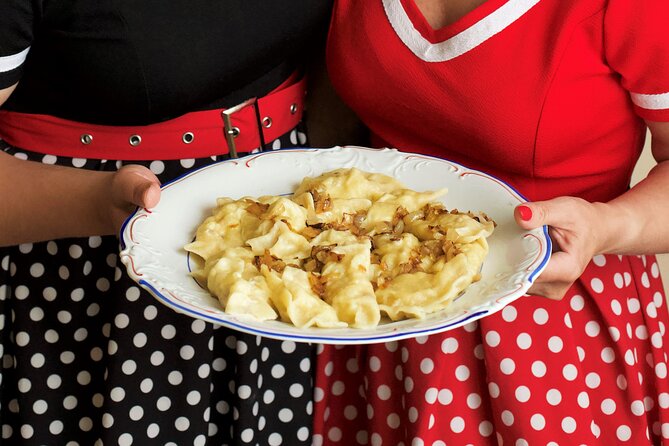
- The filling is traditional and vegetarian: Potatoes, fresh cottage cheese, and caramelized onions form the main mixture.
- You cook in a private apartment: Expect a personal home setting with snacks, conversation, and local advice.
- The group is limited to six people: This suits families, couples, and anyone who prefers direct instruction.
- Sunday bookings are different: The market stop is not included on Sundays.
Starting at the Grunwald Monument
The experience begins at the Grunwald Monument on plac Jana Matejki, a practical meeting point near Krakow’s central area and public transportation. From there, Olga leads the group toward the market rather than sending you straight to the kitchen.
The total experience lasts about three hours, but the pace depends on the group and the amount of time spent shopping and eating. You are not simply passing through a market on the way to class. The shopping is the first lesson, and Olga explains the ingredients as you go.
This beginning helps put pierogi in context. In Poland, a dumpling class makes more sense when you understand the cheese, potatoes, pickles, sausage, and other foods that shape everyday meals. You also get a useful look at ingredients you may want to buy later during your stay.
More pierogi cooking classes in Krakow:
- Krakow Pierogi Cooking Class with Market Visit & Home-Cooked Meal
★ 5.0 · 212 reviews - Pierogi Cooking Class: Mastering the Art of Polish Dumplings
★ 5.0 · 129 reviews - Krakow: Pierogi Home Cooking Class
★ 5.0 · 23 reviews
Shopping at Krakow’s oldest marketplace
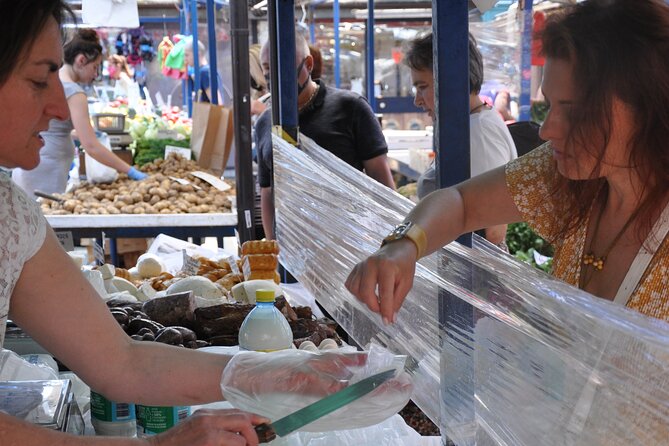
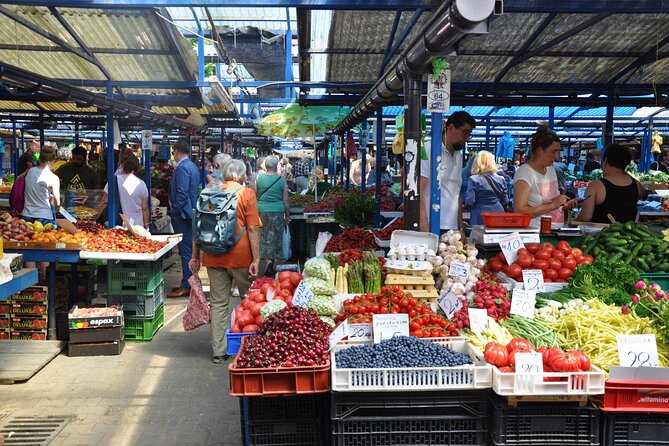
The market visit is one of the strongest parts of the experience. You help buy what is needed for the filling, especially the fresh cottage cheese, and you may taste products that are not part of the final dish.
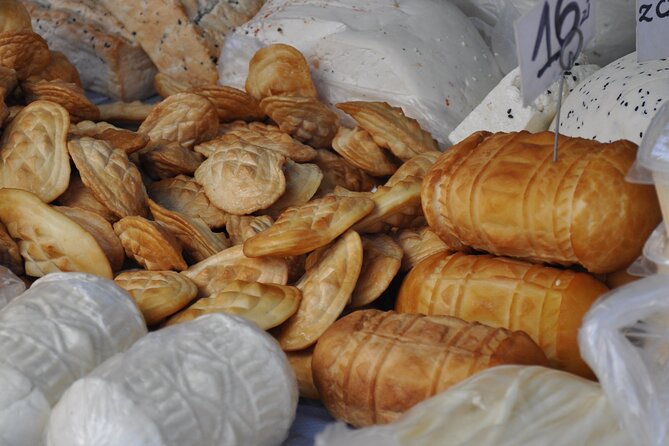
The exact snacks depend on the season. You might try fresh or smoked cheeses, Polish sausage, sour cucumbers, or sour cabbage. One particularly Polish combination described during the experience is bread spread with lard and topped with a pickle. It is simple, salty, and not the sort of thing you are likely to encounter in a standard restaurant meal.
Olga also uses the market to explain differences in cheese and the qualities that work well for pierogi. That matters because the filling is not complicated. With only potatoes, cheese, and onions, the ingredients have nowhere to hide. Good texture and well-seasoned food do most of the work.
You should allow yourself to enjoy this section without trying to rush toward the cooking. It is a chance to learn what to look for if you return to the market alone. Some people also use the visit to note foods they want to buy after class, including cheese, smoked items, pickles, and even a pierogi mold for making fruit-filled dumplings at home.
One limitation is worth noting: the market visit does not take place on Sundays. The class still includes cooking and food, but you lose the market shopping and tasting portion. If that part matters to you, choose another day.
Walking to Olga’s apartment
After shopping, you take a short walk to Olga’s apartment. The walk is described as less than ten minutes, though the exact route and pace can vary. This transition is part of the charm, but it also tells you what kind of experience this is: personal and home-based rather than formal and commercial.
Olga prepares more snacks and drinks in her apartment before the cooking begins. Expect foods such as smoked cheese, sausage, pickles, and other seasonal items. Regional alcohol is also part of the meal, with homemade liquor or a selection of Polish spirits. Several menus include bison-grass-infused vodka, sometimes served in an especially memorable fish-shaped container.
The alcohol is not a separate tasting course with technical instruction. It is part of the social meal and the Polish food setting. If you do not drink alcohol, the food and class remain the main event, but the supplied information does not specify a nonalcoholic substitute. If this matters to you, ask before booking.
The apartment setting has a clear advantage. Olga can show you how she approaches the recipe in a real home kitchen, and the table feels more like a shared meal than a school exercise. It also creates a relaxed chance to ask about Krakow, Polish traditions, restaurants, and places to visit.
The tradeoff is space. A group of four should have a comfortable working arrangement, and the maximum is six, but this is still a private apartment rather than a large teaching kitchen. If you prefer lots of room, modern workstations, and professional equipment, this may not be your ideal cooking class.
Making dough from scratch
The cooking lesson covers the full process rather than only the fun part of folding dumplings. You begin with the dough, learning how to knead it and how to judge the proper consistency.
This is useful because dough is where many first attempts go wrong. It needs to be workable enough to roll but not so soft that it tears when filled. Olga explains what to do and what to avoid while you knead, roll, and cut the dough.
The instruction is hands-on. You are not watching Olga make a perfect batch while you wait for a sample. Each person gets to take part in the process, which means you will see how your own dough behaves and can correct mistakes as you go.
The class is suitable for children as well as adults, provided they can take part in a kitchen activity. A family with children as young as seven found the process accessible, and the limited group size helped Olga give attention to each person. Still, making pierogi requires patience. Folding the first few can be fiddly, and your early dumplings may look less tidy than the later ones.
That is part of the fun, not a flaw in the recipe. Pierogi are shaped by hand, and the small differences make the meal feel made rather than manufactured.
More food tours in Krakow:
- Krakow Food Tasting Tour with Delicious Poland
★ 5.0 · 1,032 reviews - Krakow: Street Food Walking Tour
★ 4.8 · 285 reviews - Half-Day Krakow Food Tour in Old Town and Kazimierz
★ 5.0 · 186 reviews - Krakow: Food Tour of 10 Tastings with Pierogi, Vodka & More
★ 5.0 · 169 reviews
Preparing the potato, cheese, and onion filling
The traditional filling here combines fresh cottage cheese, potatoes, and caramelized onions. This is a classic vegetarian version, often associated with the familiar Polish pierogi ruskie style.
The filling sounds plain, but the preparation has several steps. The potatoes need to be cooked and handled correctly before they are mixed. The onions need time to caramelize, bringing sweetness and depth to the cheese and potatoes.
Because the filling is vegetarian, this class works well for people who want a substantial Polish dish without meat. The market snacks may include sausage and lard, however, so vegetarians should tell Olga in advance if they want to avoid those items. The provided details confirm the main pierogi filling is vegetarian, but they do not promise that every starter is meat-free.
You also learn how the pierogi tradition connects to Polish family cooking. Olga shares food customs and stories about how pierogi are prepared, along with some background on how the dish came to Poland. That makes the recipe more useful after you return home. You are learning a method, not only collecting a meal.
Folding, boiling, and eating your own pierogi
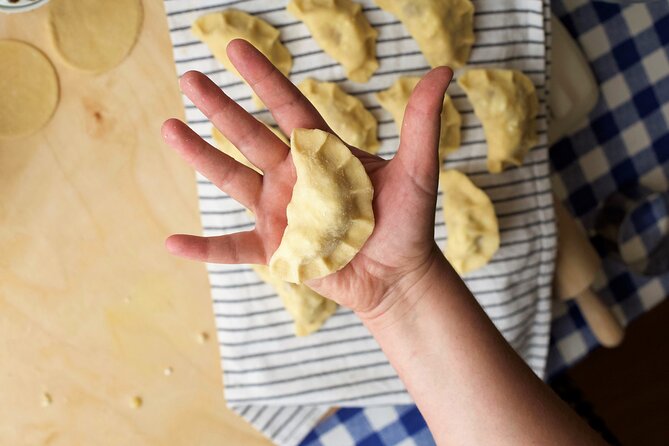
Once the dough and filling are ready, you roll out rounds, add the mixture, and seal each dumpling. Olga demonstrates the pleating technique and helps you understand how much filling to use and how firmly to close the edges.
Do not expect every dumpling to be perfect on the first try. The folding is easy to understand, but it takes a few attempts to build a rhythm. Too much filling makes sealing difficult, while too little leaves you with a thin, dough-heavy bite.
The group then boils the pierogi and serves them with toppings such as sour cream. The meal can be generous. One group made more than 100 pierogi, so you should not plan a large dinner soon afterward.
This is where the class delivers good value. You are not paying only for a recipe card and a small tasting plate. The price is $83.48 per person, and that includes the market stop, ingredients, snacks, the lesson, the finished food, and regional alcohol. In Krakow, that is more than the cost of ordering pierogi in a restaurant, but it also buys about three hours of instruction and personal hosting.
The value is strongest if you want cultural context and a social meal. If you only want to taste pierogi, a restaurant will be cheaper and faster. If you want to learn how to make them for your family and friends, the class makes a stronger case.
Local conversation is part of the meal
Olga’s role is larger than that of a cooking instructor. She talks about Polish food, Krakow traditions, and places to visit. Her local suggestions can be particularly useful early in your stay, when you still need help choosing restaurants and planning your days.
The small group also affects the mood. With a maximum of six people, you have a fair chance to talk with everyone at the table. The class attracts couples, families, and solo participants, so you may meet other people without being placed in a large organized group.
This social side is not forced. You cook together, share snacks, and eat at the same table. If you want a quiet private lesson for just you and your companion, ask about the group arrangement before booking. The experience is small-group, not automatically private.
Several details add personality to the afternoon: Polish sausage and smoked cheese before the meal, stories about family cooking, tips on buying ingredients, and regional vodka served in a playful way. These touches make the class feel connected to daily life rather than built around a generic tourist menu.
Who will enjoy this Krakow cooking class
I would recommend this experience most strongly to:
- Families with children: The steps are practical, the food is familiar, and children can shape the dumplings.
- Couples and friends: You get a meal, a shared activity, and a relaxed way to spend part of an afternoon.
- Solo visitors: The small group gives you an easy setting for meeting people.
- Food-focused visitors: The market and ingredient lessons add value beyond eating at a restaurant.
- Vegetarians: The main pierogi filling contains potatoes, cottage cheese, and onions, though some market snacks may include meat.
- Visitors at the start of a Krakow stay: Olga provides suggestions about food and things to do in the city.
I would think twice if you dislike home-based activities, do not want alcohol around the meal, or need a highly structured professional kitchen. The class is also less complete on Sundays because the market portion is removed.
The experience is offered in English, uses a mobile ticket, and allows service animals. Confirmation is sent within 48 hours of booking, subject to availability. You can cancel for a full refund up to 24 hours before the start time. The activity requires a minimum number of participants, so a cancellation by the operator can result in another date or a full refund.
Is the $83.48 price worth it?
For a simple cooking lesson, $83.48 is not a bargain. For a three-hour food and culture experience that includes market shopping, snacks, drinks, ingredients, instruction, and a full meal, it is a reasonable price in Krakow.
The strongest value comes from the personal setting. Olga teaches the recipe in her own apartment, explains the food as you go, and gives advice you can use for the rest of your visit. You also leave with a technique that can be repeated at home, which makes the experience last longer than the meal itself.
The price is less appealing if your main goal is a quick taste of pierogi. You can order the dish elsewhere for much less. You are paying here for access to the process, the market, the host, and the conversation.
Should you book it?
Book this class if you want to do more than photograph a plate of pierogi. You will shop for ingredients, taste Polish market foods, work with dough, learn a traditional potato and cheese filling, and share the finished meal in a local home.
Choose a non-Sunday date if the market matters to you, and avoid scheduling a large dinner afterward. If you are comfortable with a private apartment, a small shared group, and a generous amount of food, this is one of the more personal ways to get to know Krakow through its cooking.
FAQ
How long does the pierogi cooking class last?
The experience lasts approximately three hours.
Where does the experience begin?
It begins at the Grunwald Monument on plac Jana Matejki, 30-001 Krakow, Poland.
Where does the experience end?
The activity ends back at the meeting point.
Does the class include a market visit every day?
No. On Sundays, the experience takes place without a visit to the food market.
What type of pierogi will I make?
You will make pierogi filled with fresh cottage cheese, potatoes, and caramelized onions.
How many people can join the class?
The activity has a maximum of six participants.
More market visits in Krakow
- Krakow Christmas Market Immersive Tour
★ 5.0 · 6 reviews
Just added around Krakow
- From Krakow: Zakopane Full-Day Tour with Lunch Option★ 4.4 · 62 reviews
- From Krakow: Zalipie and Painted Village Guided Tour★ 4.0 · 4 reviews
- From Krakow: Zakopane and Dunajec River Rafting Tour★ 4.6 · 31 reviews
- From Krakow: Zakopane and the Tatra Mountains★ 4.7 · 36 reviews
- From Krakow: Zakopane and Gubałówka Cable Car Private Tour★ 4.3 · 12 reviews
- From Krakow: Zakopane Tatra Mountains & Hot Springs Tour★ 3.0 · 29 reviews
- From Krakow: Zakopane & Tatra Mountains Tour★ 3.8 · 42 reviews
- Zakopane & Tatra Mountains Private Full-Day Tour from Krakow★ 4.5 · 33 reviews
Krakow Food Tours, compared.
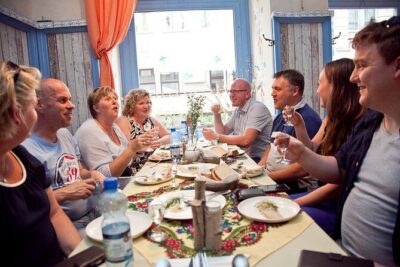
Krakow Food Tasting Tour with Delicious Poland
Read our review →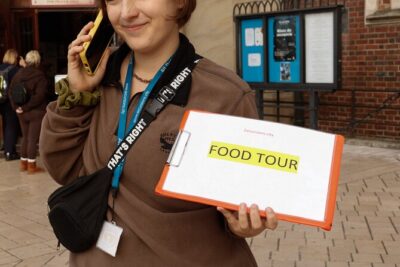
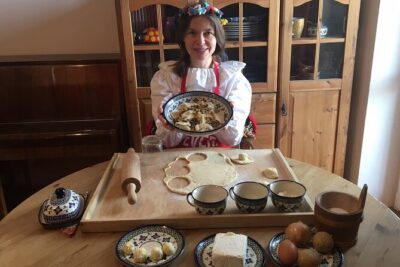
Krakow Pierogi Cooking Class with Market Visit & Home-Cooked Meal
Read our review →
Half-Day Krakow Food Tour in Old Town and Kazimierz
Read our review →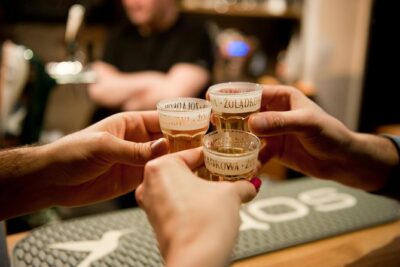
Food Tour of 10 Tastings with Pierogi, Vodka & More
Read our review →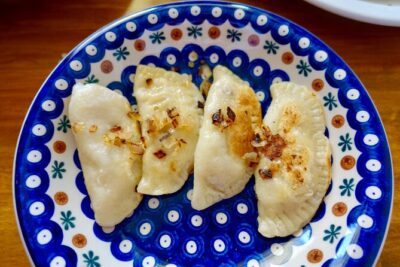
Krakow Food Tour by Foot: Polish Tastings in Old Town & Kazimierz
Read our review →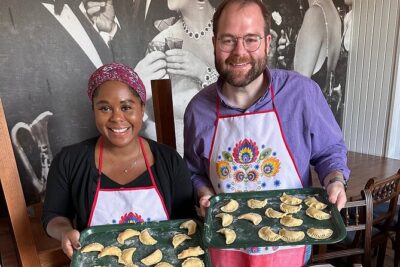
Pierogi Cooking Class: Mastering the Art of Polish Dumplings
Read our review →
6-Course Full Polish Food Tour with Vodka Tasting
Read our review →Browse the lists this tour appears in