
Reviewed · KRAKOW
Highlights & Hidden Gems of Krakow
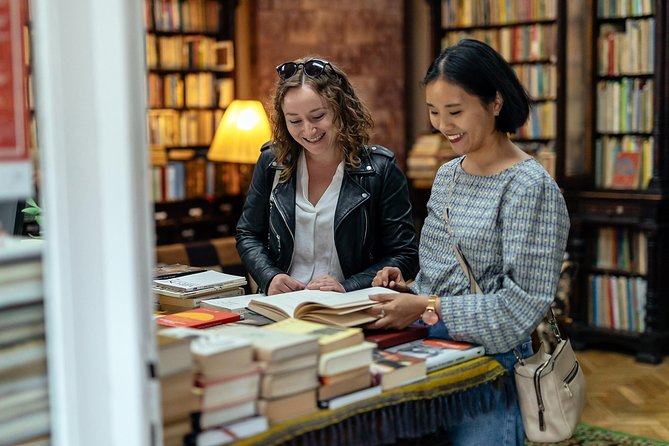
Krakow’s best surprise is how quickly the city changes character. This private tour moves from the familiar Cloth Hall and Wawel Castle to Podgórze streets, the Vistula, an old bookshop that once served as a pharmacy, and an alternative bar known as a hipster hangout. You get the postcard sights, but also a look at places you might miss on your own.
I like the private format, since your guide can answer questions and adjust the conversation to your interests. I also like the mix of famous landmarks and local corners, including a stop for a drink or tasting and a small pierogi restaurant that guide Janina introduced to one guest.
The main concern is pace. Fourteen listed stops over about three hours, with some repeated locations, is ambitious. You will see many places from the outside, but you should not expect long museum visits or detailed interior tours.
Key points to know before booking
- A private three-hour route means only your group and a local guide take part.
- Janina, Tomasz, and Maya are names associated with this experience, with praise for their personal approach and flexibility.
- Wawel Castle, the Cloth Hall, and St. Mary’s Basilica provide the essential Krakow sights.
- Podgórze, Kazimierz, the Vistula, and a former pharmacy-bookshop add less obvious sides of the city.
- One local drink or tasting and transportation are included, while hotel pickup and drop-off are not.
- The tour costs $64, which is strongest value for first-time visitors who want orientation and local advice in one outing.
Starting near Krakow’s old city walls
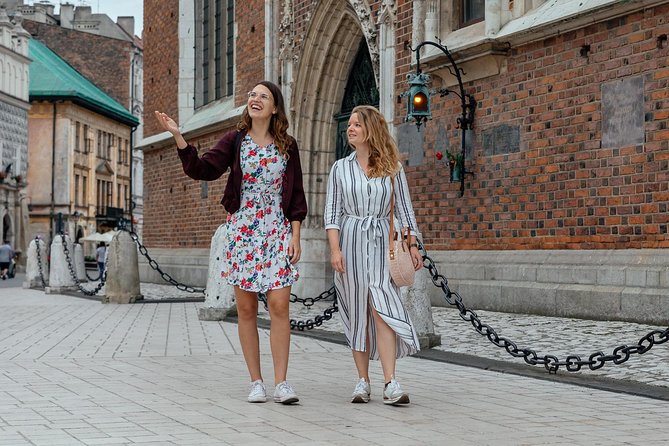
The meeting point is at plac Jana Matejki 30, close to public transportation and the edge of Krakow’s Old Town. That is a useful starting place. You are near the historic center, but not already buried in the crowds of the Main Market Square.
The first stop is the Żywe Muzeum Obwarzanka, where your host introduces the story of obwarzanek. This ring-shaped bread is one of Krakow’s everyday food symbols. The visit is listed at about 15 minutes and has no separate admission charge.
Do not expect a full cooking class unless your guide confirms one on the day. The value here is a quick introduction to a local food tradition before the architecture begins. It also gives you an easy opening to ask your guide what else you should eat during your stay.
Other Krakow days people book alongside this one:
- From Krakow: Auschwitz-Birkenau Guided Tour & Hotel Pickup
★ 4.5 · 33,358 reviews - From Krakow: Auschwitz-Birkenau Guided Tour & Hotel Pickup
★ 4.5 · 29,340 reviews - Krakow: Auschwitz Guided Tour with Optional Hotel Pickup
★ 4.5 · 15,280 reviews
St. Mary’s Basilica and the Main Market Square
The route then heads toward Lost Souls Alley before reaching St. Mary’s Basilica. Lost Souls Alley is a brief pass-by, not a full attraction visit. Its purpose is to show you one of the better-known side streets while keeping the route moving.
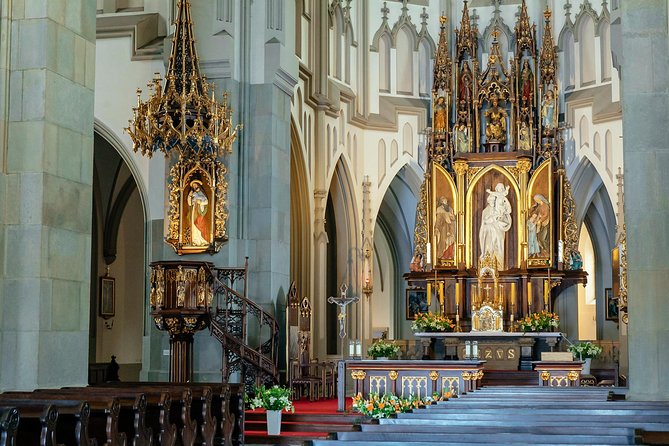
St. Mary’s Basilica receives about 15 minutes. The Gothic church was rebuilt over time and dominates one side of the Main Market Square. You can take in the facade, the square, and the setting, while your guide explains Krakow’s religious and civic traditions.
The short timing matters. This is an orientation stop, not a deep church tour. If you want to study the interior or attend a service, plan a separate visit. The benefit is that you see the basilica in context, alongside the city’s main public square rather than as an isolated monument.
The Cloth Hall and Krakow’s trading heart
Sukiennice, or the Cloth Hall, is one of Krakow’s most recognizable buildings. It once served as a center for international trade and now anchors the Main Market Square. The building forms part of Krakow’s UNESCO-listed historic center.
The tour allows about 15 minutes here. That is enough to understand why this long Renaissance market building matters and to look at the arcades, but it leaves little time for a careful browse of the stalls inside.
I like this stop because it gives you a useful contrast with Wawel. The Cloth Hall represents commerce and the daily life of the square. Wawel represents royal power. Seeing both in one short route helps you read Krakow as more than a collection of pretty buildings.
Wawel Castle, Krakow’s royal symbol
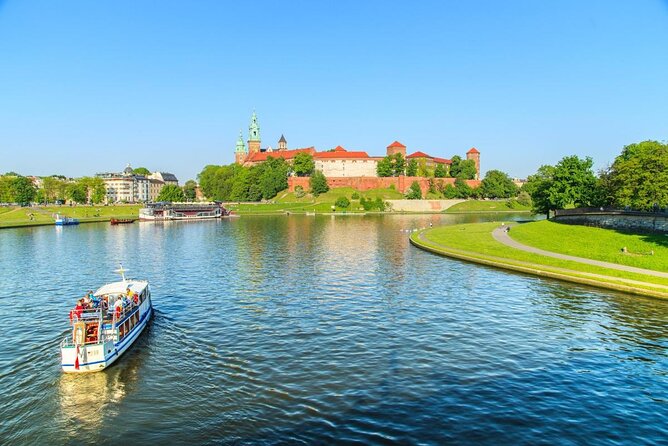
Wawel Royal Castle gets the longest single visit in the first part of the route, about 30 minutes. It is described as roughly 1,000 years old and served as a royal residence for almost five centuries. Perched above the Vistula, the complex is the city’s grandest historic sight.
Again, this is a guided look rather than a ticketed tour of the state rooms or exhibitions. The tour information lists no admission fees, and the experience does not promise entry into the castle interiors. If you want the full Wawel experience, including museum collections, you will need extra time and separate tickets.
That limitation is not a dealbreaker. For a first look, a guide can explain why Wawel matters, point out the main parts of the complex, and help you understand Krakow’s place in Polish history. The 30-minute stop also gives you more breathing room than the shorter city-center pauses.
Same city, a completely different sort of day:
- Krakow–Zakopane: Cable Car, Chocholow Baths, Cheese & Vodka
★ 5.0 · 10,720 reviews - Krakow: Auschwitz-Birkenau Guided Tour with Pickup & Lunch
★ 4.5 · 9,800 reviews - From Krakow: Wieliczka Salt Mine Tour
★ 4.6 · 9,393 reviews - Krakow: Auschwitz-Birkenau Guided Tour Pickup/Lunch Options
★ 4.5 · 9,057 reviews
Along the Vistula and toward the old pharmacy-bookshop
After Wawel, the route moves toward the Vistula River. The river stop takes about 15 minutes and offers a change of pace from churches, market buildings, and castle walls. You get a sense of how the river fits into Krakow’s layout and daily life.
The route then passes the Museum of Japanese Art and Technology. The museum itself is a pass-by, but the more unusual stop is an old bookshop that was once a pharmacy. This is exactly the sort of detail that makes a private city walk useful. You may pass an attractive doorway by yourself without knowing its earlier purpose.
The schedule gives this section about 10 minutes. That tells you to expect a quick look and an explanation, not a long browse through the museum or bookshop. Still, the former pharmacy is one of the tour’s most distinctive details, especially if you enjoy places with a layered past.
An alternative bar near ICE Krakow
Near the ICE Krakow Congress Center, the route includes a break at an alternative bar described as a paradise for hipsters. The stop lasts around 15 minutes and is tied to the included local drink or tasting.
This is a smart feature in a short walking tour. You get a chance to sit or pause, and your guide can point out a part of Krakow’s current social scene rather than focusing only on monuments. The exact drink is not specified, so ask your guide what is included and whether you can choose an alcohol-free option.
The stop also helps break up the route. A three-hour private tour with many locations can feel rushed without a pause. Just remember that the bar is an atmosphere stop, not a long meal. One separate food experience connected with this tour was a very small pierogi restaurant recommended by Janina. That kind of suggestion may be as useful as the formal sightseeing.
Podgórze, art schools, and Bednarski Park
The itinerary then crosses into Podgórze. It passes Krakowskie Szkoły Artystyczne and gives you about 10 minutes to look at a street in the district. This is not a museum visit. It is a chance to see a different urban mood and hear how the area fits into Krakow today.
Bednarski Park follows as another 15-minute pass-by. The park is presented as somewhere you can return to later, rather than a full stop for a long walk. That is practical advice. If you enjoy green spaces, keep the location in mind for a quieter visit after the tour.
Podgórze is one reason this experience is more useful than a standard Old Town circuit. You are not simply repeating the same square and castle views. You are moving through districts with different identities, and a local guide can explain the links between them.
St. Joseph’s Church and Podgórski Square
The route ends its Podgórze section at the Church of St. Joseph and Podgórski Square. The visit is listed at about 30 minutes, making it one of the more substantial stops.
Podgórski Square and the church were once the center of Podgórze, which became part of Krakow in 1915. That local political detail gives the area more meaning than a quick photograph would. You can look at the church, understand the square’s former civic role, and ask your guide how the district changed when it joined the larger city.
This is also a useful place to judge the tour’s character. If you want only the major monuments, this section may feel like a detour. If you like seeing how a city grew beyond its medieval core, it is one of the stronger parts of the route.
Kazimierz and the Corpus Christi Basilica
The Corpus Christi Basilica is in Kazimierz, Krakow’s historic Jewish quarter. The Gothic church was founded by King Casimir III the Great in 1335. The visit is scheduled for about 15 minutes.
The itinerary does not promise a detailed tour of Kazimierz, but including the basilica gives you a glimpse of the district’s Christian heritage alongside its better-known Jewish history. Ask your guide how the church fits into the wider story of Kazimierz, since the short stop alone cannot explain the whole neighborhood.
This part of the route may also connect with food advice. One piece of local dining feedback points to a steak restaurant in Kazimierz, while another guide-led outing included a small pierogi place. These recommendations are not included meals, but they show how the private format can help you build a useful dinner plan.
Forum Przestrzenie and the return route
Forum Przestrzenie is a laid-back venue in a raw concrete building, with burgers and live music. The stop takes about 15 minutes. Its industrial setting and casual food offer another sharp change from the castle and Gothic churches.
The tour then lists Wawel Castle and the Cloth Hall again, each for about 15 minutes, before returning to the meeting point. These repeated entries may reflect the return route or viewpoints revisited from another direction. You should confirm the exact sequence with your guide, especially if you are planning another appointment afterward.
The return to familiar sights has one advantage: you may understand them better after seeing the river and outer districts. The drawback is that the listed route sounds longer than a normal three-hour walk. Transportation is included, which helps, but the experience still calls for moderate physical fitness.
What the $64 price buys you
At $64, this is not simply a monument checklist. You are paying for a private guide, local interpretation, transportation, and one local drink or tasting. There are no separate admission charges listed for the stops, but the experience also does not include hotel pickup, drop-off, or full entry to museum collections.
The price makes the most sense for two kinds of visitors. First, it suits a couple, family, or small group that wants a private introduction without joining a large party. Second, it works for someone with limited time who wants a broad sense of Krakow before choosing which places deserve a longer return visit.
For a solo visitor, $64 may feel less attractive because the private rate is not spread across several people. For a group, the value improves. Group discounts are available, so check the final price for your party before booking.
Guide quality and the private format
The strongest part of this experience is the guide relationship. Janina is associated with a flexible Old Town and district tour, including detailed answers and a stop at a small pierogi restaurant. Tomasz is praised for covering Krakow in nearly three hours while explaining the places along the way. Maya is associated with a much longer walking day split into two sessions, suggesting that the route can adapt when you want more time.
These names do not guarantee who will lead your tour, but they help set expectations. You should use the private format actively. Ask for food advice, request more context about Podgórze or Kazimierz, and tell the guide if you prefer architecture, local customs, or daily life.
The guide’s style matters more here than on a standard bus ride. Many stops are brief, and a clear explanation is what turns a pass-by into something memorable.
Timing, walking, and practical limits
The tour lasts about three hours and requires moderate physical fitness. You should expect a great deal of movement, even though transportation is included. Wear comfortable shoes and keep your schedule open after the tour if you want to revisit Wawel, the Cloth Hall, Bednarski Park, or the museums.
Monday may not be the best day if you want museum interiors. One French-language comment specifically advises taking the tour early in your stay, but not on Monday, because too many museums may be closed. That is good advice even if you plan to focus mainly on outdoor sights. A private guide can still explain the city, but closed museums limit your options for returning indoors.
Booking early in your stay has another advantage. You can use the guide’s restaurant and neighborhood advice for the rest of your visit. Free cancellation is available up to 24 hours before the start time, while cancellations inside that window are not refunded.
Should you book Highlights & Hidden Gems of Krakow?
Book it if you want a private introduction that combines Wawel, St. Mary’s Basilica, and the Cloth Hall with Podgórze, the Vistula, Kazimierz, an old pharmacy-bookshop, and a local drink. It is especially useful for a first visit, a short stay, or a small group that values direct access to a guide.
Skip it if your main goal is lengthy interior visits, detailed museum touring, or a slow meal. The schedule covers a lot, and several stops are brief pass-bys. At $64, the experience earns its keep through the private guide, route variety, transport, and practical local advice. For the best result, book near the start of your Krakow stay, avoid Monday if museums matter, and ask in advance how the route will be tailored to your group.
FAQ
How long does the Krakow tour last?
The tour lasts approximately three hours.
Is this a private tour?
Yes. Only your group and the local guide participate.
What sights are included?
The route includes St. Mary’s Basilica, the Cloth Hall, Wawel Royal Castle, the Vistula, Podgórze, the Church of St. Joseph, the Corpus Christi Basilica, and other listed stops.
Does the tour include museum admission?
No museum admission is listed as included. The stops at the Museum of Japanese Art and Technology and other sites are described as pass-bys or brief visits.
Is a drink or tasting included?
Yes. One local drink or tasting is included.
Is transportation included?
Yes, transportation is included during the experience.
Does the tour provide hotel pickup and drop-off?
No. Hotel pickup and drop-off are not included.
Where does the tour start?
It starts at plac Jana Matejki 30, 31-156 Kraków, Poland.
Where does the tour end?
The activity ends back at the meeting point.
Can I cancel for a full refund?
Yes, if you cancel at least 24 hours before the experience start time. Cancellations made less than 24 hours before the start time are not refunded.
Just added around Krakow
- From Krakow: Zakopane Full-Day Tour with Lunch Option★ 4.4 · 62 reviews
- From Krakow: Zalipie and Painted Village Guided Tour★ 4.0 · 4 reviews
- From Krakow: Zakopane and Dunajec River Rafting Tour★ 4.6 · 31 reviews
- From Krakow: Zakopane and the Tatra Mountains★ 4.7 · 36 reviews
- From Krakow: Zakopane and Gubałówka Cable Car Private Tour★ 4.3 · 12 reviews
- From Krakow: Zakopane Tatra Mountains & Hot Springs Tour★ 3.0 · 29 reviews
- Zakopane & Tatra Mountains Private Full-Day Tour from Krakow★ 4.5 · 33 reviews
- From Krakow: Hot Springs and Zakopane with Gubałówka★ 4.7 · 25 reviews