Reviewed · TOURS
Kraków Holocaust Tour
Kraków’s former Jewish ghetto is unusual because so much of its wartime layout and architecture remains. This two-hour walking tour uses those surviving streets, buildings, wall fragments, and public spaces to explain how the Nazi ghettos functioned and what daily life looked like for the people trapped inside.
I like two things here: the tour covers the ghetto as a whole, rather than stopping at one famous square, and it connects physical places with the machinery of occupation, including labor offices, hospitals, police agencies, prisons, factories, and orphanages. I also like that a guide trained in Geography and History leads the walk in Spanish. The main consideration is the subject itself. This is a serious Holocaust tour, not a light sightseeing stroll, and two hours of walking can feel demanding in comfortable shoes, especially while taking in difficult material.
- See the two surviving fragments of the ghetto wall, useful for understanding the physical limits imposed on residents.
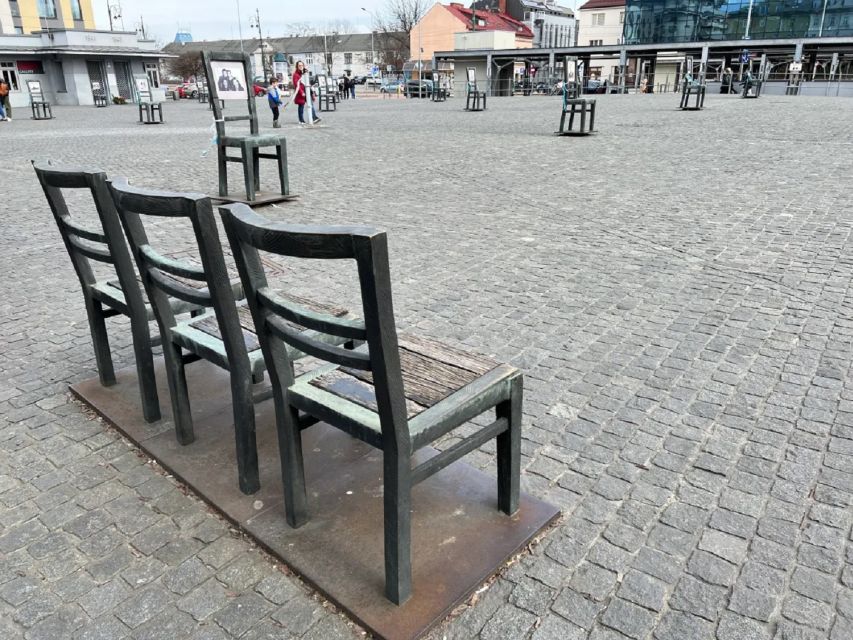
- Walk through Ghetto Heroes Square, known for its rows of empty chairs that recall the people forced from their homes.
- Trace the places that made the ghetto operate, from Judenrat offices and labor organizations to hospitals, prisons, and police agencies.
- Learn how daily life was controlled, including work, housing, medical care, family life, and movement.
- Finish at the Pharmacy Under the Eagle, one of Kraków’s key museums connected with the ghetto.
- Join a Spanish-language walking tour for $16 per person, with a gray umbrella identifying the guide.
Why Kraków’s Former Ghetto Feels Different
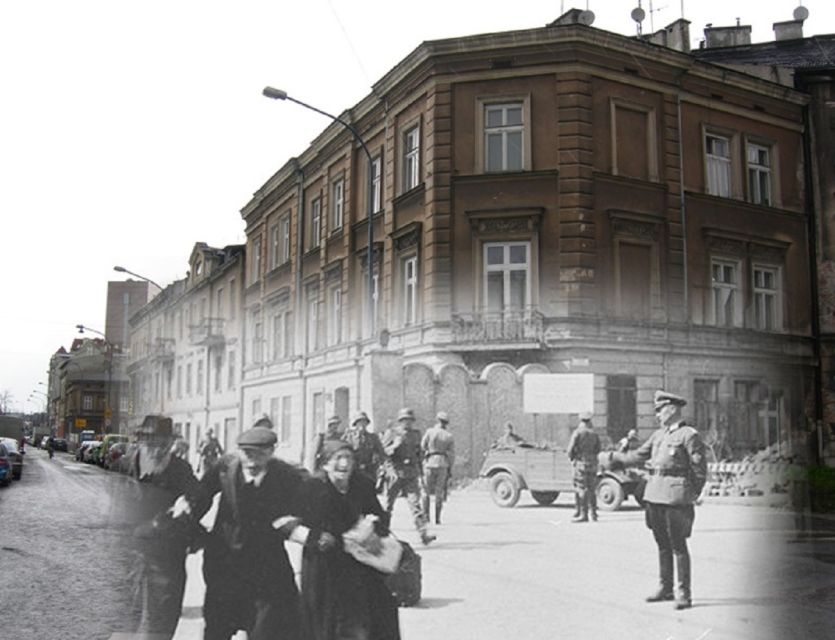
Many Holocaust sites rely heavily on exhibitions, memorials, and reconstructed settings. Here, the streets themselves do much of the teaching. The former Kraków ghetto has retained many of its old houses and institutional buildings, so you can see the setting in which the Nazi occupation unfolded.
That does not mean every building looks exactly as it did during the war, or that every stop is an intact museum. The value is in the pattern. A wall fragment, a former office, a hospital site, a factory, and a square make more sense when viewed together. The guide’s job is to explain how these parts worked as one system.
The district is described as having kept much of its gloomy appearance from the years 1941 to 1943. That visual continuity can be powerful, but it also means you should arrive ready for a sober experience. The tour deals with forced confinement, persecution, labor, illness, separation, and the Nazi plan to murder Europe’s Jews. It is not designed to soften the subject.
Starting With the Ghetto Walls
The two surviving fragments of the wall are an important first stop. They make the idea of confinement concrete. Instead of hearing only that the Nazis created ghettos, you see the physical barrier that divided the district from the rest of Kraków.
The guide explains the purpose of the ghetto system and how Kraków’s example compared with other ghettos in occupied Poland. The point was not simply to create a poor neighborhood. The ghettos were tools of control, separation, exploitation, and eventual destruction.
You will want comfortable shoes because this is a walking route rather than a bus tour. The supplied meeting-point instruction is simple: look for the guide carrying a gray umbrella. No guide name is provided, so the umbrella matters more than searching for a particular person.
More World War II tours in Krakow:
- Krakow World War II Private Tour
★ 5.0 · 16 reviews - Krakow: 2h World War II, visiting the Ghetto walking tour
★ 4.2 · 7 reviews - World War II in Krakow Walking Tour in English
★ 5.0 · 6 reviews
Ghetto Heroes Square and the Empty Chairs
Ghetto Heroes Square is one of the most recognizable places on the route. It is also called the Square of Chairs because of the chair installation spread across the open space. The chairs create a stark image of absence, suggesting homes left behind and people removed from ordinary life.
A good explanation here should connect the square to the practical workings of deportation and forced movement, not treat it as a quick photo stop. The tour is built to ask what happened to the people who lived in this district, how they were organized, and how the occupation authorities managed them.
The square is likely to be one of the most emotionally direct parts of the walk. If you prefer to spend time quietly at memorials, remember that the full route continues through many other locations. Two hours gives the guide enough time to explain the area, but not enough time for long private pauses at every stop.
Seeing the Offices Behind Daily Control
The tour focuses on the less visible structure of ghetto life as well as the memorial sites. You will learn about the Judenrat, the Jewish council forced to administer parts of daily life under German orders. You will also see or discuss the location of labor organizations, police agencies, and other administrative buildings.
These stops matter because they show how occupation worked through paperwork, rules, work assignments, policing, and enforced cooperation. A ghetto was not controlled only by a wall and armed guards. It required offices, records, instructions, and people compelled to carry out orders under impossible conditions.
The itinerary also includes buildings connected with intellectual meetings and resistance. That gives the tour a wider frame. People in the ghetto were not simply passive figures in a tragic story. They tried to preserve community life, organize, work, resist, and care for one another while facing increasingly brutal restrictions.
You should not expect to enter every building named along the route. Some are locations viewed from outside or explained from the street. Their importance comes from what they reveal about the district’s former organization.
Hospitals, Prison, Factories, and Orphanages
The route includes the sites of hospitals, a prison, factories, and orphanages. Together, these places help explain the uneven and difficult reality of life inside the ghetto.
A hospital points to illness, overcrowding, and the struggle to provide care under occupation. A prison shows the threat of punishment and surveillance. Factories connect the ghetto to forced labor and the economic interests of the Nazi system. Orphanages bring the human cost into sharp focus, particularly for children separated from normal family life.
These are the kinds of details that can be missed on a short memorial visit. You may remember the major names and dates, but understanding the ghetto also means asking ordinary questions. Where did people work? How were sick people treated? Who handled administration? How were children housed? Which buildings were used to police the population?
The tour promises a look at these practical systems without turning the walk into a dry lecture. The strongest feedback about the guide points to clear explanations, an engaging manner, and broad command of the subject. That balance matters here. The material needs care and precision, but a guide who simply recites dates would make the experience harder to follow.
Same city, a completely different sort of day:
- From Krakow: Auschwitz-Birkenau Guided Tour & Hotel Pickup
★ 4.5 · 33,358 reviews - From Krakow: Auschwitz-Birkenau Guided Tour & Hotel Pickup
★ 4.5 · 29,340 reviews - Krakow: Auschwitz Guided Tour with Optional Hotel Pickup
★ 4.5 · 15,280 reviews - Krakow–Zakopane: Cable Car, Chocholow Baths, Cheese & Vodka
★ 5.0 · 10,720 reviews
The Synagogue, Factories, and Places of Community
A synagogue on the route helps place the ghetto within the older Jewish life of Kraków. The tour is not limited to the period of Nazi control. By identifying religious, social, and community buildings, it gives you a sense of what existed before the ghetto was imposed and how those spaces were affected.
Factories add another layer. Work could offer a degree of protection for some people, but it also tied survival to the demands of the occupation. The guide can use these locations to explain why employment, registration, and labor assignments mattered so much in the ghetto system.
The walk also includes former meeting places and sites linked with resistance. These stops prevent the story from becoming only a list of Nazi institutions. They point to the choices people tried to make in conditions where the range of choices was shrinking by the day.
Because the tour is only two hours, the treatment will necessarily be selective. You will get a connected overview of the whole district rather than a long specialist study of one building or one family. That is a strength if you want orientation before visiting museums on your own, but less useful if you already know Kraków’s ghetto well and want archival detail.
The Pharmacy Under the Eagle as the Final Stop
The walk finishes at the Pharmacy Under the Eagle, one of Kraków’s most important museums on the Holocaust and ghetto period. Ending here makes good sense. After seeing the district from the street, you reach a place where the story can be examined through a dedicated museum setting.
The pharmacy is especially useful as a final stop because it links a familiar everyday business with the extraordinary pressure of life under occupation. A pharmacy was not just a shop in this setting. It became connected with people living under persecution and with the wider story of the Kraków ghetto.
The information provided for the tour does not state that museum admission is included. The listed inclusion is the graduate guide in Geography and History, while food and drinks are not included. If entering the museum is important to you, check the booking details for any admission arrangement before you pay.
Do not treat the pharmacy as a substitute for the walking route. Its value is stronger after you have seen the walls, square, offices, and other locations. The street walk gives the district scale. The pharmacy gives the final stop a more focused setting.
What the $16 Price Delivers
At $16 per person, this is an inexpensive guided history walk. The value comes from the guide’s interpretation rather than transport, meals, or a large number of included attractions. You are paying for two hours of organized explanation in a district where many important places can be easy to overlook.
I think that is a fair price for someone visiting Kraków for the first time and wanting a structured introduction to the former ghetto. The claim that this is the only Kraków tour covering the old ghetto in its entirety is a strong selling point, though you should understand entirety as a full district walk with many locations explained, not a guarantee that every site is open for entry.
The tour has a 4.9 out of 5 score from five bookings. The most consistent praise concerns the guide: the walk is described as very interesting, clear, and made enjoyable to follow despite the difficult topic. One Spanish-speaking guide was also praised for being well informed across many subjects. Since no individual guide name is supplied, you should book based on the Spanish-language format and the route rather than a named-person guarantee.
Practical Details for a More Comfortable Walk
The activity lasts two hours and is offered in Spanish. It is listed as wheelchair accessible, which is useful information for planning, though the route remains a walk through an urban district and the exact condition of every surface is not specified.
Wear comfortable shoes. That advice is especially important because the tour covers the former ghetto in an extensive way rather than concentrating on one square. Bring only what you need for the walk, and allow mental space for a demanding subject.
The meeting point is identified by the guide’s gray umbrella. This is a small detail, but it is the sort of practical marker that can save time in a busy city. The activity also allows cancellation up to 24 hours before the start for a full refund, and you can reserve now and pay later, which helps if your Kraków schedule is still changing.
Food and drinks are not included. Two hours is short enough that you probably do not need a meal break during the tour, but plan water around it if you are walking in warm weather.
Who Will Get the Most From This Tour
I would choose this tour if you want more than a quick visit to Ghetto Heroes Square. It suits first-time visitors, Spanish-speaking travelers, students, and anyone who wants the former ghetto explained as a working system rather than a collection of memorials.
It is also a good fit if you value place-based learning. Seeing the wall fragments, administrative sites, hospitals, factories, prison, synagogue, orphanages, and pharmacy in one route gives you a clearer sense of how the district operated.
You may want a different plan if you prefer a quiet, self-guided visit with long periods for reflection. A two-hour guide-led walk has a set pace, and the serious subject matter leaves little room for casual sightseeing. It may also feel too brief for anyone seeking detailed museum research or an extended focus on individual testimonies.
Should You Book the Kraków Holocaust Tour?
Book it if you want a reasonably priced, Spanish-language walk that covers the former Kraków ghetto from wall fragments to the Pharmacy Under the Eagle. The strongest reason to choose it is the combination of full-district coverage and a guide who explains how the ghetto worked in daily life.
Skip it if your main goal is a relaxed city walk or if you want every stop to include indoor access. This is a focused Holocaust experience, and you should approach it with time, comfortable shoes, and attention. For the right visitor, $16 buys a useful framework for understanding one of Kraków’s most important and difficult districts.
FAQ
Where does the Kraków Holocaust Tour take place?
The tour takes place in the former Kraków Jewish ghetto in Lesser Poland, Poland. It covers the district’s surviving walls, squares, buildings, and historic locations.
How long does the tour last?
The walking tour lasts two hours.
What language is the tour offered in?
The live tour guide speaks Spanish.
What does the tour include?
The tour includes a graduate guide in Geography and History. It does not include food or drinks.
Is the Pharmacy Under the Eagle part of the route?
Yes. The tour finishes with a visit to the Pharmacy Under the Eagle, an important Kraków museum connected with the ghetto and Holocaust period. The available information does not state that museum admission is included.
Is the tour wheelchair accessible?
Yes, the activity is listed as wheelchair accessible. Comfortable shoes are recommended because the experience covers the former ghetto on foot.
Just added around Krakow
- From Krakow: Zakopane Full-Day Tour with Lunch Option★ 4.4 · 62 reviews
- From Krakow: Zalipie and Painted Village Guided Tour★ 4.0 · 4 reviews
- From Krakow: Zakopane and Dunajec River Rafting Tour★ 4.6 · 31 reviews
- From Krakow: Zakopane and Gubałówka Cable Car Private Tour★ 4.3 · 12 reviews
- From Krakow: Zakopane Tatra Mountains & Hot Springs Tour★ 3.0 · 29 reviews
- From Krakow: Zakopane and the Tatra Mountains★ 4.7 · 36 reviews
- Zakopane & Tatra Mountains Private Full-Day Tour from Krakow★ 4.5 · 33 reviews
- From Krakow: Hot Springs and Zakopane with Gubałówka★ 4.7 · 25 reviews
Tours, compared.
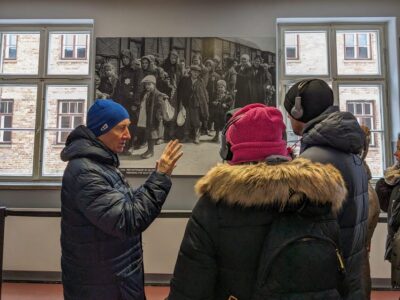
Auschwitz-Birkenau Guided Tour & Hotel Pickup
Read our review →Auschwitz-Birkenau Guided Tour & Hotel Pickup
Read our review →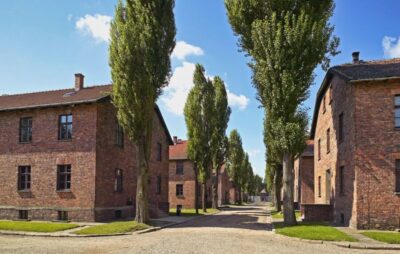
Auschwitz Guided Tour with Optional Hotel Pickup
Read our review →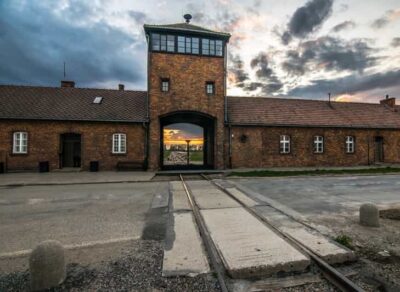
Auschwitz-Birkenau Guided Tour with Pickup & Lunch
Read our review →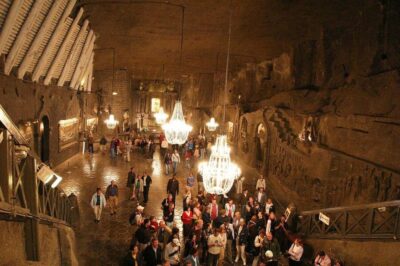
Auschwitz-Birkenau Guided Tour Pickup/Lunch Options
Read our review →