
Reviewed · SCHINDLER'S FACTORY TOURS
Krakow: Schindler’s Factory and Jewish Ghetto Guided Tour
The most powerful part of this tour comes after you leave the museum. In Podgórze, ordinary streets, surviving walls, and the 68 Empty Chairs memorial make the story of Krakow’s Jewish Ghetto feel close and human. You are not just looking at wartime exhibits. You are walking through the places where people were forced to live.
I like the way the tour joins Schindler’s Factory with the neighborhood around it, and I like having a guide to explain what the museum displays do not always make clear. Guides such as Helena, Christopher, Ela, and Joanna have brought strong historical knowledge and personal family connections to different groups. The main drawback is that the museum portion can feel crowded, with narrow corridors and audio equipment that has not worked well for every group.
Key points to know before booking
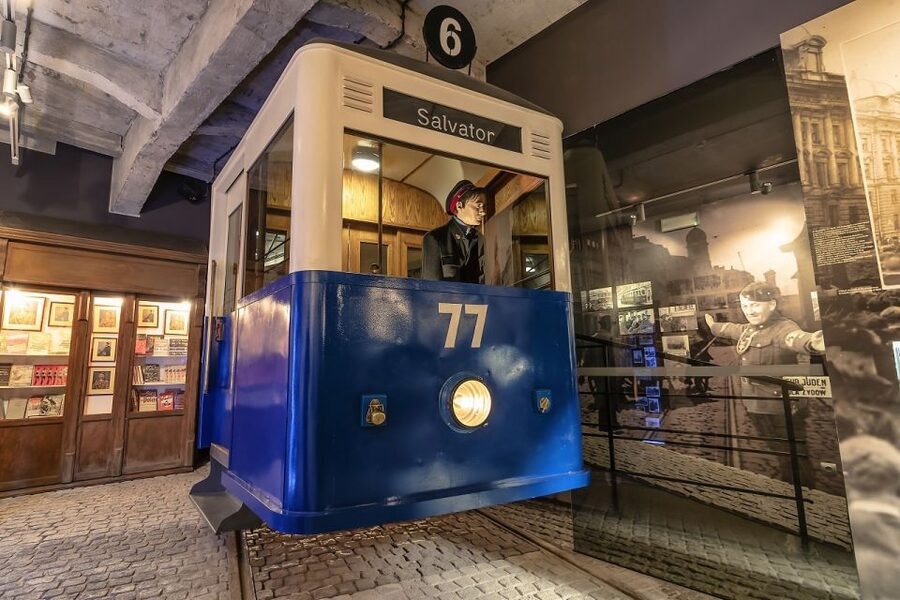
- The tour combines two experiences: about 1.5 hours inside Schindler’s Factory followed by roughly an hour walking through Podgórze.
- The ghetto walk adds real context: you see part of the original wall, former Jewish homes, the pharmacy Under the Eagle, and the 68 Empty Chairs.
- Guide quality matters here: the experience depends heavily on clear storytelling, and guides including Helena, Christopher, Ela, and Joanna have led memorable tours.
- Museum groups may be large: narrow corridors can make it hard to stop at every display, though headsets help when they work properly.
- Choose daylight if you can: a late afternoon tour can put the outdoor walk in darkness, especially in December.
- The $58 price covers the guide, museum entry, and walking tour: that is fair value if you want explanation rather than a quick museum visit alone.
Why Schindler’s Factory works best with a guide
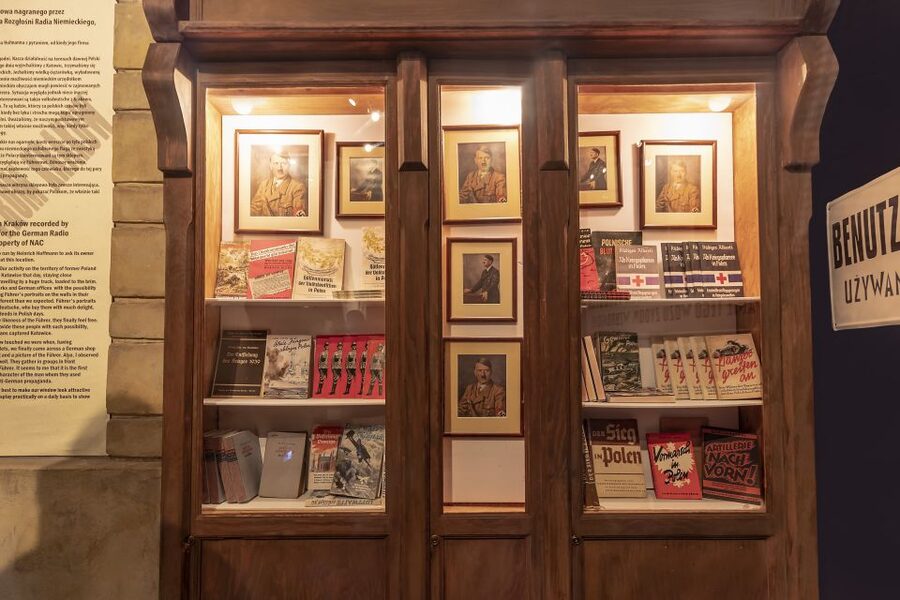
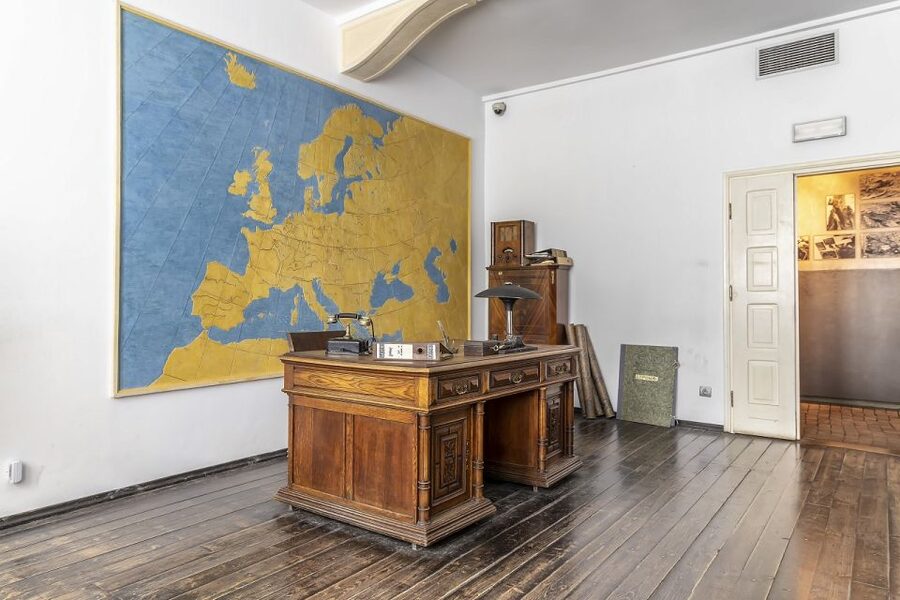
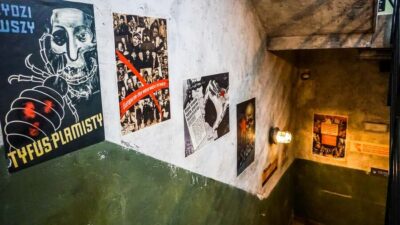
Schindler’s Factory is not a simple house museum devoted only to Oskar Schindler. It presents Krakow during the Second World War, including the Nazi occupation, daily life, displacement, and the fate of the city’s Jewish population. That wider setting matters because Schindler’s story makes little sense without the system around him.
Your guide meets you at the entrance to Oskar Schindler’s Enamel Factory Museum. After entering, you follow a museum tour that connects the factory to the people who worked there and to the wider events in Krakow. The factory was used to protect Jewish workers, but the tour also places Schindler’s actions within the harder facts of occupation and persecution.
I like having a guide for this museum because the displays can be dense. You may see documents, photographs, objects, and recreated settings without instantly knowing why each one matters. A good guide supplies the missing links and keeps the story moving.
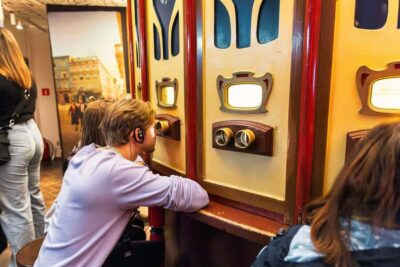
That said, a guide cannot solve every museum problem. The corridors are narrow, and one group found that a large party had to keep moving before everyone could take in each display. Headsets are intended to help, but the audio controls did not work well for one group, and eventually people stopped using them. Your experience will depend partly on the group size and how well the equipment functions that day.
More Jewish Ghetto tours in Krakow:
- Krakow: Schindler’s Factory & Ghetto Guided Tour
★ 4.7 · 1,694 reviews - Krakow: Jewish Quarter and Former Ghetto Tour
★ 4.9 · 1,441 reviews - Krakow: Bike Tour of Old Town, Jewish Quarter and the Ghetto
★ 4.9 · 1,155 reviews
Following Schindler’s story beyond the film
The tour explains the real events that later inspired Steven Spielberg’s Schindler’s List. It is useful to approach this part with some care. The film gives Schindler’s story a strong emotional shape, while the museum and guide place him in the complicated setting of wartime Krakow.
You learn about Schindler as a German entrepreneur and about the Jewish people who worked in his factory. The focus is not simply on a heroic character. It is also on the daily choices, dangers, and restrictions faced by people living under Nazi occupation.
Several guides have made this part especially personal. Christopher was described as passionate about the history, while Ela brought a strong connection to the city and its past. Helena has also led tours with a personal family connection to the Holocaust. That kind of first-person link can make the material feel immediate, though it also means the tour may carry a strong emotional weight.
I would not book this as a light sightseeing stop. The subject is painful, and the walking tour deals directly with forced displacement, confinement, and murder. You should allow yourself time afterward rather than planning a rushed meal or another major attraction right away.
The museum visit, about 90 minutes inside the factory
The indoor part lasts around an hour and a half. You move through the factory museum with the guide, hearing about wartime life, Krakow under occupation, and the role of Schindler’s factory.
This is the most information-heavy part of the experience. You will likely get more from it if you listen closely to the guide rather than trying to photograph every display. The tour format helps you understand the connection between individual objects and the larger story.
One useful point is that the museum does not only explain what happened to Jewish workers inside the factory. It also presents life in Krakow before the Nazi invasion, the occupation itself, and the later Russian occupation. A guide can show how those changes affected the city in stages.
The main tradeoff is time. One person wanted more time inside the factory, while another felt the large group had to move on before seeing everything. The tour must keep to schedule because the outdoor portion follows, so you should not expect a slow museum study session.
If you already know the subject well, you may prefer visiting the museum independently. If you want help sorting out names, dates, places, and cause and effect, the guided format is more useful. I would especially choose the guide if this is your first visit or if you have not studied Krakow’s wartime history beforehand.
Podgórze and the Jewish Ghetto
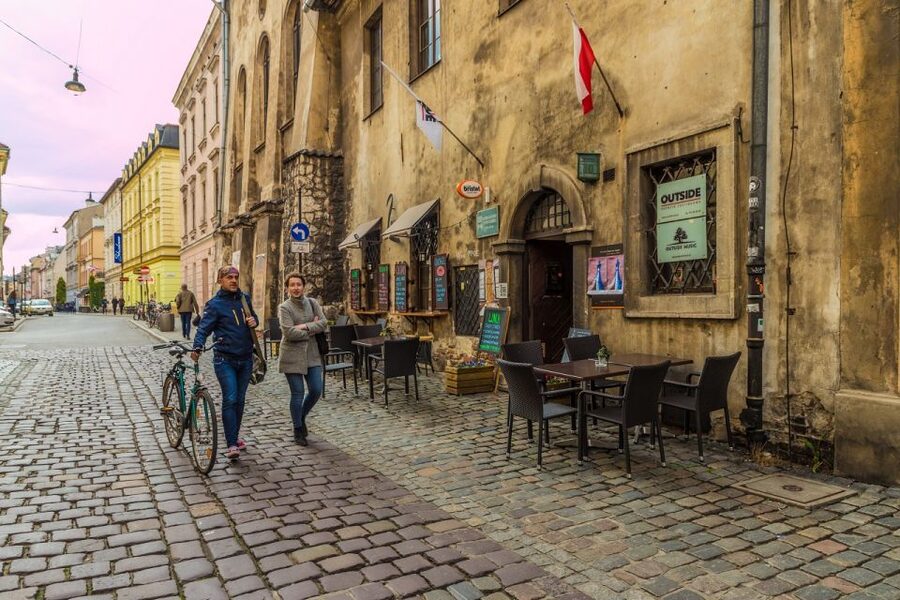
After the museum, the tour continues into Podgórze, the district where the Jewish Ghetto was established during the Nazi occupation. This is where the experience shifts from museum interpretation to direct contact with the city streets.
You see part of the original wall that surrounded the ghetto. You also pass houses where thousands of displaced Jews were forced to live. These are not grand monuments. Their value is in their ordinariness. The buildings and streets help you picture how confinement was imposed on a real neighborhood.
The walking route gives the museum story a physical setting. Inside, you hear about policies and people. Outside, you see the spaces that shaped daily life. That combination is the strongest reason to book the full tour instead of visiting Schindler’s Factory alone.
The walk lasts about an hour and uses the streets of Podgórze rather than a vehicle. Wear comfortable shoes, since the tour involves continuous walking. No food or drinks are included, so plan a break before or after if you need one.
The time of day matters. One tour began at 2:30 p.m. in mid-December, and darkness had fallen by the time the group reached the outdoor stops. The guide still explained the sites well, but it was harder to see some details. If you can choose, an earlier departure should give you more daylight for the wall and buildings.
More ways into Schindler's Factory in Krakow:
- Krakow: Oskar Schindler’s Factory Entry Ticket & Guided Tour
★ 4.2 · 3,793 reviews - Krakow: Schindler’s Factory Tour with Entrance Ticket
★ 4.5 · 3,182 reviews - Krakow: Schindler’s Factory Skip-the-Line Ticket
★ 4.4 · 3,105 reviews - Krakow: Schindler’s Factory Tour with Entrance Ticket
★ 4.6 · 1,737 reviews
The pharmacy Under the Eagle
The route includes the pharmacy Under the Eagle, a place tied to the lives of many Jewish people in the ghetto. The stop helps you understand that survival depended on more than large political decisions. Local workplaces, services, and individual acts could matter greatly to people trapped inside the ghetto.
Your guide explains the pharmacy’s role as part of the wider story. This is one of the stops where a short explanation can change how you see an otherwise ordinary building. Without that context, you might walk past it without understanding why it belongs on this route.
The tour does not present the ghetto as a collection of isolated memorials. It links the pharmacy, homes, wall, square, and factory into one account. That continuity gives the walking portion its purpose.
The 68 Empty Chairs at Heroes’ Square
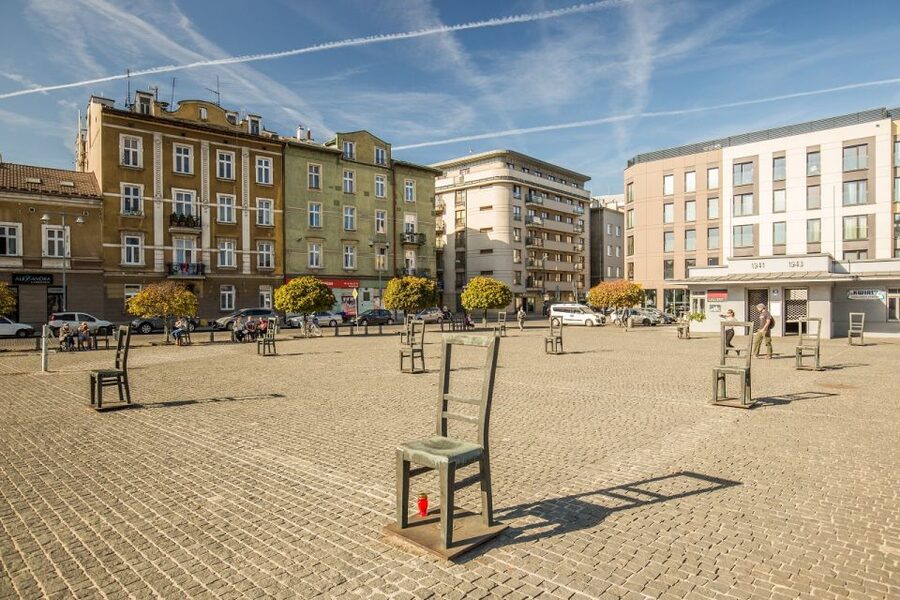
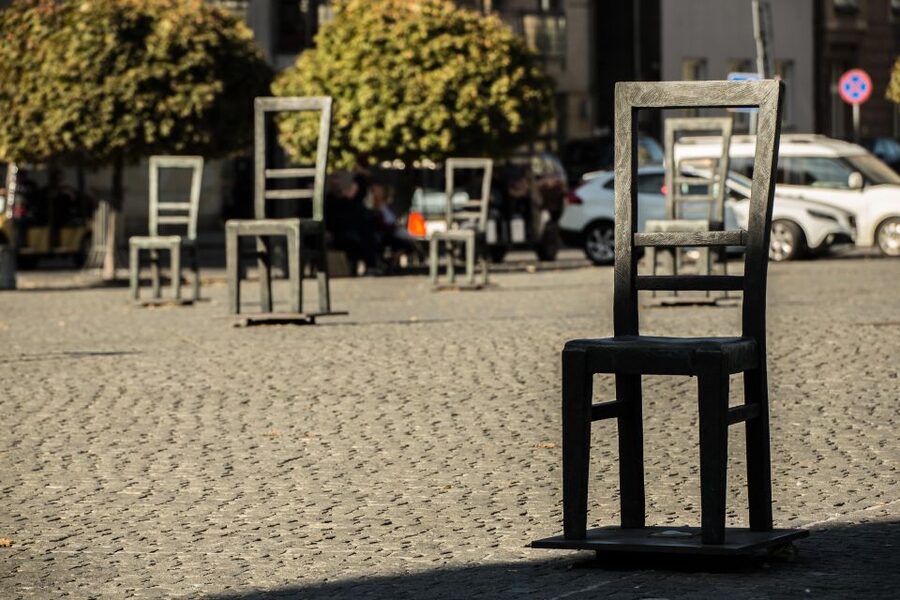
The final major stop is the 68 Empty Chairs memorial in Heroes’ Square. The chairs represent the Jewish people forced from the ghetto, and the memorial gives the tour a quiet, visual ending.
The chairs are simple and widely spaced. They suggest absence rather than offering a long written explanation. Your guide explains their significance and connects the memorial to the people and homes discussed during the walk.
I find this stop especially effective because it asks you to pause. The factory museum is full of information and objects. The square reduces the story to an image that is easy to remember: belongings and lives left behind, with no one returning to claim them.
This is also the point where the tour feels most dependent on the guide’s delivery. Joanna, for example, has been described as clear and engaging both inside the museum and during the smaller ghetto group. In general, the outdoor group may feel more manageable than the museum group because there is more room to stand and listen.
How the guides shape the experience
The guide is not a minor part of this tour. You are paying for interpretation as much as for admission. The strongest guides explain difficult material in plain language, answer questions, and help you connect the museum to the streets outside.
Helena has led tours with a personal family connection to the Holocaust. Christopher has been praised for his passion and storytelling. Ela has brought a strong personal connection to Krakow, and Joanna has guided both the museum and ghetto portions with a friendly, clear style.
The tour is offered in English, French, Spanish, German, and Italian. The exact guide will vary, so do not book expecting a particular person. Still, the repeated pattern is clear: this experience works best when the guide tells the story rather than simply leading you from stop to stop.
There is also a practical difference between the two sections. Inside the factory, the group may be larger and the audio system may be used. In Podgórze, the group can be smaller and the guide may be easier to hear directly. If the museum headsets cause trouble, stay close enough to hear the guide and ask for clarification when needed.
Is $58 a fair price?
At $58 per person, the tour is not the cheapest way to enter Schindler’s Factory. It includes the museum ticket, a guided museum visit, and a walking tour of Podgórze, so you are getting more than admission alone.
I consider the price fair if you want the historical background explained as you go. The ghetto walk is the part that adds the most value. You could visit the museum without a guide, but you would lose the organized connection between the factory, the ghetto, the pharmacy, the wall, and Heroes’ Square.
The value is less clear if you prefer to read every display at your own pace. A large group can limit your time at individual exhibits, and the tour does not include food, drinks, or transport beyond the walking route. Independent visitors may prefer a slower museum visit, followed by their own neighborhood walk.
Free cancellation up to 24 hours before the tour and reserve-now, pay-later booking make the commitment easier. From January 1, 2026, museum times are approximate and may change with the museum schedule. You must provide the full names of all participants when booking and bring a passport or ID, since entry may be denied without them.
Who should book this Krakow tour?
I would choose this tour for anyone visiting Krakow who wants the Schindler story placed in its actual setting. It suits first-time visitors, people with a serious interest in Second World War history, and anyone who prefers a guide to explain difficult material rather than reading every panel alone.
It is also a good choice if you want a structured three-hour plan. The museum takes about 90 minutes, followed by a short transition or break and roughly an hour in Podgórze. You do not have to arrange separate tickets or work out how the sites connect.
I would think twice if you dislike group tours, need a quiet pace, or want to spend a long time on each museum display. I would also avoid a late tour in winter if seeing the outdoor sites clearly matters to you.
FAQ
How long does the Schindler’s Factory and Jewish Ghetto tour last?
The tour lasts three hours. The factory portion takes about 1.5 hours, and the walking tour of Podgórze lasts about one hour, with some time between the two sections.
What does the $58 price include?
The price includes a live guide, entry to Schindler’s Factory, a guided factory tour, and the walking tour of Podgórze. Food and drinks are not included.
Which languages are available?
The tour is offered in English, French, Spanish, German, and Italian.
Where do I meet the guide?
Meet at the entrance to Schindler Factory Museum. Look for a guide holding an excursions.city sign.
What places are included in the Podgórze walk?
The walk includes part of the original ghetto wall, buildings where displaced Jews lived, the pharmacy Under the Eagle, and the 68 Empty Chairs memorial in Heroes’ Square.
Do I need identification for the museum?
From January 1, 2026, you must provide the full names of all participants when booking and bring a passport or ID for entry. Without these documents, entry may be denied.
Should you book it?
Book this tour if you want more than a museum ticket. The factory gives you the documented setting, while Podgórze shows where the story happened. Together, they create a clearer and more personal understanding of Krakow during the Nazi occupation.
Choose an earlier time when possible, especially in winter. Expect serious subject matter, a potentially crowded museum, and a guide-led pace. For $58, the combination is good value when the guide is strong, and the outdoor ghetto walk is the part I would least want to miss.
Just added around Krakow
- From Krakow: Zakopane Full-Day Tour with Lunch Option★ 4.4 · 62 reviews
- From Krakow: Zalipie and Painted Village Guided Tour★ 4.0 · 4 reviews
- From Krakow: Zakopane and Dunajec River Rafting Tour★ 4.6 · 31 reviews
- From Krakow: Zakopane and the Tatra Mountains★ 4.7 · 36 reviews
- From Krakow: Zakopane and Gubałówka Cable Car Private Tour★ 4.3 · 12 reviews
- From Krakow: Zakopane Tatra Mountains & Hot Springs Tour★ 3.0 · 29 reviews
- Zakopane & Tatra Mountains Private Full-Day Tour from Krakow★ 4.5 · 33 reviews
- From Krakow: Hot Springs and Zakopane with Gubałówka★ 4.7 · 25 reviews
Schindler's Factory Tours, compared.
Oskar Schindler’s Factory Entry Ticket & Guided Tour
Read our review →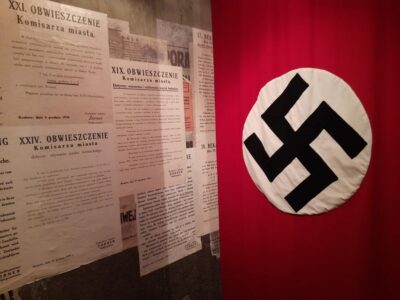
Schindler’s Factory Tour with Entrance Ticket
Read our review →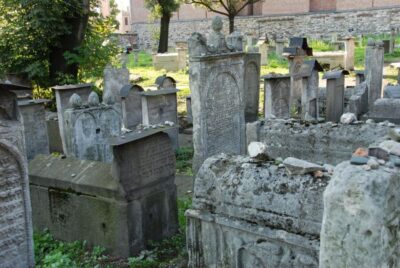
Schindler’s Factory Tour with Entrance Ticket
Read our review →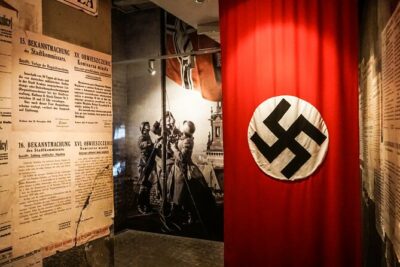
Schindler’s Factory in Krakow: Guided Tour & Skip the Line Ticket
Read our review →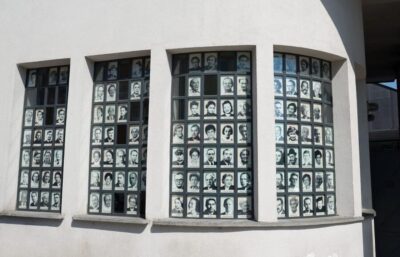
Schindler’s Factory Ticket with Guided Tour Option
Read our review →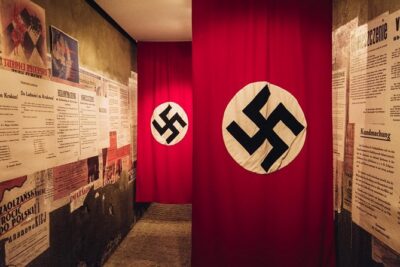
Krakow Schindler’s Factory Guided Tour with Admission Ticket
Read our review →Browse the lists this tour appears in