
Reviewed · SCHINDLER'S FACTORY TOURS
Krakow Schindler’s Factory & Ghetto & Plaszow Camp Guided Tour
Schindler’s Factory is only the beginning of this serious, moving tour. You’ll follow Krakow’s wartime story from the museum at Lipowa 4 to the former Jewish ghetto and the open grounds of Plaszow, where the evidence is quieter but no less powerful.
I like the clear historical sequence and the fact that a guide connects each place rather than leaving you to assemble the story alone. I also like that museum admission is included and the group is intended to stay small. The main caution is simple: five hours on foot and public transport can feel long, especially if you try to fit this into a busy afternoon.
This is a worthwhile choice if you want more than a quick visit to Schindler’s Factory. The route is emotionally heavy, and Plaszow is not a polished museum site, so come ready for a thoughtful day rather than light sightseeing.
Key points to know before booking
- Schindler’s Factory is about Krakow under Nazi occupation, not a biography of Oskar Schindler.
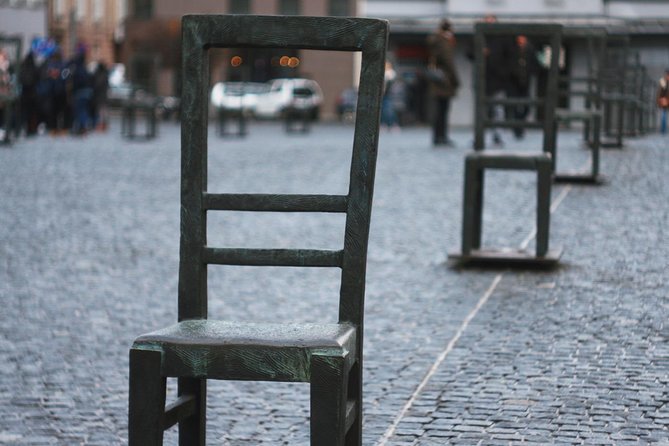
- Ghetto Heroes Square uses empty metal chairs to represent belongings left behind after the ghetto was cleared.
- The original ghetto wall fragment is a short stop with a powerful memorial inscription.
- Plaszow takes about 90 minutes and gives the tour its most open, reflective setting.
- The five-hour schedule includes transport between sites, with a 4 PLN tram ticket not included.
- The advertised format is small group, although the practical information also lists a maximum of 25 people.
Why this Krakow history tour matters
This experience takes you through three connected chapters of Krakow’s wartime story. You begin at a museum inside Schindler’s former enamel factory, continue through the Podgórze district where the Jewish ghetto once operated, and finish at Plaszow, the former Nazi camp south of the city.
That order makes sense. You first receive the wider political and social background, then see the physical places tied to the ghetto, and finally reach a site where much of the evidence has disappeared into open ground. A guide is especially useful here because the locations do not explain themselves.
The subject is painful. You’ll hear about Nazi occupation, forced labor, deportations, and murder. I would not book this as a casual gap between lunch and an evening show. Give yourself time afterward to think, particularly if you have also visited Auschwitz.
The tour costs $76.35 per person. That is not a bargain-basement walking tour, but the price includes professional guiding and entrance to Schindler’s Factory, which is one of Krakow’s most popular museums. You also avoid arranging separate visits and figuring out how the three locations connect.
More Plaszow camp tours in Krakow:
- Krakow: Plaszow Concentration Camp Walking Tour
★ 4.8 · 39 reviews - Krakow: Schindler’s Factory & Ghetto & Plaszow Camp Guided Tour
★ 4.5 · 28 reviews - Guided Tour in Kraków-Płaszów Former Concentration Camp
★ 5.0 · 19 reviews
Inside Schindler’s Factory at Lipowa 4
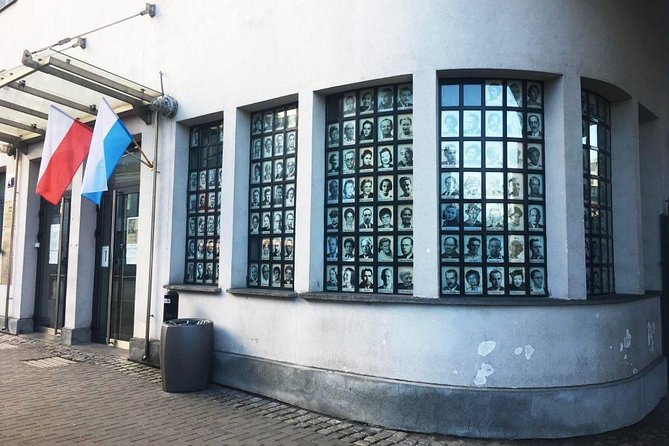
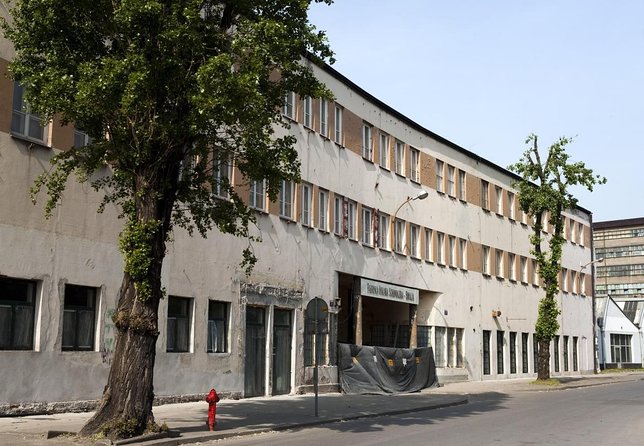
The tour starts at Fabryka Emalia Oskara Schindlera, at Lipowa 4. The museum’s main exhibition is titled Krakow under Nazi Occupation 1939 to 1945, and the visit lasts about 90 minutes.
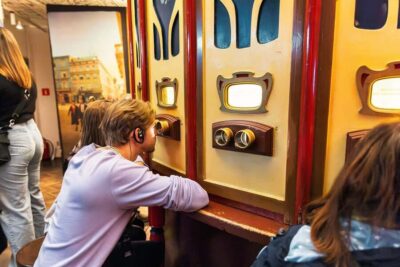
The most important thing to understand before entering is that this is not mainly an Oskar Schindler biography. The exhibition uses the factory setting to tell the larger story of Krakow during German occupation. Schindler is part of that story, but the focus is on how occupation changed daily life for the city’s residents.
That distinction matters. If you arrive expecting a museum devoted mostly to the film Schindler’s List or to Schindler’s personal life, you may be surprised. Instead, you’ll get a wider account of the period and the ways Nazi rule affected people in Krakow.
A guide helps you sort out the names, dates, and connections. Without that support, a museum about occupation can feel packed with information. With the guide, you have someone to explain why this factory matters and how its story fits the next stops.
The 90-minute visit is substantial without taking up the entire day. Still, it is only one part of the experience. Try not to treat the museum as the finish line. The ghetto sites and Plaszow give the first stop a physical setting and show what happened beyond the exhibition walls.
The ghetto wall fragment and the meaning of the chairs
After the museum, the tour moves to a 12-meter fragment of the original ghetto wall. The stop lasts about 15 minutes, and no separate admission ticket is included.
This is a brief visit, but the wall is a direct surviving piece of the ghetto. A commemorative plaque in Hebrew and Polish describes the people who lived, suffered, and died there, and the final journey that began from this place toward the death camps.
You will not spend long here, so listen closely to the guide. The value is not in the size of the fragment. It is in the connection between the wall and the thousands of people confined behind it.
The next stop is Plac Bohaterow Getta, or Ghetto Heroes Square, in the Podgórze district. During the years 1941 to 1943, the square lay inside the ghetto and served as a place where Jewish residents were concentrated before transport to camps.
The square’s memorial consists of several dozen cast-iron chairs placed separately across the space. They represent the furniture, luggage, and other belongings left scattered after the ghetto was liquidated.
This is one of the tour’s clearest visual symbols. You do not need a long explanation to understand what the empty chairs suggest, though the guide adds the necessary context. The memorial works because it turns an abstract word such as deportation into a scene you can picture.
Both the wall and the square are short stops. They do not offer the comfort of a large indoor exhibition or a long list of displays. Instead, they ask you to pause in ordinary city surroundings and recognize what took place there.
Plaszow Camp, where the ground carries the story
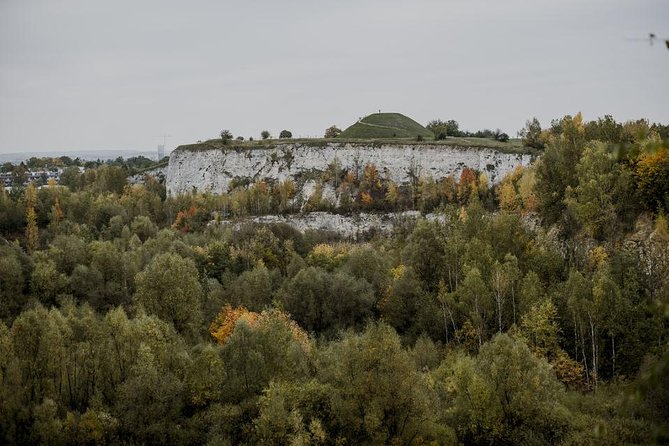
The final major stop is Plaszow, a former Nazi concentration camp in Krakow’s southern suburbs. The visit lasts about 90 minutes and has no admission charge.
Plaszow began in 1940 as a forced labor camp. The Nazis expanded it in 1941 and later converted it into a concentration camp. From October 28, 1942, Jews from the Krakow ghetto were deported there. Prisoners supplied labor for military factories and a quarry.
This is the part of the tour where a guide is most valuable. Plaszow is not presented here as a conventional museum with a neat path from one display to the next. You’ll need the guide to explain what the camp was, how it changed, and how it fits into the fate of Krakow’s Jewish population.
The open setting can make the visit feel less immediate than Schindler’s Factory. That is also its strength. At the museum, information is arranged for you. At Plaszow, the absence of obvious structures forces you to pay attention to the history being explained.
Allow the full 90 minutes. Rushing through this stop would miss the point. The tour’s earlier locations show the ghetto through surviving places and memorials. Plaszow gives you the larger setting where forced labor, detention, and deportation became part of the Nazi system.
The emotional weight builds across the day. Some people may find Plaszow the most meaningful stop, while others may find the museum more accessible because it provides more direct interpretation. The tour works best because it includes both.
More Jewish Ghetto tours in Krakow:
- Krakow: Schindler’s Factory & Ghetto Guided Tour
★ 4.7 · 1,694 reviews - Krakow: Jewish Quarter and Former Ghetto Tour
★ 4.9 · 1,441 reviews - Krakow: Bike Tour of Old Town, Jewish Quarter and the Ghetto
★ 4.9 · 1,155 reviews - Krakow: Kazimierz, Schindler’s Factory & Ghetto Guided Tour
★ 4.8 · 460 reviews
Five hours, walking, and the tram connection
The advertised duration is about five hours. The listed visits add up to about three and a half hours, so the remaining time is used for moving between locations, meeting the guide, and getting from one part of Krakow to another.
A tram ride is part of the practical picture. The ticket costs 4 PLN and is not included, so carry the fare separately. The tour begins at Lipowa 4 and ends at Henryka Kamieńskiego 57, which means you should not expect to finish where you started.
Wear comfortable shoes. One person who tried the combined experience found the walking tiring, even though the day felt worthwhile. That is a useful warning, not a reason to avoid the tour. You are visiting several locations across Krakow, not sitting in one museum for five hours.
The schedule can also be tighter than it first appears. A start time of noon may leave little room to complete all parts before evening plans. If you have a choice, an earlier start gives you more breathing room and reduces the risk of having to leave before the final stop.
The tour is described as a small-group experience, capped at 15 people in the main highlights. The additional practical information gives a maximum of 25. Since those figures differ, you should expect a group setting but not assume the smallest possible number. Either way, a guide-led visit is more useful here than wandering alone.
What the guide adds
The guide is not just there to lead you from one address to the next. The three sites require explanation, especially because they represent different types of evidence.
At Schindler’s Factory, the guide can help you keep the focus on occupied Krakow rather than expecting a simple Schindler biography. At the ghetto wall and square, the guide supplies the human and historical context behind short memorial stops. At Plaszow, the guide explains a former camp whose story may not be obvious from the present-day setting.
The guided format also helps with timing. You are checked in, brought through the sequence of stops, and told what is happening next. That matters on a five-hour program using public transport.
The supplied experience information describes the guiding as professional and says that two guides may be involved across the day. No guide names are provided, so you should not book expecting a particular person. The important point is that the tour gives you live interpretation throughout rather than leaving you to read everything independently.
Is the $76.35 price fair?
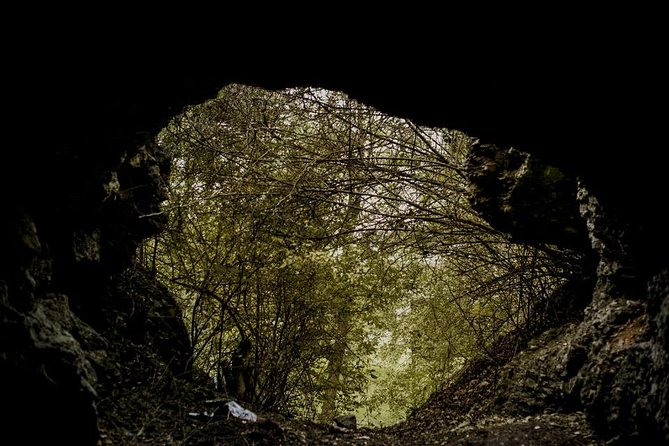
At $76.35, this is best viewed as a convenience and context purchase, not simply an admission ticket.
Schindler’s Factory admission is included, but the price also covers the guide and the coordination of three historically connected sites. The wall fragment and Ghetto Heroes Square do not require separate admission, while Plaszow is free to enter. You are paying mainly for the structure of the day and the explanations that link the places.
That makes the tour a stronger value for a first visit to Krakow’s wartime sites. You save the effort of planning transport and deciding how long to spend at each location. You also avoid reaching Plaszow without enough background to understand what you are seeing.
The value is weaker if you prefer to move slowly, read every museum panel, or spend extra time alone at memorials. The fixed schedule gives you a clear route, but not unlimited time. You may also pay less by arranging separate visits yourself, though you would then need to provide your own historical context.
The experience is booked an average of 103 days in advance, so leaving it until the last minute may not be wise during a busy Krakow visit. Free cancellation is available until 24 hours before the start time, provided the minimum group size is met. If the operator cancels because that minimum is not reached, you are offered another date or experience, or a full refund.
Who should book this experience?
I would choose this tour if you want a guided introduction to Krakow’s wartime history and prefer to see several connected sites in one day.
It suits you especially well if:
- You have not visited Schindler’s Factory before.
- You want a guide to explain the ghetto memorials.
- You are interested in seeing Plaszow rather than stopping at the museum alone.
- You are comfortable with several hours of walking and public transport.
- You have enough time afterward to process a serious subject.
I would think twice if you have limited mobility, need a relaxed pace, or have evening plans that cannot move. The supplied information says most people can participate, but the five-hour duration and walking deserve attention.
This is also not the right pick if you want a tour centered only on Oskar Schindler. The museum is about Krakow under Nazi occupation as a whole. That broader focus is a benefit for many people, but it should match your expectations.
Should you book the Krakow Schindler’s Factory and Plaszow tour?
Book it if you want the full connection between museum, ghetto, and camp. Schindler’s Factory gives you the organized history, Ghetto Heroes Square and the wall provide direct places of remembrance, and Plaszow shows where the story leads beyond the city streets.
The strongest reasons to go are the guide, the linked route, and the inclusion of Plaszow. The main drawbacks are the heavy subject, the walking, the extra tram fare, and the possibility that a noon start will run too late for your plans.
If your schedule allows the full five hours, I think this is a thoughtful and useful way to approach Krakow’s Nazi occupation sites. Start early when possible, wear sensible shoes, bring 4 PLN for the tram, and leave the rest of the day open.
FAQ
How long does the tour last?
The experience lasts approximately five hours.
Where does the tour start?
It starts at Lipowa 4, 32-051 Krakow, Poland, at Schindler’s Enamel Factory.
Where does the tour end?
The tour ends at Henryka Kamieńskiego 57, 30-644 Krakow, Poland.
Is admission to Schindler’s Factory included?
Yes. The entrance ticket to Schindler’s Factory Museum is included.
Is the tram ticket included?
No. The tram ticket is not included and costs 4 PLN.
How long is the visit to Schindler’s Factory?
The museum visit lasts approximately one hour and 30 minutes.
How long is the visit to Plaszow?
The guided visit to Plaszow lasts approximately one hour and 30 minutes.
Can I cancel for a full refund?
Yes. You can cancel at least 24 hours before the experience starts for a full refund. Cancellations or changes made less than 24 hours before the start time are not refunded or accepted.
More ways into Schindler's Factory in Krakow
- Krakow: Oskar Schindler’s Factory Entry Ticket & Guided Tour
★ 4.2 · 3,793 reviews - Krakow: Schindler’s Factory Tour with Entrance Ticket
★ 4.5 · 3,182 reviews - Krakow: Schindler’s Factory Skip-the-Line Ticket
★ 4.4 · 3,105 reviews - Krakow: Schindler’s Factory Tour with Entrance Ticket
★ 4.6 · 1,737 reviews
Just added around Krakow
- From Krakow: Zakopane Full-Day Tour with Lunch Option★ 4.4 · 62 reviews
- From Krakow: Zalipie and Painted Village Guided Tour★ 4.0 · 4 reviews
- From Krakow: Zakopane and Dunajec River Rafting Tour★ 4.6 · 31 reviews
- From Krakow: Zakopane and the Tatra Mountains★ 4.7 · 36 reviews
- From Krakow: Zakopane and Gubałówka Cable Car Private Tour★ 4.3 · 12 reviews
- From Krakow: Zakopane Tatra Mountains & Hot Springs Tour★ 3.0 · 29 reviews
- Zakopane & Tatra Mountains Private Full-Day Tour from Krakow★ 4.5 · 33 reviews
- From Krakow: Hot Springs and Zakopane with Gubałówka★ 4.7 · 25 reviews
Schindler's Factory Tours, compared.
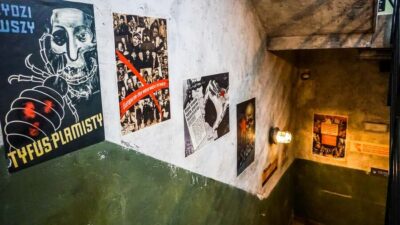
Oskar Schindler’s Factory Entry Ticket & Guided Tour
Read our review →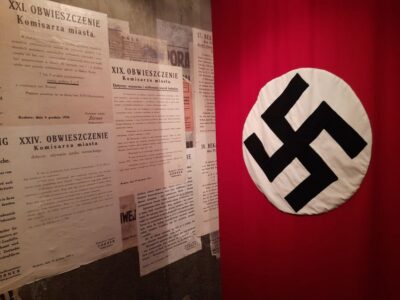
Schindler’s Factory Tour with Entrance Ticket
Read our review →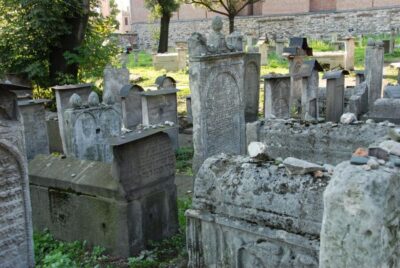
Schindler’s Factory Tour with Entrance Ticket
Read our review →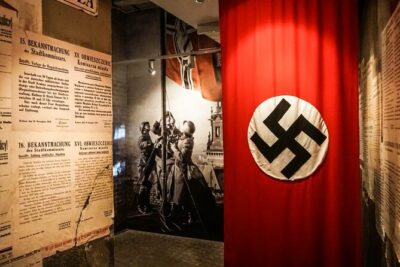
Schindler’s Factory in Krakow: Guided Tour & Skip the Line Ticket
Read our review →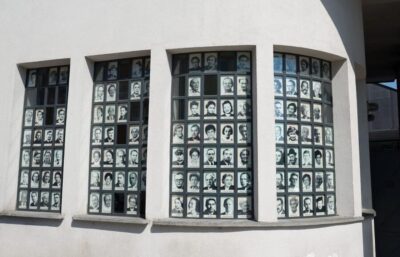
Schindler’s Factory Ticket with Guided Tour Option
Read our review →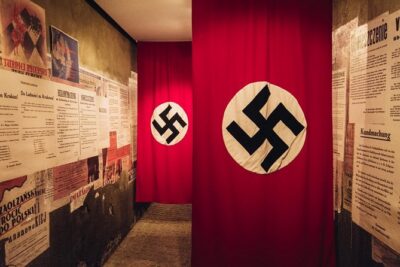
Krakow Schindler’s Factory Guided Tour with Admission Ticket
Read our review →Browse the lists this tour appears in