
Reviewed · KRAKOW JEWISH GHETTO TOURS
Krakow: Guided Tour of the Jewish Ghetto
Kraków’s former Jewish Ghetto is not a museum set apart from daily life. It is a real neighborhood, where ordinary streets, buildings, and fragments of wall still carry the memory of wartime suffering. I like that this tour takes you to the original Ghetto Wall and Ghetto Heroes Square, rather than discussing the past only inside a gallery.
I also like the short, focused format and the chance to hear about Tadeusz Pankiewicz, the pharmacist who helped people trapped inside the ghetto. The main consideration is time: one hour is enough for an introduction, but not enough for a full visit to every nearby museum or memorial.
Key points to know before booking
- The surviving wall fragment shows how tightly the ghetto was enclosed and makes the scale of confinement easier to grasp.
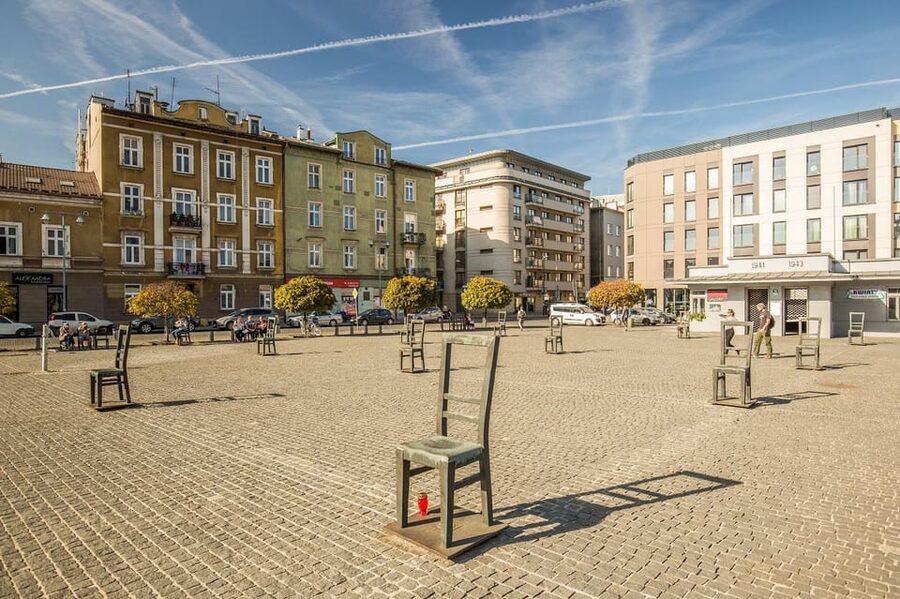
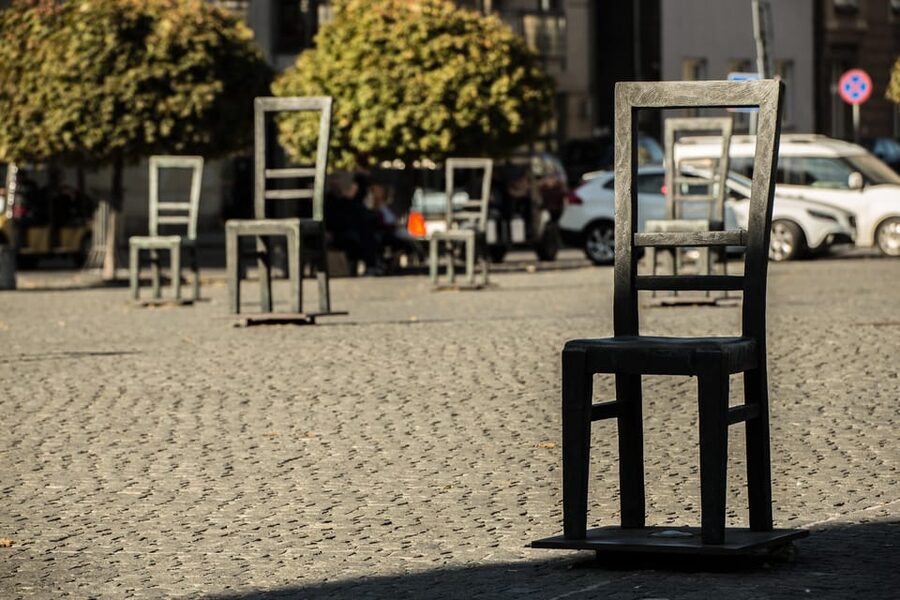
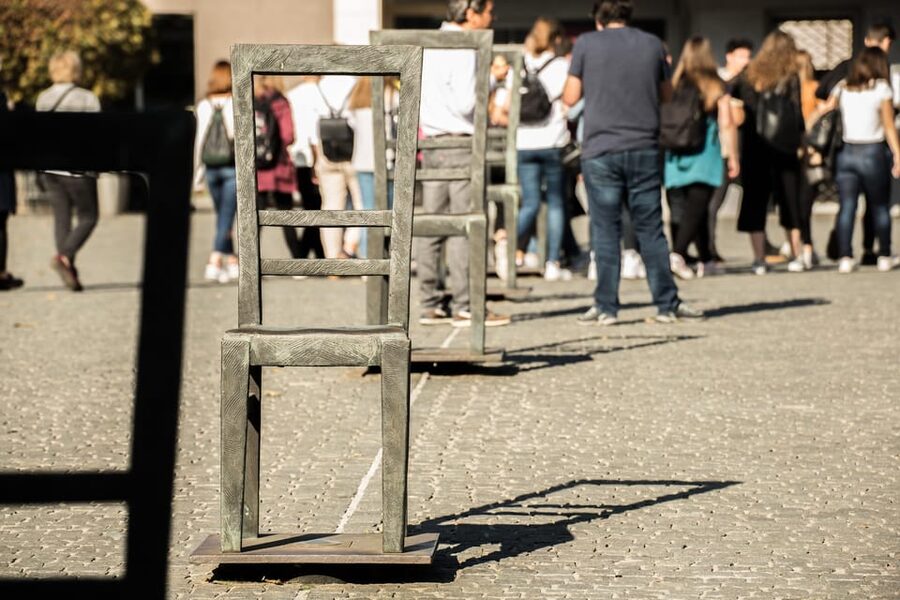
- Ghetto Heroes Square is marked by dozens of empty metal chairs, a stark memorial to lives disrupted and lost.
- Under the Eagle Pharmacy recalls the risks taken by Tadeusz Pankiewicz and his staff to aid Jewish residents.
- The tour begins outside Schindler Factory Museum, a useful location if you are already visiting Podgórze.
- The one-hour length works well for a compact history lesson, though you will need extra time for museum interiors.
- Guiding is offered in five languages, English, German, Italian, French, and Spanish.
Walking through Kraków’s former Jewish Ghetto
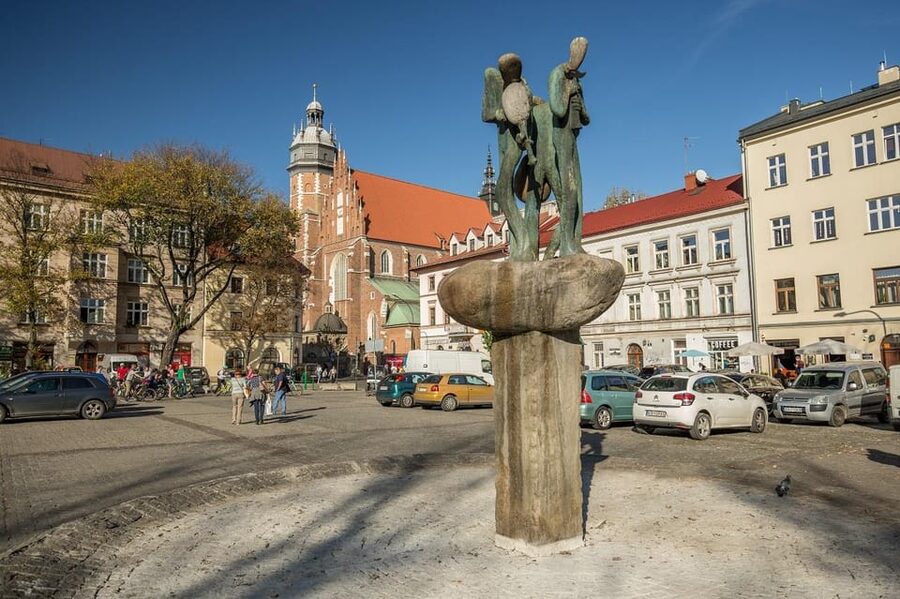
The tour begins in Podgórze, the district where Kraków’s Jewish Ghetto was created during World War II. Your guide meets you at the entrance to Schindler Factory Museum, holding an excursions.city sign.
That meeting point is practical. Schindler Factory Museum is one of Podgórze’s best-known historical attractions, so you can pair this walk with a separate museum visit. The guided walk itself does not include admission, food, or drinks, and the supplied details do not promise entry into the museum.
As you move through the streets, the guide explains how more than 15,000 people were forced into a few city blocks behind the ghetto walls. That figure matters because it turns a broad historical subject into a question of space. You are not hearing about an isolated camp far from the city. You are walking through a neighborhood where families were confined, watched, separated, and eventually deported.
The streets are described as quiet, with wartime buildings and old street layouts still visible. That setting gives the tour much of its force. You can connect the guide’s explanation to the actual routes, corners, and structures around you instead of trying to picture everything from photographs.
The walk covers daily life as well as deportations and survival. Those subjects belong together. A useful historical tour should not reduce the ghetto to a list of dates and atrocities. It should also explain how people tried to find medicine, protect relatives, maintain dignity, and help one another under terrible conditions.
More Jewish Ghetto tours in Krakow:
- Krakow: Schindler’s Factory & Ghetto Guided Tour
★ 4.7 · 1,694 reviews - Krakow: Jewish Quarter and Former Ghetto Tour
★ 4.9 · 1,441 reviews - Krakow: Bike Tour of Old Town, Jewish Quarter and the Ghetto
★ 4.9 · 1,155 reviews
The remaining section of the Ghetto Wall
One of the clearest stops is the surviving fragment of the original Ghetto Wall. It is one of the few pieces left from the barrier that enclosed the ghetto.
The wall gives you a physical point of reference. You can see that confinement was not simply a rule written on paper. It was built into the city itself. Once the guide explains that more than 15,000 people were held within a small area, the fragment becomes more than an old structure. It represents the boundary between forced isolation and the rest of Kraków.
This is also where the tour can help you understand daily hardship. The guide discusses life inside the walls and the acts of solidarity that took place there. The information provided does not promise detailed accounts about particular families or individuals beyond the figures and places named, so do not expect an archive-based family history. Instead, you get a concise explanation of the wider human situation.
I find this stop especially useful for first-time visitors to Kraków. The city has many layers, and it can be easy to pass through Podgórze without realizing what happened here. A remaining section of wall slows you down and gives the neighborhood a very different meaning.
Ghetto Heroes Square and the empty chairs
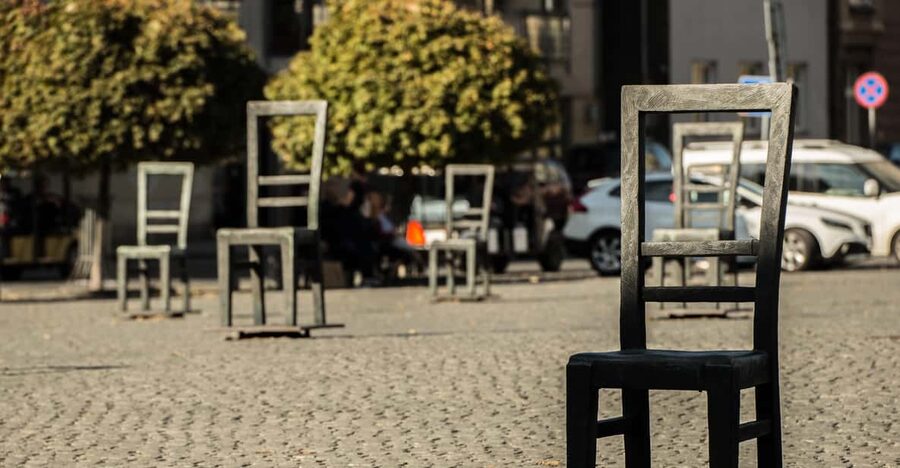
The walk continues to Ghetto Heroes Square, the central memorial space of the former ghetto. During the war, it was associated with deportations to concentration camps. Today, the square is marked by dozens of empty metal chairs.
The chairs are a simple idea with a heavy effect. They represent lives lost during the Holocaust, but they also suggest absence, interruption, and the removal of people from their homes. You do not need a long explanation to understand the basic message, though your guide adds the historical setting that makes the memorial more meaningful.
This is likely the tour’s most reflective stop. The square is not presented as a dramatic attraction. It is a place where the guide pauses to explain what happened and gives you room to take it in.
The chairs also help you see the difference between a memorial and a monument built only to celebrate. Nothing here asks you to admire power or victory. The design asks you to notice what is missing. That makes it a strong stop for visitors who prefer history presented through real places and restrained memorials.
Because the tour lasts only an hour, the stop will be brief. You can look around the square and listen to the explanation, but you should not expect an extended private ceremony or a long period of independent study. If the memorial affects you deeply, you may want to return later at your own pace.
Under the Eagle Pharmacy and the story of Tadeusz Pankiewicz
Across from Ghetto Heroes Square is the historic Under the Eagle Pharmacy. The pharmacy is connected with Tadeusz Pankiewicz and his staff, who risked their lives to help people inside the ghetto.
Your guide explains how the pharmacy provided medicine and shelter. That detail gives the tour a human focus. The story is not only about the machinery of persecution. It is also about people who chose to act when helping others could bring serious danger.
Pankiewicz’s role is one of the most distinctive parts of this walk. Many historical tours move quickly from one large event to another. Here, you hear about a specific place where practical aid was given. Medicine and shelter may sound modest beside the scale of wartime violence, but those actions mattered to people facing fear, illness, and deportation.
The tour information identifies the pharmacy as a historic site, but it does not include admission to an interior exhibition. Treat this stop as an exterior or site-based part of the guided walk unless your booking details state otherwise. If you want a longer visit inside the pharmacy, check separately before planning your day.
This is also a good place to ask your guide questions. The guides work in English, German, Italian, French, and Spanish, and the live format allows some room for conversation. One guide even helped a visitor find a rugby bar during a tournament visit, so you can ask for practical local suggestions if your interests extend beyond the tour.
A handful more Krakow trips to weigh up
- From Krakow: Auschwitz-Birkenau Guided Tour & Hotel Pickup
★ 4.5 · 33,358 reviews - From Krakow: Auschwitz-Birkenau Guided Tour & Hotel Pickup
★ 4.5 · 29,340 reviews - Krakow: Auschwitz Guided Tour with Optional Hotel Pickup
★ 4.5 · 15,280 reviews - Krakow: Auschwitz-Birkenau Guided Tour with Pickup & Lunch
★ 4.5 · 9,800 reviews
What the one-hour format really gives you
At $15 per person, this is priced as a compact introduction rather than a full-day historical program. I consider that good value if you want a clear orientation to Podgórze, especially before deciding how much more time to spend in the area.
The one-hour length keeps the walk manageable. You hear the key story, visit the surviving wall, reach the main square, and learn about the pharmacy without giving up half your day. That suits visitors with a short stay in Kraków or a crowded sightseeing plan.
The tradeoff is depth. The tour cannot cover every wartime site in Podgórze, explain every stage of Kraków’s occupation, or give you enough time for a detailed museum visit. It is best understood as a guided framework. Afterward, you will know which places matter and why, even if you still want to explore more.
The price also makes it a sensible choice for couples, families with older children, and solo visitors who want context without committing to an expensive private tour. The activity does not list a group size, so you should not book it expecting a guaranteed small group.
How to fit it into your Kraków plans
The meeting point outside Schindler Factory Museum makes this easy to combine with other Podgórze sights. You could schedule the walk before or after a separate museum visit, but leave enough time to avoid rushing from one booking to the next.
Since the tour lasts one hour, check the available starting times before making other reservations. The activity provides live guiding in English, German, Italian, French, and Spanish, so select a time and language that suit your plans.
Wear comfortable shoes. The route is a walking tour through city streets, and the experience depends on moving between several historical locations. The provided details do not specify special accessibility arrangements, route length beyond the one-hour duration, or seating at the stops, so contact the provider if you need those details confirmed.
There is no food or drink included. That is hardly a problem for a one-hour walk, but it is worth remembering if you are planning a long day in Podgórze.
The experience allows cancellation up to 24 hours before the start for a full refund, and you can reserve now and pay later. Those policies are useful if your Kraków schedule is still changing, though you should check the exact booking terms when selecting your date.
Who will get the most from this walk
I would choose this tour if you want a respectful introduction to Kraków’s wartime history and prefer seeing real locations to sitting through a long indoor lecture. It suits first-time visitors, history-minded couples, and anyone already planning to visit Schindler Factory Museum.
It is also a good match if you want a short activity between larger sightseeing stops. The tour has a clear route and a defined ending, so it will not take over your day.
You may want something longer if you already know the history of the Kraków Ghetto or want extensive museum time. A one-hour guided walk cannot provide the detail of a specialist program, and the available information does not include archival documents, survivor testimony, or a longer discussion of the city’s Jewish history before and after the war.
Families should consider the subject carefully. The tour covers deportations, concentration camps, suffering, and loss. Older children and teenagers studying World War II may find the real locations useful, but the material is serious and the guide’s presentation is intended to be respectful rather than light entertainment.
Should you book the Kraków Jewish Ghetto tour?
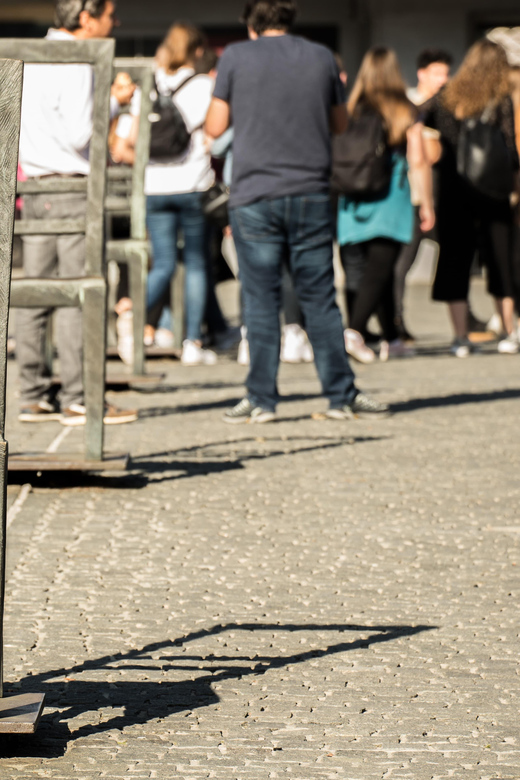
Book it if you want a low-cost, tightly organized way to understand Podgórze. The Ghetto Wall, empty chairs in Ghetto Heroes Square, and Under the Eagle Pharmacy give the hour a strong sense of place. The guide adds the human stories that connect those sites.
Skip it if you need a long museum visit, extensive specialist research, or a tour covering every part of Kraków’s Jewish past. For most visitors, though, $15 is a fair price for a focused introduction, especially when the walk can be paired with Schindler Factory Museum and further independent exploration.
FAQ
Where does the tour meet?
The meeting point is at the entrance to Schindler Factory Museum in Kraków. Look for a guide holding an excursions.city sign.
How long does the tour last?
The guided walking tour lasts one hour.
What places are included?
The route includes the remains of the original Ghetto Wall, Ghetto Heroes Square, and the historic Under the Eagle Pharmacy. It also passes authentic wartime buildings and streets in Podgórze.
Is the Schindler Factory Museum entrance included?
No museum admission is listed as included. The meeting point is outside the entrance to Schindler Factory Museum.
What languages are available?
Live guiding is available in English, German, Italian, French, and Spanish.
Is food or drink included?
No. Food and drinks are not included in the activity.
Can I cancel the booking?
You can cancel up to 24 hours in advance for a full refund. The activity also allows you to reserve now and pay later.
Just added around Krakow
- From Krakow: Zakopane Full-Day Tour with Lunch Option★ 4.4 · 62 reviews
- From Krakow: Zalipie and Painted Village Guided Tour★ 4.0 · 4 reviews
- From Krakow: Zakopane and Dunajec River Rafting Tour★ 4.6 · 31 reviews
- From Krakow: Zakopane and the Tatra Mountains★ 4.7 · 36 reviews
- From Krakow: Zakopane and Gubałówka Cable Car Private Tour★ 4.3 · 12 reviews
- From Krakow: Zakopane Tatra Mountains & Hot Springs Tour★ 3.0 · 29 reviews
- Zakopane & Tatra Mountains Private Full-Day Tour from Krakow★ 4.5 · 33 reviews
- From Krakow: Hot Springs and Zakopane with Gubałówka★ 4.7 · 25 reviews
Krakow Jewish Ghetto Tours, compared.
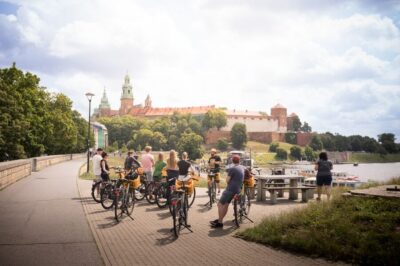
Bike Tour of Old Town, Jewish Quarter and the Ghetto
Read our review →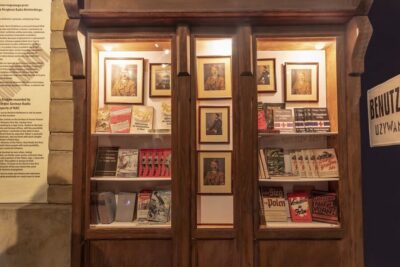
Kazimierz, Schindler’s Factory & Ghetto Guided Tour
Read our review →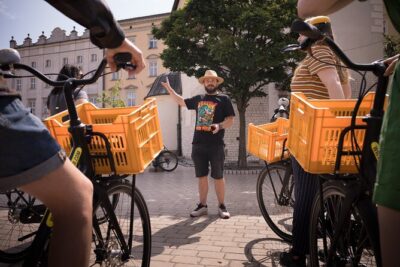
Full Bike Tour – the Old Town, Jewish Qtr & the Ghetto NEW BIKES
Read our review →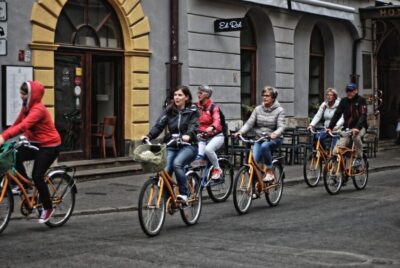
Bike Tour of the Old Town, Kazimierz, and the Ghetto
Read our review →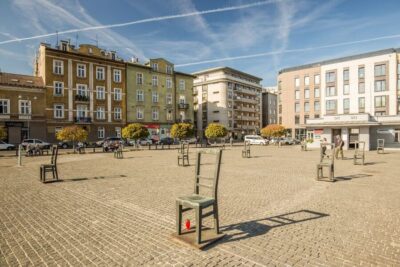
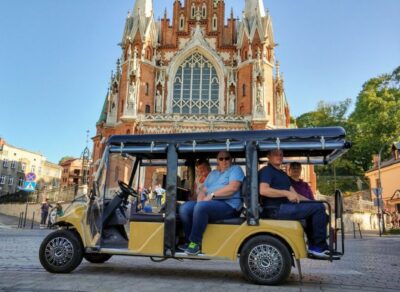
Jewish Quarter and Ghetto Electric Golf Cart Tour
Read our review →Browse the lists this tour appears in