
Reviewed · KRAKOW JEWISH GHETTO TOURS
Krakow Jewish District and Ghetto Guided Tour in a Small Group
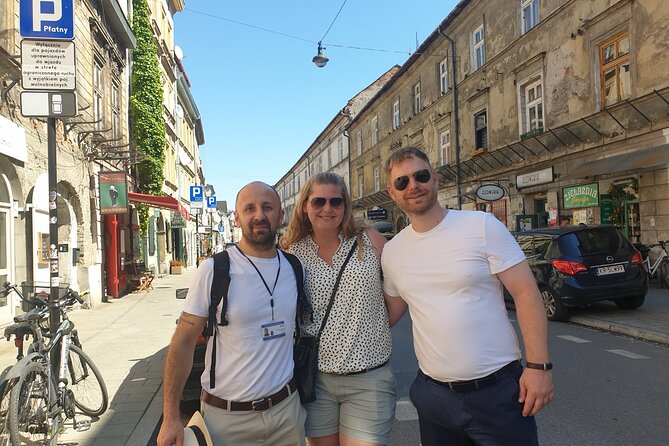
Krakow’s Jewish story is best understood on foot, block by block, and this tour connects the old Jewish Quarter with the former ghetto in about two hours. You begin on Szeroka Street, pass several historic synagogues, then cross toward Podgórze and the wartime ghetto.
I like the small group cap of 10, which gives you a better chance to hear the guide and ask questions. I also like the clear route: you see major Jewish sites without trying to piece them together from a map. The main drawback is that most synagogue stops are viewed from outside, so this is primarily a walking and history tour, not an interior museum visit.
Key points to know before you book
- Szeroka Street sets the scene: This is the oldest part of Krakow’s Jewish Quarter and the natural place to begin.
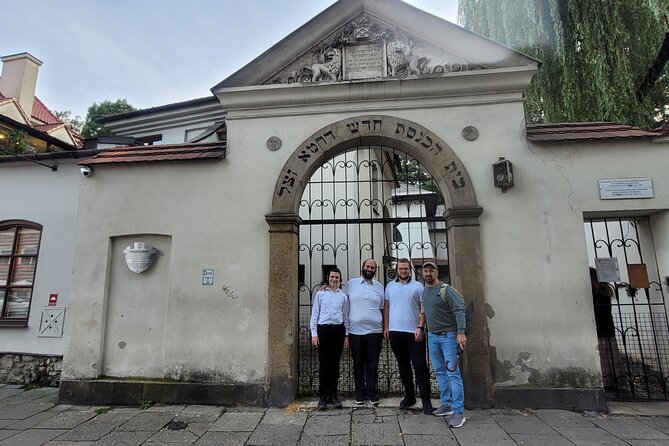
- Several synagogues are exterior stops: Remuh, the Old Synagogue, Wolf Popper, the High Synagogue, and Izzak Synagogue are included in the route, but interior admission is not listed.
- The tour links two districts: You move from Kazimierz, the historic Jewish Quarter, toward the former Krakow Ghetto in Podgórze.
- Jan Karski adds a personal angle: His statue recalls the Polish courier who tried to warn the world about the Holocaust.
- The ending is especially sobering: Plac Bohaterów Getta, Eagle Pharmacy, and the remaining ghetto wall fragment focus attention on wartime persecution.
- The price buys context, not admission: At $60.21 per person, the value rests mainly in the guide’s explanations and the efficient small-group route.
From Szeroka Street into Krakow’s Jewish Quarter
The tour starts at Szeroka 6, on Szeroka Street in Kazimierz. This is not simply a convenient meeting point. It is the oldest part of Krakow’s Jewish Quarter, so the opening minutes put you in the right setting before the walk moves on.
You can expect roughly 10 minutes here. That sounds brief, but a guide can use the stop to explain why this street matters and how Jewish life once centered on this part of Krakow. The value is in the orientation. Instead of seeing Kazimierz as a collection of attractive old buildings, you begin to understand it as a historic community area.
The tour is offered in English, and the group is capped at 10 people. That small size matters on a walking route. You are less likely to lose the guide in a crowded street, and it should be easier to ask for clarification when a name, date, or place needs a second explanation.
The route is also easy to follow. You do not need to build your own plan around scattered synagogues and ghetto memorials. The guide takes you from one location to the next, which is useful if you have only a short time in Krakow or want an introduction before visiting sites on your own.
More Jewish Ghetto tours in Krakow:
- Krakow: Schindler’s Factory & Ghetto Guided Tour
★ 4.7 · 1,694 reviews - Krakow: Jewish Quarter and Former Ghetto Tour
★ 4.9 · 1,441 reviews - Krakow: Bike Tour of Old Town, Jewish Quarter and the Ghetto
★ 4.9 · 1,155 reviews
Five synagogues, mostly seen from the street
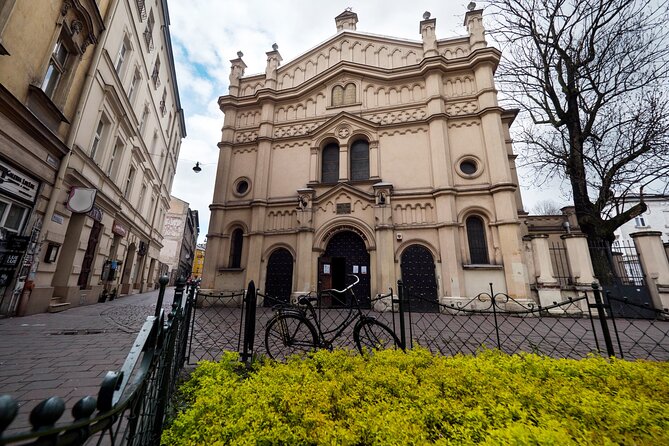
The first part of the walk visits a remarkable number of historic Jewish buildings in a short period. The Remuh Synagogue is described as a 16th-century synagogue, and you spend about 15 minutes viewing it from outside. The Old Synagogue follows, with about 10 minutes at the exterior.
These stops are valuable because they help you see the physical concentration of Jewish institutions in Kazimierz. They also give the guide several points from which to explain the community’s religious and social life. Still, you should be clear about what you are buying: the tour does not include listed admission inside these synagogues.
The five-minute stop at Wolf Popper Synagogue adds another 16th-century building to the route. Its short timing suggests a quick look and explanation rather than a long visit. That is fine if your goal is to recognize the main landmarks, but less suitable if you want to study architectural details or spend time indoors.
A 19th-century synagogue is also viewed from outside for about 10 minutes. The High Synagogue receives around five minutes, again from the exterior. Later, Izzak Synagogue, dating from the 17th century, gets another five-minute stop.
The benefit is variety. You are not hearing about one building in isolation. You are seeing several places connected to the Jewish Quarter, with the guide tying them together as part of one historic district. The limitation is pace. With so many stops, the explanations at each one may be fairly focused rather than extensive.
If entering a synagogue is important to you, check current opening arrangements separately. The supplied tour details list exterior visits, not interior tickets. That distinction can save you from booking this experience expecting a museum-style visit.
The Jan Karski statue and the human cost of history
The statue of Jan Karski is one of the most meaningful stops because it shifts attention from buildings to an individual. Karski is remembered here as the man who tried to stop the Holocaust. The tour gives this stop about five minutes.
That is not a long time, but the site adds a human thread to a route that could otherwise become a sequence of dates and façades. A good guide can explain why Karski is remembered and place his actions within the wartime story. You will want to listen closely here, since a short stop can still carry considerable weight.
This is one reason a guided walk can offer more than a self-guided map. A plaque may give you a name. A guide can explain why that name matters and connect it to the district around you. The tour’s subject is painful, so a calm, direct explanation is more useful than a rushed list of facts.
Plac Nowy and the everyday center of Kazimierz
The route then reaches Plac Nowy, described as a former center of trade for Krakow’s Jewish community. The stop lasts about 10 minutes.
This is a useful change of focus. Synagogues show religious life, while a market square helps you think about daily business, food, movement, and neighborhood routines. The square gives the tour a more ordinary social setting before the route turns toward the wartime ghetto.
I like this part because it prevents the Jewish Quarter from being presented only as a memorial zone. Communities are made up of work, shopping, family life, and local gathering places as well as formal religious buildings. The guide’s commentary is especially helpful here because the square may look like a regular city space if you do not know its past role.
The stop at the Krakow Jewish Community Center follows and lasts about five minutes. The center connects the historic district with Jewish life in Krakow today. Even with limited time, this makes the route feel less locked in the past.
That balance matters. The tour deals with persecution and loss, but the community center reminds you that Jewish life in Krakow is not only a historical subject. The short stop may not provide a full look inside the center, yet it gives the walk a present-day reference point.
More Kazimierz and Jewish Quarter tours in Krakow:
- Krakow: Kazimierz Jewish Quarter Walking Tour
★ 4.8 · 571 reviews - Krakow: Kazimierz, Schindler’s Factory & Ghetto Guided Tour
★ 4.8 · 460 reviews - Full Bike Tour – the Old Town, Jewish Qtr & the Ghetto NEW BIKES
★ 5.0 · 437 reviews - Krakow: Bike Tour of the Old Town, Kazimierz, and the Ghetto
★ 4.9 · 350 reviews
Crossing toward the former Krakow Ghetto
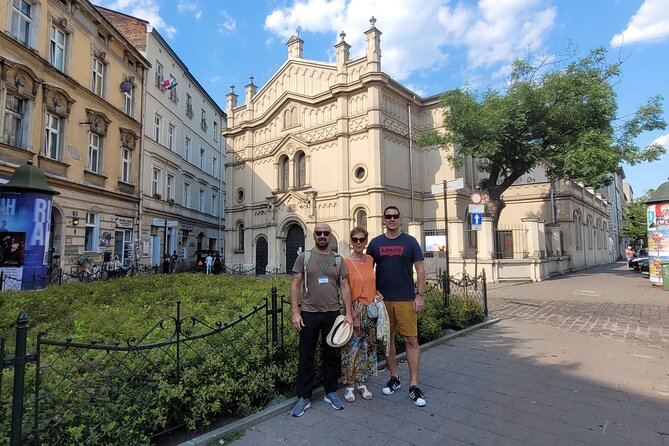
The tour then moves from Kazimierz toward the former ghetto in Podgórze. The provided schedule does not give a precise walking time between stops, so you should allow for a steady city walk rather than treating the experience as a series of stationary talks.
This change of district is central to the tour. You begin among historic Jewish institutions and then move to places connected with wartime confinement. The route therefore has a clear progression, from community life to the destruction of that community under Nazi occupation.
The small group helps here. In a group of up to 10, you can usually stay close to the guide without the feel of a large organized march. You should still wear practical shoes and be ready to walk for the full two hours. No transport is listed as part of the tour.
At $60.21 per person, the price is not simply paying for a walk around free public sites. You are paying for the guide’s structure, explanations, and the time saved by following a planned route. The value is strongest if you want historical context and do not already know Krakow’s Jewish Quarter well.
If you are happy reading plaques and navigating on your own, the cost may feel high because admission tickets are not included. If you want the sites connected into one clear story, the fee is easier to justify, especially with the group limited to 10.
Eagle Pharmacy and the former ghetto
The route includes the Eagle Pharmacy in the Krakow Ghetto, viewed from outside for about 10 minutes. The stop places you directly within the former ghetto story and helps show how ordinary businesses became connected to wartime events.
You should expect this section to be more sobering than the earlier part of the walk. The buildings and streets are not just old landmarks. They are places tied to forced confinement and the suffering of Krakow’s Jewish population.
Because the pharmacy is listed as an exterior stop, do not assume that entry is part of the $60.21 price. If you want to see the interior or a related museum collection, you will need to check separately. One practical warning is useful here: a museum connected with this history can draw very long lines, sometimes extending around the block, so advance booking is wise if you plan an additional museum visit.
That tip matters because many people set aside too little time for Krakow’s Holocaust and wartime museums. The walking tour itself lasts about two hours, but adding an indoor museum requires a separate time plan.
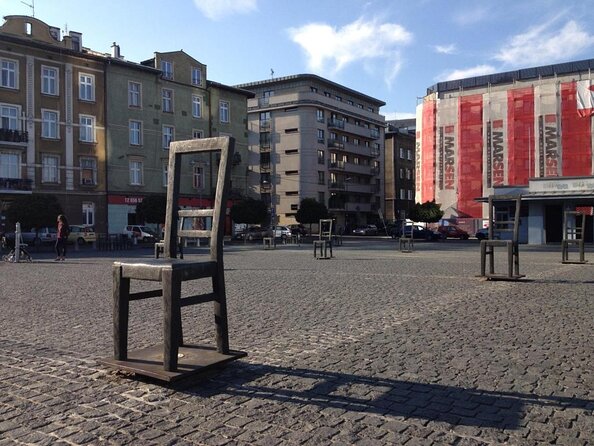
Plac Bohaterów Getta and the empty-chair memorial
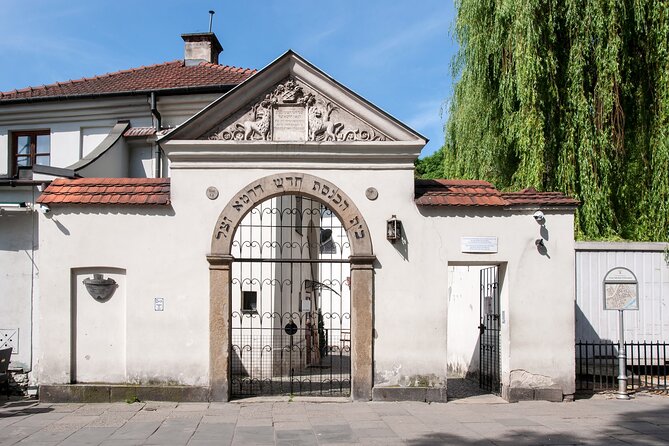
The tour ends at Plac Bohaterów Getta, the main square of the Krakow Ghetto. About 10 minutes are allocated here, and the official end point is also in the square.
This is a strong place to finish because the square gathers the story into one public space. After seeing the Jewish Quarter, the synagogues, the market, and the pharmacy, you arrive at the area most directly tied to the ghetto.
The square is also a place where silence and space do part of the work. You may find that the guide’s explanation is more useful when followed by a moment to look around rather than a rapid move to the next attraction. The schedule allows only about 10 minutes, so the stop is focused, but its position at the end gives the walk a clear emotional finish.
The final stop is a fragment of the Krakow Ghetto wall, with about five minutes for the visit. It is a small surviving piece, but that is precisely why it can be easy to miss without a guide. The wall makes the boundaries of the ghetto more concrete than a general description can.
You finish at Plac Bohaterów Getta rather than returning to Szeroka Street. That is practical if you plan to continue exploring Podgórze or visit nearby sites afterward. It is less convenient if you have left belongings near the starting point, so plan your day around the one-way route.
What the two-hour format does well
Two hours is enough to cover a lot of ground without turning the experience into an all-day commitment. You see the main points in both Kazimierz and the former ghetto, with commentary linking the locations.
The tradeoff is depth. Several stops last only five minutes, and the synagogue visits are outside only. This tour works best as a well-organized introduction, not as a full study of Krakow’s Jewish history.
I would choose it early in a Krakow stay. The route can give you a useful map of the city’s Jewish sites and help you decide where to return for longer visits. It also suits people who prefer a guide’s explanation to reading several separate plaques or arranging their own route.
The experience has received a 5 rating, with 100 percent recommendation from the available feedback, and the group size is one of its clearest strengths. The praise is most meaningful when understood in practical terms: the route is focused, the subject matter is handled through guided commentary, and the group is small enough to remain manageable.
Who should book this Krakow walking tour?
I would recommend it if you want:
- A short introduction to Kazimierz and the former Krakow Ghetto
- An English-speaking guide to explain the connections between sites
- A small group capped at 10 people
- A one-way walking route that ends at Plac Bohaterów Getta
- A clear overview before visiting museums or synagogues independently
I would be more cautious if your priority is entering historic synagogues, spending a long time at each building, or having admission included. The details provided list outside viewing for the synagogues, pharmacy, and several other stops.
The tour is also better for adults and older children who can give the subject serious attention. The material concerns Jewish persecution and the Holocaust, so it is not a light sightseeing stroll. Most people can participate, and the tour is near public transportation, but the experience remains a walking route with several stops.
Should you book it?
Book this tour if you want a compact, guided introduction to Krakow’s Jewish Quarter and former ghetto, especially if this is your first visit. The small group and carefully connected route are the main reasons to choose it.
Skip it if you want extensive interior visits or a museum ticket included. At $60.21, the price makes the most sense for the guide’s historical explanation and the convenience of seeing many important places in two hours. For that purpose, it offers a focused way to begin understanding Krakow’s Jewish past and present.
FAQ
How long does the Krakow Jewish District and Ghetto tour last?
The tour lasts approximately two hours.
What language is the tour offered in?
The tour is offered in English.
How many people can join the tour?
The group is limited to a maximum of 10 travelers.
Where does the tour begin?
It begins at Szeroka 6, 31-053 Kraków, Poland.
Where does the tour end?
It ends at Plac Bohaterów Getta, also called Square of Ghetto Heroes, in Krakow.
Are synagogue admission tickets included?
The listed synagogue stops are outside visits, and admission tickets are not included in the tour details.
Does the tour include transportation?
No transportation is listed. The experience is a guided walking tour.
How much does the tour cost?
The listed price is $60.21 per person.
Can I cancel for a full refund?
Yes. You can cancel up to 24 hours before the experience start time for a full refund. Cancellations or changes made less than 24 hours before the start time are not accepted for a refund.
Just added around Krakow
- From Krakow: Zakopane Full-Day Tour with Lunch Option★ 4.4 · 62 reviews
- From Krakow: Zalipie and Painted Village Guided Tour★ 4.0 · 4 reviews
- From Krakow: Zakopane and Dunajec River Rafting Tour★ 4.6 · 31 reviews
- From Krakow: Zakopane and the Tatra Mountains★ 4.7 · 36 reviews
- From Krakow: Zakopane and Gubałówka Cable Car Private Tour★ 4.3 · 12 reviews
- From Krakow: Zakopane Tatra Mountains & Hot Springs Tour★ 3.0 · 29 reviews
- From Krakow: Zakopane & Tatra Mountains Tour★ 3.8 · 42 reviews
- Zakopane & Tatra Mountains Private Full-Day Tour from Krakow★ 4.5 · 33 reviews
Krakow Jewish Ghetto Tours, compared.
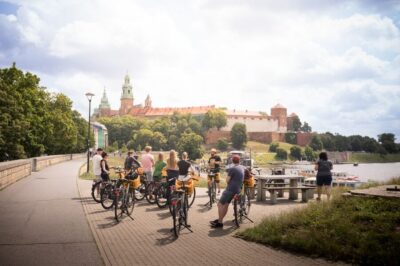
Bike Tour of Old Town, Jewish Quarter and the Ghetto
Read our review →
Kazimierz, Schindler’s Factory & Ghetto Guided Tour
Read our review →
Full Bike Tour – the Old Town, Jewish Qtr & the Ghetto NEW BIKES
Read our review →
Bike Tour of the Old Town, Kazimierz, and the Ghetto
Read our review →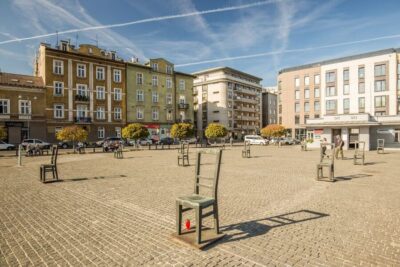
Jewish Quarter and Ghetto Electric Golf Cart Tour
Read our review →Browse the lists this tour appears in