
Reviewed · KRAKOW JEWISH GHETTO TOURS
Krakow: Bike Tour of Old Town, Jewish Quarter and the Ghetto
Krakow’s story is spread across several neighborhoods, and this 3.5-hour bike tour links them in one easy outing. You’ll pedal from the medieval Old Town to Wawel Castle, across the river to Kazimierz, and into the former ghetto area tied to Schindler’s List. It is a smart way to cover ground without spending the day on foot.
I like the flat route and the human touch from guides such as Tomasz, Christopher, Michael, and Krzysztof, who mix dates and facts with local stories, humor, and personal details. I also like the 30-minute break, which keeps the long ride from feeling like an endurance test. The main consideration is simple: you must be comfortable riding a bicycle, and cobbled streets plus one bridge crossing may feel less smooth than the quiet roads.
Key points to know before you book
- 25 stops connect three major Krakow areas: Old Town, Kazimierz, and the former ghetto.
- The route is mostly level and relaxed, though you will ride over some cobbles and across a bridge.
- English-speaking guides bring the past to life with stories about Krakow, Jewish history, World War II, and Schindler’s List.
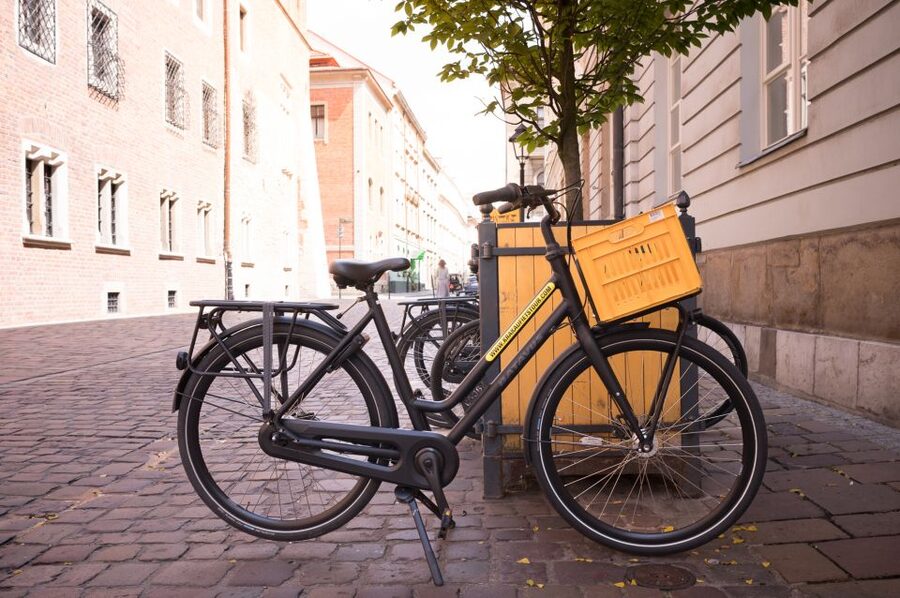
- Bikes are included, with sturdy, comfortable models and front baskets available; helmets can be requested.
- A 30-minute break is built in, but refreshments and entrance tickets cost extra.
- The $37 price is strong value if you want a broad first look at Krakow in a single morning or afternoon.
Why a bicycle works so well in Krakow
Krakow is compact enough to explore by foot, but its most important sights are not all in the same quarter. The Old Town, Wawel Hill, Kazimierz, and Podgórze sit close together, yet walking between them takes time and energy.
A bicycle gives you a wider view. You can pause at a church, square, bridge, or memorial, then move on before the next stop feels too far away. I especially like this format for a first day in Krakow because you get a map in your head quickly. Later, you can return to the places that deserve more time.
The pace is designed for sightseeing rather than speed. Guides keep the group together and use pedestrian areas or quieter roads where possible. You will still need to watch your surroundings, especially in busy areas, but this is not presented as a sporty cycling excursion.
The bikes have been described as sturdy and in good condition. One useful detail is the front basket, which gives you a place for small personal items. Some riders find the bikes a little heavy, though that weight also helps them feel stable. Helmets are available on request, so ask before setting off if you want one.
More Jewish Ghetto tours in Krakow:
- Krakow: Schindler’s Factory & Ghetto Guided Tour
★ 4.7 · 1,694 reviews - Krakow: Jewish Quarter and Former Ghetto Tour
★ 4.9 · 1,441 reviews - Krakow: Kazimierz, Schindler’s Factory & Ghetto Guided Tour
★ 4.8 · 460 reviews
Starting in the Old Town at Sławkowska Street
The meeting point is at Sławkowska 11, in the office courtyard reached through a gate marked Chicago Music Club. That instruction matters because the storefront can be easy to miss if you expect a large street-facing bike shop.
You begin with a 10-minute safety briefing in the Old Town. This is the right moment to check your seat, brakes, and comfort before the group moves into central Krakow. Since the tour includes riders of different ages and abilities, tell the guide at the start if you need a slower pace or a small adjustment.
The tour is suitable for people who can ride a bicycle, but it is not suitable for anyone who cannot cycle, people with mobility impairments, or babies under one year old. The bikes are supplied, and insurance is included through a safe cyclist package.
Main Market Square and the medieval center
The first major stop is Main Market Square, Krakow’s great central stage. You will have time for photos and a guided look before cycling onward.
This is a good opening stop because it helps set the scale of the Old Town. From here, the route moves to the Juliusz Słowacki Theatre and Florian Gate. The theater gives you a look at Krakow’s cultural life, while Florian Gate and the old city walls point to the medieval defenses that once controlled entry into the city.
The short stops are useful for orientation, but they are not full museum visits. You will hear the guide’s explanation and have time for photographs, not a long architectural study. If you want to see the theater interior or explore the city walls in detail, plan a separate visit.
Jagiellonian University and Bishop’s Palace
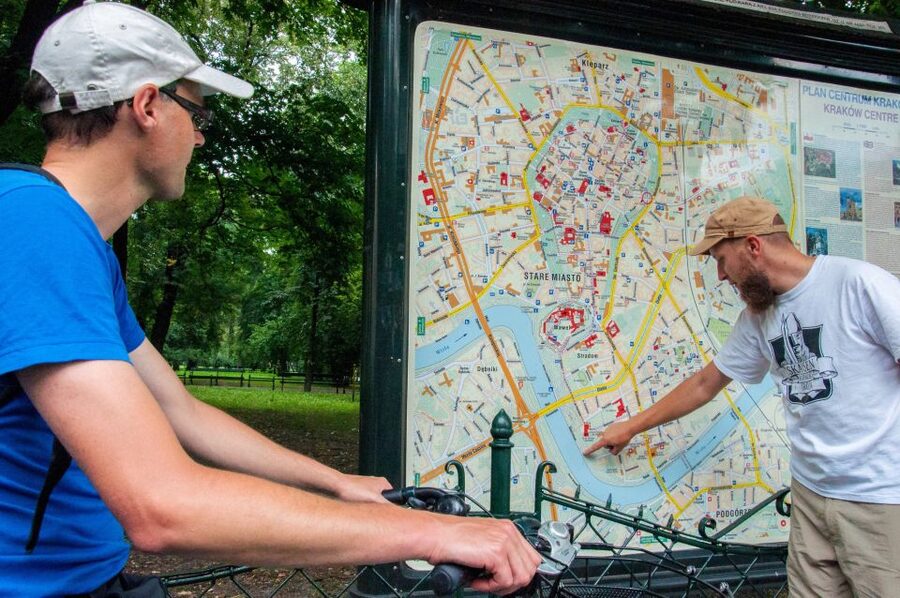
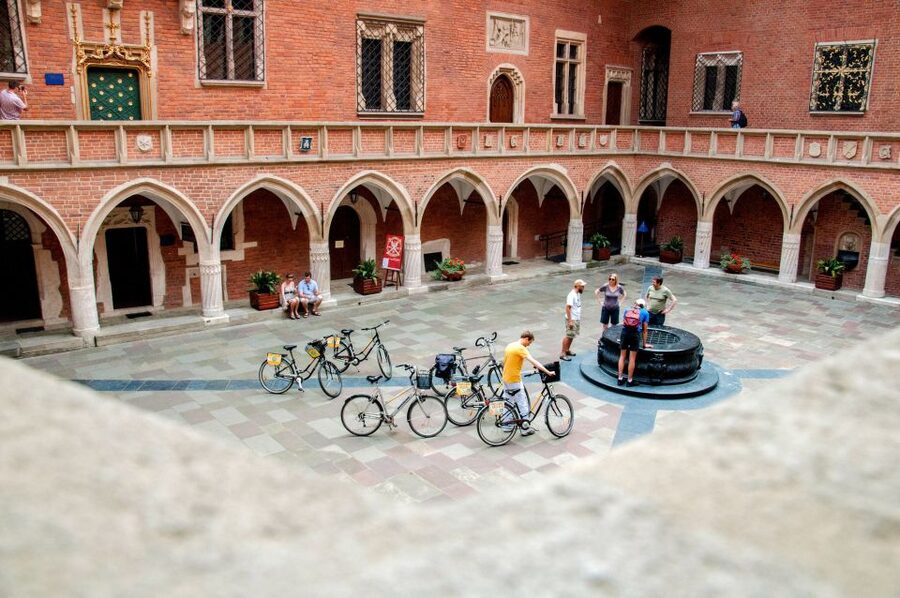
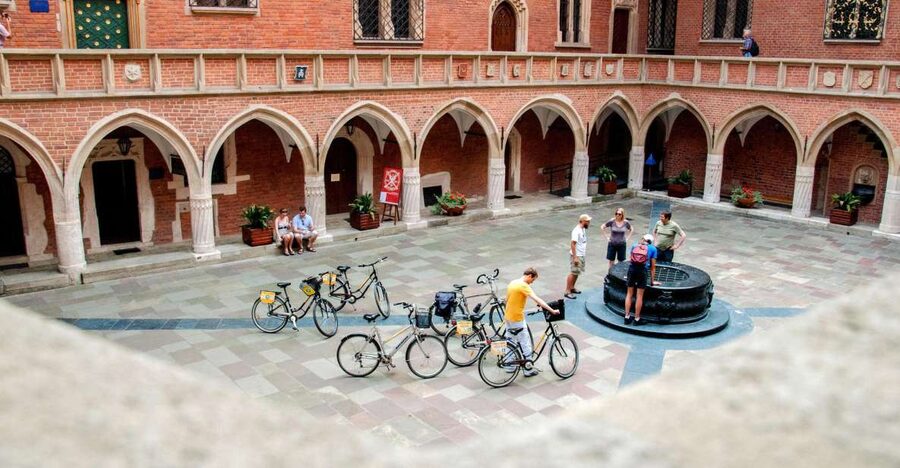
The route continues to Jagiellonian University, one of Krakow’s most important academic landmarks, then to Bishop’s Palace. These stops add a different layer to the city. Krakow is not only royal and religious; it is also a university town with centuries of intellectual life.
This is where the guide’s storytelling makes a real difference. The strongest guides on this route, including Tomasz and Christopher, are praised for explaining the city in clear English and adding local anecdotes instead of simply reciting dates. You should expect a mixture of Polish history, architecture, culture, and small details that are easy to miss on your own.
The stop-by-stop format keeps the information manageable. You are not standing in one place for an hour while your legs stiffen. You listen, take photos, then get moving again.
More Kazimierz and Jewish Quarter tours in Krakow:
- Krakow: Kazimierz Jewish Quarter Walking Tour
★ 4.8 · 571 reviews - Full Bike Tour – the Old Town, Jewish Qtr & the Ghetto NEW BIKES
★ 5.0 · 437 reviews - Krakow: Bike Tour of the Old Town, Kazimierz, and the Ghetto
★ 4.9 · 350 reviews - Krakow: Jewish Quarter and Ghetto Electric Golf Cart Tour
★ 4.6 · 348 reviews
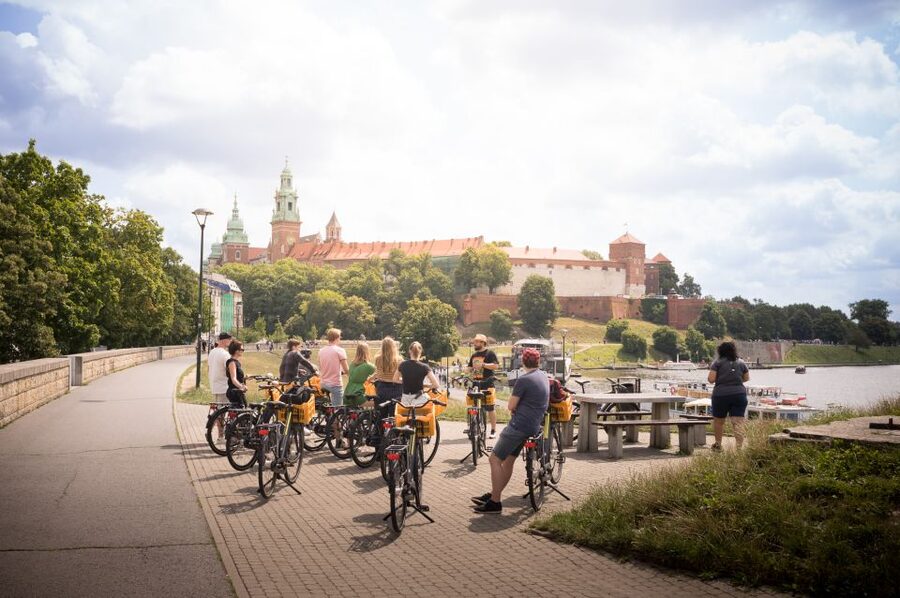
Along the Vistula to Wawel Castle
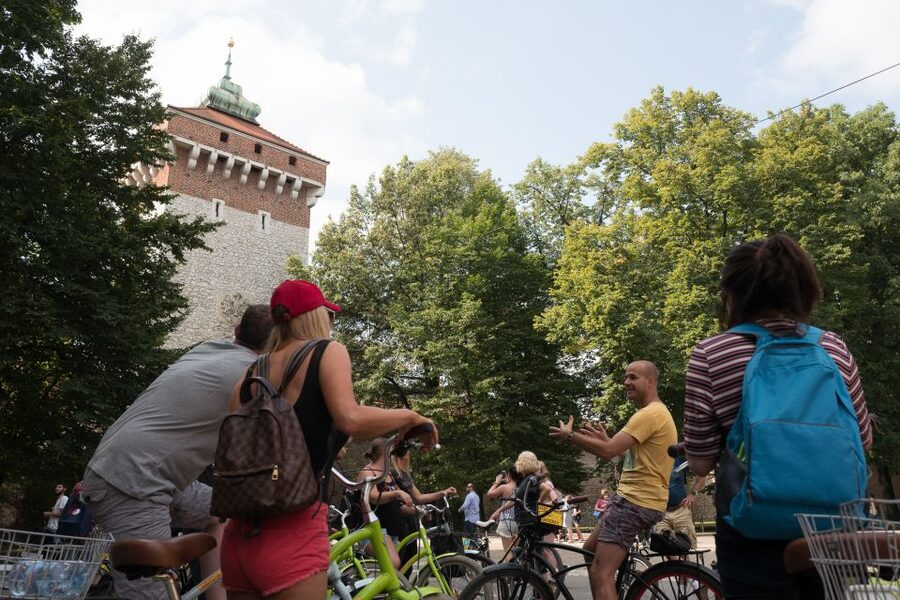
The ride beside the Vistula gives you a change of pace. Instead of narrow streets and dense buildings, you get open views and a more relaxed stretch of cycling.
The route then reaches Wawel Royal Castle, one of Krakow’s essential sights. The guide will explain the castle and its place in Poland’s story, but the tour does not include entry tickets. You will see the area from outside and hear the context, then you can decide if you want to return for a longer visit.
Nearby, the Wawel Dragon Statue adds a lighter moment. The dragon is part of Krakow’s local legend, and guides use it to balance the heavier history covered later. This mix of legend, royal history, and everyday city life is one reason the ride feels more personal than a simple list of monuments.
The castle area can be busy, and the route may require care around pedestrians. You will have more freedom to enjoy the views if you stay close to the guide and avoid rushing ahead for photographs.
Kazimierz, Krakow’s former Jewish quarter
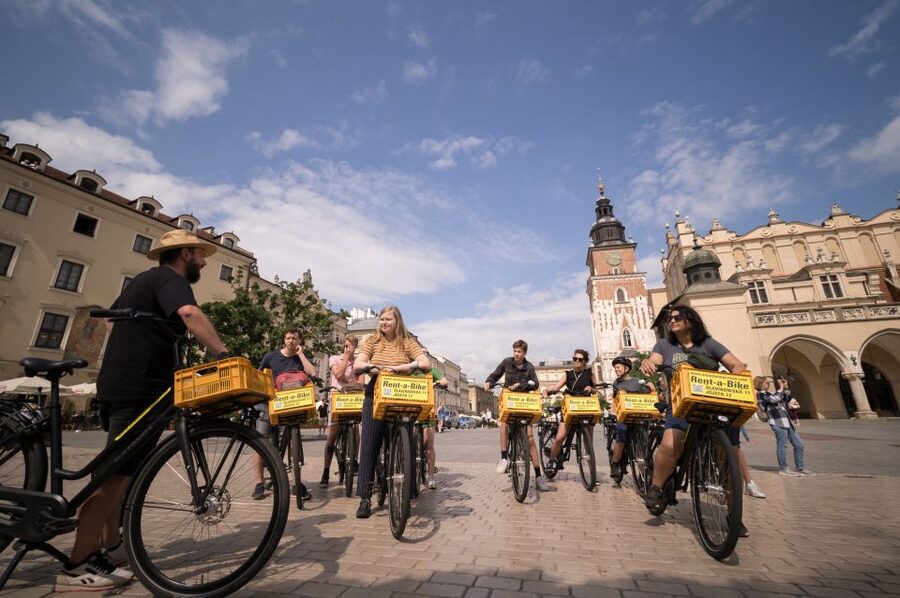
From Wawel, the group rides into Kazimierz. This former Jewish quarter is one of the tour’s most important sections, not simply because it is photogenic, but because it connects Krakow’s Jewish past with the city you see today.
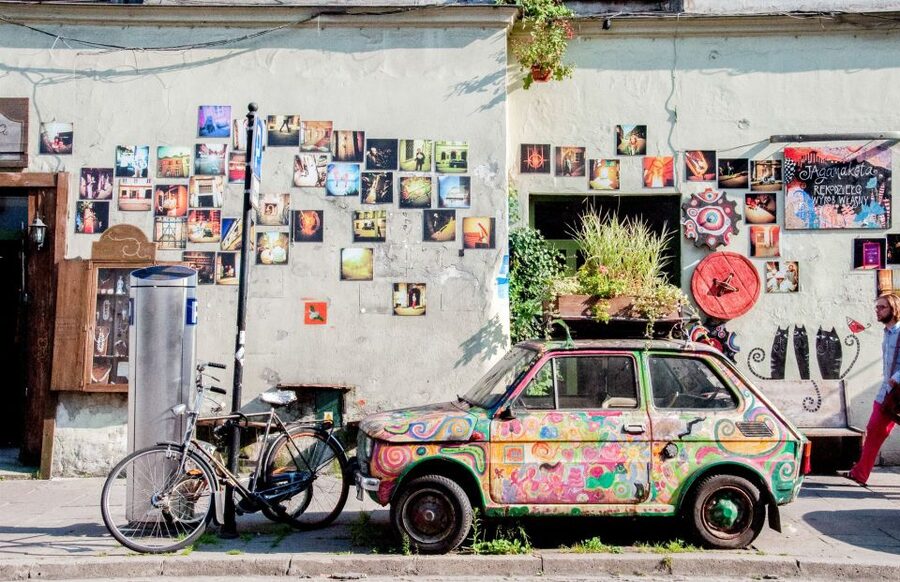
The itinerary includes the Schindler’s List Passage, Plac Nowy, and Szeroka Street. Each stop offers a different view of Kazimierz. Szeroka Street is closely tied to the area’s Jewish identity, while Plac Nowy gives you a more everyday square and a chance to notice how the neighborhood functions in the present.
You should expect the guide to explain both the prewar community and the damage caused by World War II. The best approach is to listen carefully and allow the mood to change. Kazimierz has cafés, shops, and an active social life, but the tour does not reduce its past to decoration.
The Schindler’s List connection is handled through real places rather than movie trivia alone. You will see locations associated with the film and hear how the story relates to Krakow. If you are coming mainly because of the movie, this ride gives you useful context, but it is not a substitute for visiting Schindler’s Factory museum.
The former ghetto and Ghetto Heroes Square
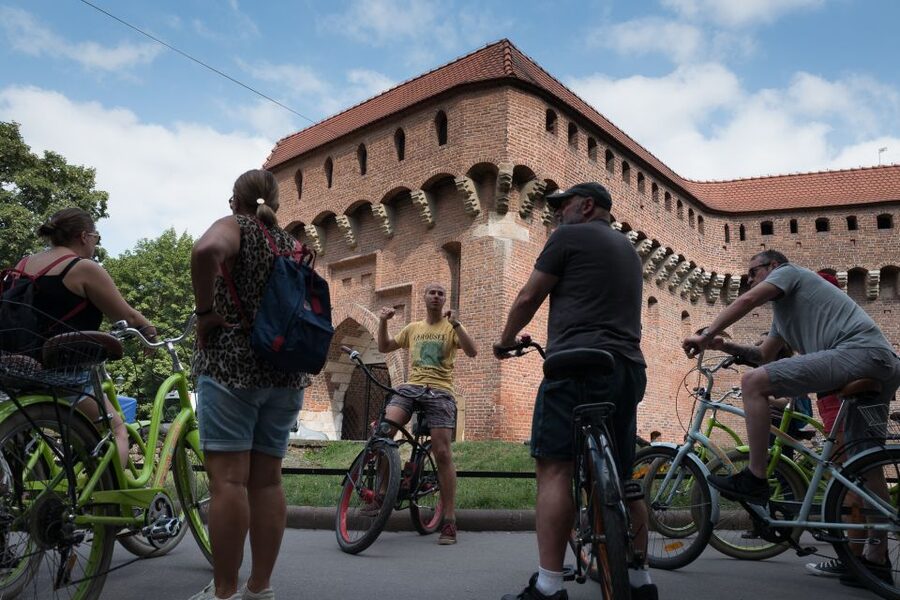
After Kazimierz, the route crosses Father Bernatek’s Bridge and continues into the former ghetto area. The bridge itself is a brief stop, but it provides a clear transition from one part of the city to another.
Ghetto Heroes Square is one of the most sobering points on the route. The memorial recalls the Jewish residents who were forced into the Krakow ghetto during World War II. You will have time for photographs and an explanation from the guide, but this is not a place to hurry through.
The tour’s strength here is its willingness to address difficult history directly. Guides are praised for explaining timelines and darker parts of Krakow’s past with care, accuracy, and a little restraint. That matters because the subject calls for more than a film reference or a dramatic anecdote.
You may find this section emotionally heavier than the Old Town portion. That contrast is useful. It shows how quickly Krakow’s story moves from royal power and medieval walls to occupation, persecution, and memory.
Oskar Schindler’s Factory and the final ride
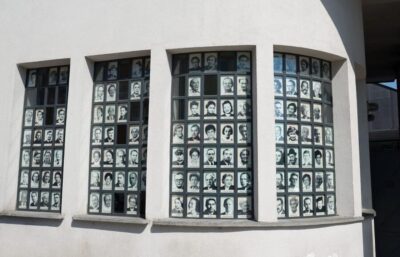
The last major stop is Oskar Schindler’s Factory. The guide explains its connection to Schindler and the wartime history of Krakow, but admission is not included. If you want to enter, you will need to arrange a separate ticket and visit.
The outside stop works well as the final piece of the route because it brings together the movie connection, the former ghetto, and the wider story of the city during World War II. It also gives you a practical choice: continue your Krakow history with a museum visit, or finish the tour and return another day.
The group then cycles back toward the original area, with drop-off at Sławkowska 11. The ride lasts 210 minutes in total, including the 30-minute break. That length is enough to cover a lot without turning the afternoon into a race.
What the break adds to a three-and-a-half-hour ride
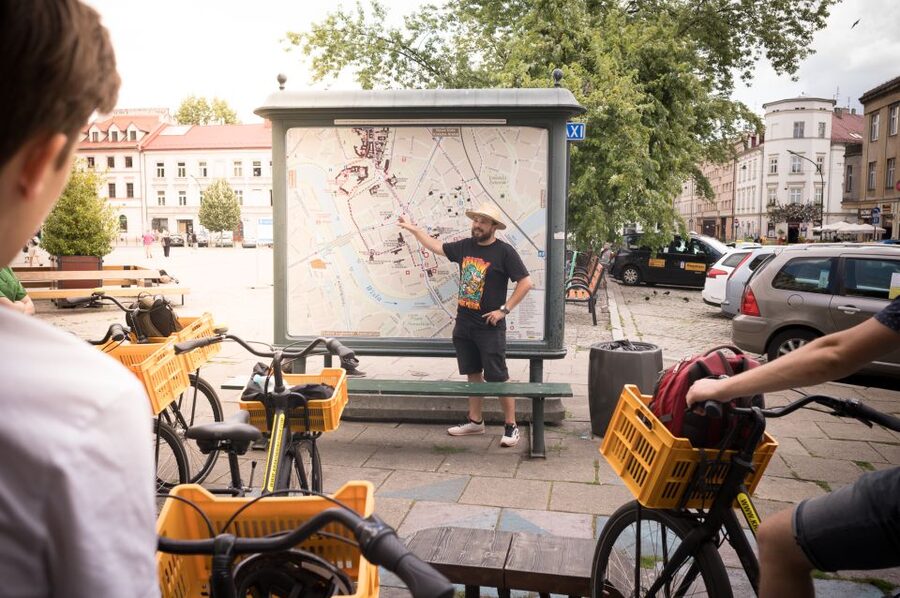
The scheduled break is more important than it sounds. A bike tour with 25 stops involves repeated mounting, dismounting, listening, and moving through streets. A pause lets you catch your breath, buy a drink or snack, use the time to chat with people in the group, and reset before the more serious history in the ghetto area.
Refreshments are not included, so bring money for anything you want during the break. Entrance tickets are also separate. At $37 per person, the tour remains good value if you use it as a broad introduction rather than expecting every sight to include an interior visit.
I would book it early in your stay. Several guides also offer useful suggestions about places to eat and areas worth returning to, and the route helps you decide where to spend your free time later.
Guide quality and group feel
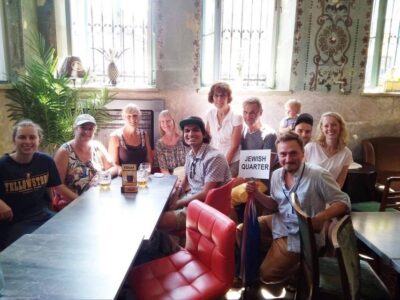
The guide is the heart of this experience. The company uses English-speaking guides, with names appearing in recent bookings and feedback including Christopher or Chris, Tomasz or Thomas, Michael, and Krzysztof. Your guide will vary, but the repeated strengths are clear: good English, strong local knowledge, humor, patience, and care with the group’s pace.
Groups are kept small for a more personal experience. That makes it easier to ask questions and easier for the guide to notice if someone has fallen behind. It also helps at crossings and busy streets.
The route suits mixed-age groups. A family group ranging from age 11 to 58 enjoyed the pace, and riders describe the cycling as easy and mostly level. Still, you should be honest about your comfort on a bike. A sturdy bike can feel heavy, and cobbled surfaces are not as smooth as a cycle path.
Is $37 good value?
At $37, you are paying for a supplied bicycle, an English-speaking guide, insurance, and three and a half hours of coverage across several parts of Krakow. That is strong value if you want an overview of the city and would otherwise pay for separate walking tours or local transport.
The value is strongest for a first visit or a short stay. You see the central sights, the river, Wawel, Kazimierz, the former ghetto, and Schindler-related locations in one outing. You also save your feet for museums and longer visits later.
The limits are clear. Food, drinks, and admission tickets are extra. The stops are brief, so anyone wanting detailed time inside Wawel Castle or Schindler’s Factory should add separate visits. You are paying for range and explanation, not an in-depth museum tour.
The free cancellation window is up to 24 hours before departure, and you can reserve now and pay later. Check available start times when booking, since the exact departure schedule is not fixed here.
Who should book this Krakow bike tour?
I would choose it if you want to see a lot in one morning or afternoon, enjoy history told through stories, and can comfortably ride for several hours with stops. It is especially useful for first-time visitors, short stays, families with older children, and anyone who likes to get oriented before exploring alone.
I would skip it if you cannot ride, dislike cobbles, need extensive mobility support, or want long indoor visits at each sight. A walking tour may suit you better if you prefer to remain in one neighborhood and spend more time inside monuments.
For most able cyclists, this is an efficient and thoughtful introduction to Krakow. Book it near the start of your stay, request a helmet if you want one, and leave room in your schedule to revisit Kazimierz, Wawel, or Schindler’s Factory at your own pace.
FAQ
How long does the Krakow bike tour last?
The tour lasts 210 minutes, or three and a half hours, including a 30-minute break.
What areas does the tour visit?
You will visit Krakow’s Old Town, the area around Wawel Castle, Kazimierz, the former World War II ghetto area, and locations connected with Schindler’s List.
Is the tour conducted in English?
Yes. The tour includes a live English-speaking guide.
Are bicycles included in the price?
Yes. Bikes are included, along with cyclist insurance.
Are helmets provided?
Helmets are available on request. Ask for one before the tour begins if you would like to wear one.
Are food and drinks included?
No. Refreshments are not included, but the tour provides a 30-minute break for you to buy refreshments.
Are entrance tickets included?
No. Entrance tickets are not included. This applies to places such as Wawel Castle or Oskar Schindler’s Factory if you want to go inside.
Where does the tour meet?
The meeting point is at Sławkowska 11, inside the courtyard of the building. Enter through the gate marked Chicago Music Club.
Who should not book this activity?
The tour is not suitable for people who cannot ride a bike, people with mobility impairments, or babies under one year old.
More bike tours in Krakow
- Complete Cracow Bike Tour (small group of maximum 15 people!)
★ 5.0 · 1,322 reviews - Highlights of Krakow Bike Tour – Small group
★ 5.0 · 662 reviews - Hidden Krakow Bike Tour
★ 5.0 · 275 reviews - Private Bike Tour in Krakow
★ 5.0 · 152 reviews
More Old Town walking tours in Krakow
- Old Town Krakow & Wawel Castle Walking Tour
★ 5.0 · 1,508 reviews - Krakow: The Old Town Walking Tour
★ 4.8 · 794 reviews - Krakow: Old Town Guided Segway Tour
★ 4.7 · 756 reviews - Kraków: Old Town & Wawel Castle Walking Tour in English
★ 4.8 · 532 reviews
Just added around Krakow
- From Krakow: Zakopane Full-Day Tour with Lunch Option★ 4.4 · 62 reviews
- From Krakow: Zalipie and Painted Village Guided Tour★ 4.0 · 4 reviews
- From Krakow: Zakopane and Dunajec River Rafting Tour★ 4.6 · 31 reviews
- From Krakow: Zakopane and the Tatra Mountains★ 4.7 · 36 reviews
- From Krakow: Zakopane and Gubałówka Cable Car Private Tour★ 4.3 · 12 reviews
- From Krakow: Zakopane Tatra Mountains & Hot Springs Tour★ 3.0 · 29 reviews
- Zakopane & Tatra Mountains Private Full-Day Tour from Krakow★ 4.5 · 33 reviews
- From Krakow: Hot Springs and Zakopane with Gubałówka★ 4.7 · 25 reviews
Krakow Jewish Ghetto Tours, compared.
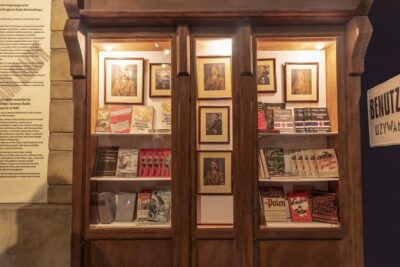
Kazimierz, Schindler’s Factory & Ghetto Guided Tour
Read our review →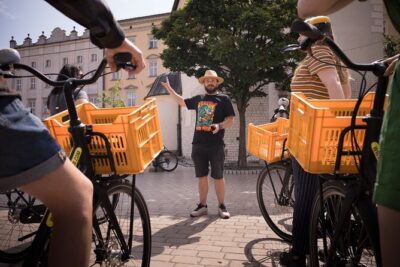
Full Bike Tour – the Old Town, Jewish Qtr & the Ghetto NEW BIKES
Read our review →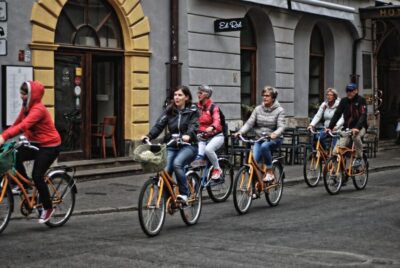
Bike Tour of the Old Town, Kazimierz, and the Ghetto
Read our review →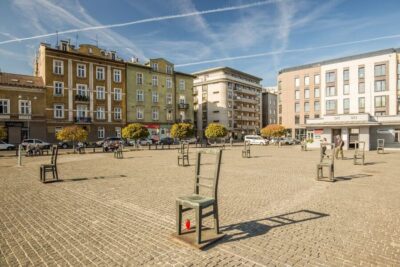
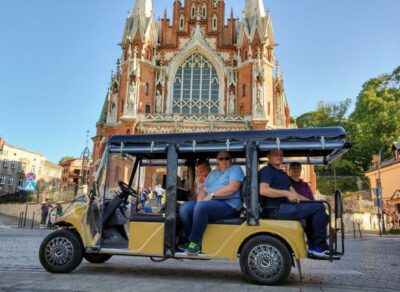
Jewish Quarter and Ghetto Electric Golf Cart Tour
Read our review →
Schindler’s Factory and Jewish Ghetto Guided Tour
Read our review →Browse the lists this tour appears in