
Reviewed · PLASZOW CAMP TOURS
Guided Tour of Plaszow Concentration Camp, Kraków
Plaszow is not a museum filled with intact barracks. It is an open, quiet place where the ground itself carries the story. This two-hour guided walk helps you picture a camp that Nazi Germany built on the site of two Jewish cemeteries, then brings the history into focus through memorials, ruins, cemetery traces, and the paths once paved with broken gravestones.
I like two things here. First, the guide gives structure to a site with few surviving buildings, explaining how the living, hospital, administrative, and industrial sections worked. Second, the pace leaves room for reflection rather than pushing you from one point to the next. The main consideration is that Plaszow can feel stark and difficult to read without a guide, so this tour is far more useful than arriving alone and simply walking around.
Key points to know before booking
- The tour spends two hours at an open former camp site, where silence and memorials matter as much as surviving structures.
- You visit the Grey House, cemetery remains, the roll-call square, and the ruins of the pre-burial hall.
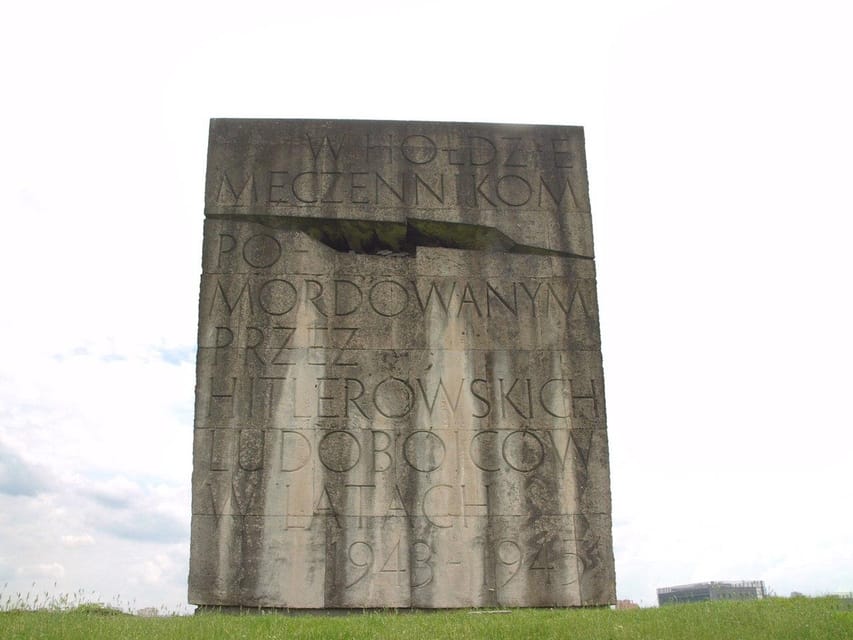
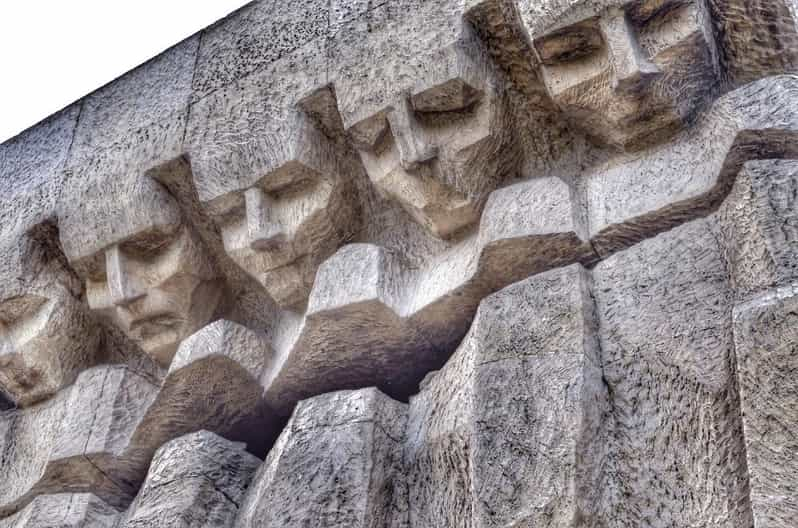
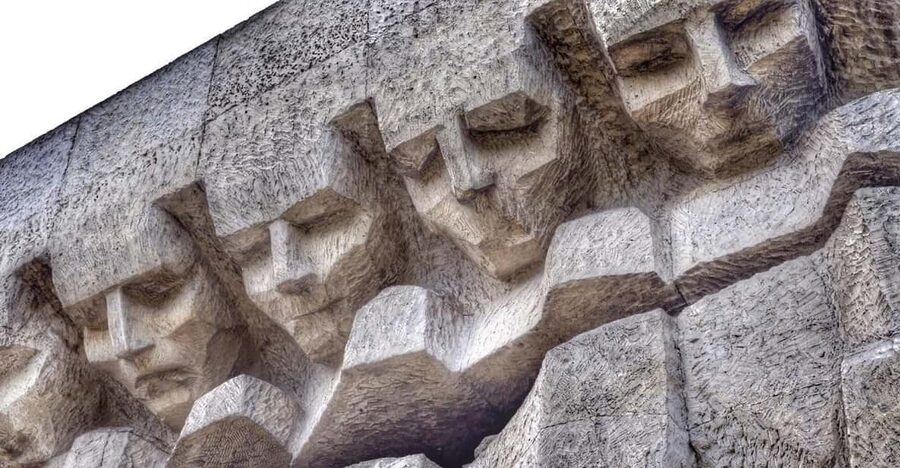
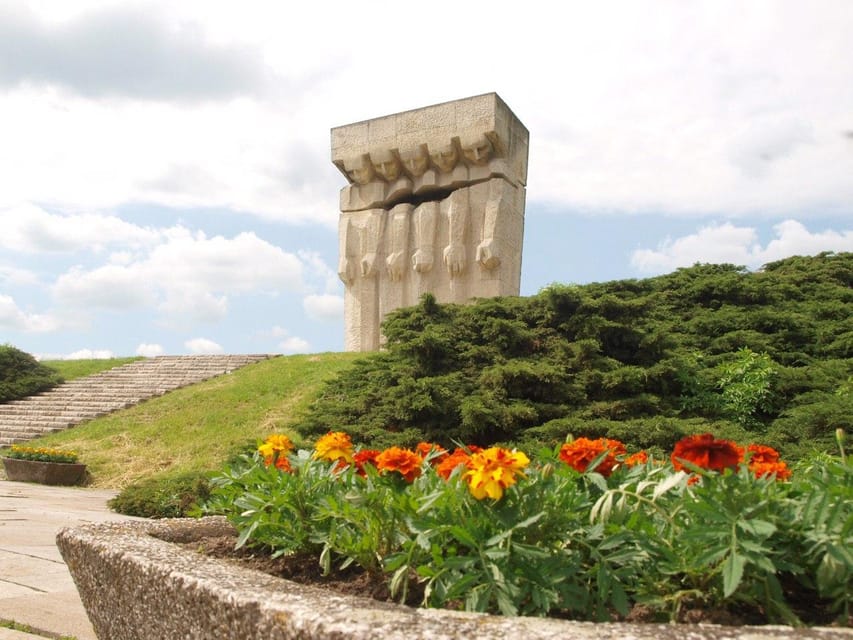
- The Monument of Torn-Out Hearts is a major stopping point for remembering the people murdered here.
- Schindler’s story is part of the tour, including how his factory work permits protected Jewish prisoners.
- The route includes one tram ticket, and the meeting point is marked by an excursions.city sign.
- The English-language tour costs $29 per person, with free cancellation up to 24 hours before departure.
Why Plaszow Requires a Guided Walk
Plaszow does not offer the instant clarity of a preserved historic building. There are no rows of complete barracks waiting to tell you what happened. Instead, the site asks you to notice fragments: the Grey House, traces of the old Jewish cemeteries, the remains of a pre-burial hall, and the shape of spaces once used for roll call.
That is why I consider a guide especially useful here. Without context, you may see an ordinary-looking stretch of open ground. With an explanation of the camp’s layout, you can begin to understand where prisoners lived, where administration took place, and where industrial work was organized.
The tour also gives the place a human scale. It does not treat Plaszow as a set of film locations or a stop to rush through before lunch. The stated pace is designed for reflection, and that suits the subject. You have time to listen, ask questions, and pause at the memorials.
The small group size is not specified, so you should not book expecting a private tour. Still, one English-language group and a two-hour route provide a clear framework. A recent booking had just one participant with the guide, but that should be treated as a lucky possibility rather than a promise.
More Plaszow camp tours in Krakow:
- Krakow: Plaszow Concentration Camp Walking Tour
★ 4.8 · 39 reviews - Krakow: Schindler’s Factory & Ghetto & Plaszow Camp Guided Tour
★ 4.5 · 28 reviews - Guided Tour in Kraków-Płaszów Former Concentration Camp
★ 5.0 · 19 reviews
The Camp’s Origins on Two Jewish Cemeteries
Plaszow was established in October 1942 by the Nazi German occupiers of Poland. The camp was built on the grounds of two Jewish cemeteries, a fact that gives the site an added layer of pain. The place was not just a prison camp. It was also a deliberate violation of a Jewish burial ground.
At first, Plaszow served as a forced-labor camp for Jews from the liquidated Kraków Ghetto. That connection is important because it shows how the camp formed part of a wider process: people were removed from the ghetto, sent into forced labor, and exposed to further deportation and murder.
In July 1943, the camp also gained a penal-labor section for Poles. In January 1944, Nazi authorities redesignated Plaszow as a concentration camp. Later, it functioned as a transit camp for Hungarian Jews being sent to Auschwitz.
More than 35,000 people were imprisoned at Plaszow during its existence. Around 6,000 were murdered. Executions took place at several points within the camp, and mass graves and memorials now mark some of these sites.
A guide can connect these changes without reducing the story to a list of dates. You learn that Plaszow changed purpose and population over time, while remaining tied to forced labor, imprisonment, deportation, and murder. That context is one of the tour’s strongest features.
Entering the Site Through Its Remaining Markers
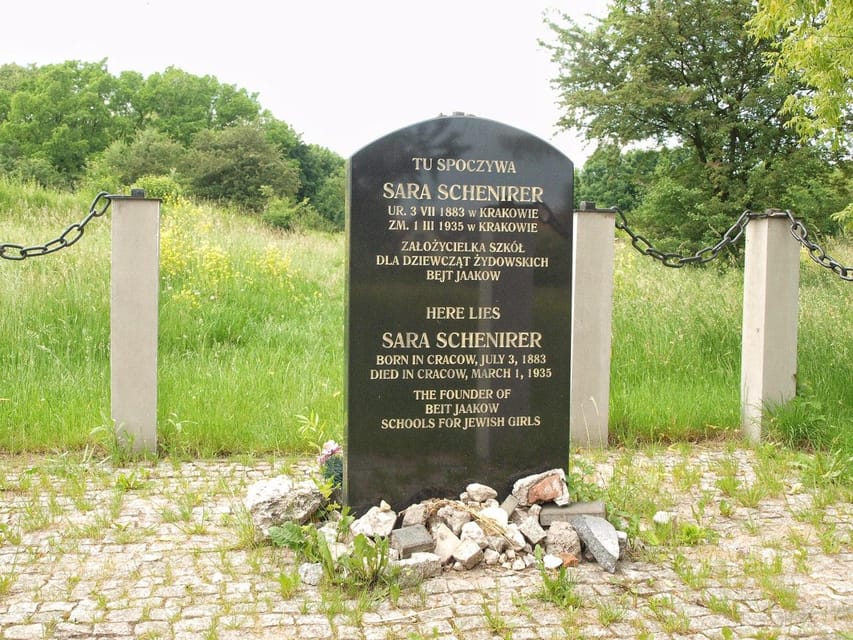
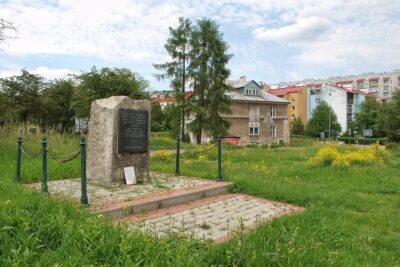
The tour pieces together Plaszow from what is still visible. The Grey House is one of the key surviving structures. The route also reaches the ruins of the pre-burial hall, where the remains of the Jewish cemetery can help you understand how the camp was placed over an earlier sacred site.
You should expect partial remains rather than a polished museum setting. That can make the visit emotionally difficult, but it also prevents the history from becoming a display behind glass. You are walking through an open place where very little physical evidence remains, and the guide’s words give meaning to what your eyes can and cannot see.
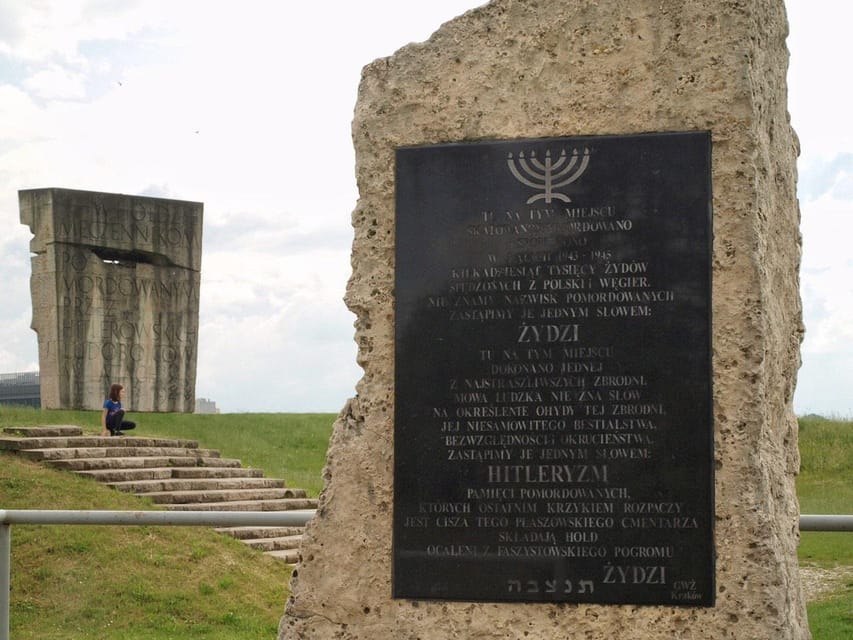
The old cemetery traces deserve particular attention. Paths paved with fragments of gravestones show how the Nazi camp authorities treated Jewish religious spaces and the people imprisoned there. This is not just a detail about construction. It is a physical sign of humiliation and destruction.
The route also includes the former roll-call square. Here, the guide explains how prisoners were assembled and how the camp was arranged around daily control. A roll-call space may look empty now, but knowing its purpose changes how you read the open ground.
I would listen closely to the camp layout explanation. The living, hospital, administrative, and industrial areas were not interchangeable. Understanding those sections helps you picture how labor, illness, punishment, surveillance, and survival were bound together.
Remembering the Victims at the Monument of Torn-Out Hearts
The memorial stops are the emotional center of the walk. The Monument of Torn-Out Hearts is especially important, offering a place to honor those who were murdered and imprisoned here.
This part of the tour is not about collecting dramatic photographs. It is about allowing the names, numbers, and places discussed earlier to become more personal. The guide’s role matters greatly. A clear explanation can help you understand the memorial without turning it into a rushed photo stop.
Executions took place at several sites within Plaszow. Today, mass graves and memorials mark parts of that history. The tour brings these locations into the wider story of the camp, helping you see that the murders were not confined to one single point.
I appreciate that the route is described as reflective rather than rushed. At a site like this, a packed schedule would be a poor fit. You need time to absorb what you have heard, especially if you have already visited other Holocaust sites in Kraków or plan to visit Auschwitz later.
The subject matter is heavy. That is not a flaw, but it is something to consider before booking. This is not a light sightseeing walk, and the open setting can make the experience feel intimate and exposed.
A handful more Krakow trips to weigh up
- From Krakow: Auschwitz-Birkenau Guided Tour & Hotel Pickup
★ 4.5 · 33,358 reviews - From Krakow: Auschwitz-Birkenau Guided Tour & Hotel Pickup
★ 4.5 · 29,340 reviews - Krakow: Auschwitz Guided Tour with Optional Hotel Pickup
★ 4.5 · 15,280 reviews - Krakow: Auschwitz-Birkenau Guided Tour with Pickup & Lunch
★ 4.5 · 9,800 reviews
Oskar Schindler’s Connection to Plaszow
Oskar Schindler is inseparable from the way many people first learn about Plaszow. Steven Spielberg’s Schindler’s List brought the camp and its surrounding story to a worldwide audience, and the tour includes filming locations connected with the movie.
The real history is more important than the film connection. Through his enamelware enterprise, Schindler obtained work permits for Jewish prisoners registered through Plaszow. Those permits helped shield them from further transports. Later, he arranged for their transfer to his wartime plant in Brünnlitz, saving more than a thousand lives.
The guide places Schindler within the camp’s wider system rather than presenting him as the entire story. That distinction matters. Plaszow was home to tens of thousands of prisoners, and the lives saved through Schindler’s efforts form one part of a much larger history of persecution and murder.
The film locations can help you connect familiar images with the actual setting, but you should not expect a movie-themed tour. The strongest part is the link between popular memory and historical explanation. You learn what the film can show, what it leaves out, and why the physical site matters beyond the screen.
If Schindler’s List led you to Kraków, this walk will give you a more grounded understanding of the place. If you have not seen the film, you can still follow the tour fully. The camp’s history does not depend on knowing the movie.
What Two Hours Gives You
Two hours is a sensible length for this visit. It is long enough to cover the main remains, camp organization, memorials, executions, cemetery traces, and Schindler’s connection without turning the tour into an all-day commitment.
The route is not designed as a sprint. That matters because the site requires pauses. You may spend several minutes listening at one memorial, then walk through quiet open ground before reaching the next point. A shorter visit could leave you with only a few disconnected impressions.
At the same time, two hours cannot cover every detail of Plaszow’s history. If you want an academic study of the camp, archival research, or a full account of every prisoner group, this experience will be an introduction rather than a final word.
The guide is the difference between a basic visit and a meaningful one. The strongest praise for the experience has focused on guides who explain the camp in detail, answer questions, and show real feeling for the subject. A French-speaking participant described the guide as passionate and said the explanations made the camp understandable in detail. Another participant specifically valued the guide’s willingness to answer questions.
The scheduled language is English, and group tours operate in one language only. Choose your preferred language while booking, but the available language listed for this experience is English.
Price, Transport, and Practical Value
At $29 per person, the tour offers solid value if you want historical context rather than simple access to an open site. The price includes a licensed guide and one tram ticket, so you are paying for interpretation as well as transport support.
The tram ticket is a small but useful inclusion. It means one part of the transfer is covered, though the exact route and departure point should be checked when you book. Look for the guide holding an excursions.city sign at the meeting point.
Arrive 10 minutes early. This is important, not polite filler. Once the group leaves, late arrivals cannot join, and the ticket cannot be refunded. Plaszow is not the kind of place where you want to begin the visit flustered and searching for the group.
The tour is wheelchair accessible according to the activity information. Since the experience takes place across an open former camp site, you may still want to confirm that the route suits your personal mobility needs before booking, particularly if you need very specific ground or surface conditions.
Free cancellation is available up to 24 hours before the start time, and you can reserve now while paying later. That flexibility helps if your Kraków schedule is still changing. It does not remove the late-arrival rule, so keep the start time firmly in your plan.
Who Will Get the Most From This Tour
I would choose this tour if you want a serious, guided introduction to Plaszow and prefer to understand the site rather than simply walk through it. It suits first-time visitors who want the main history explained in a focused two-hour route.
It is also useful if you have visited Schindler’s Factory or are interested in how Kraków’s wartime story connects across different places. The Schindler material gives you another way to understand the camp, while the memorials and cemetery traces keep the attention on the victims.
Families with older children and teenagers may find the tour valuable, provided they are ready for the subject matter. The information is direct, and the site is a place of mourning. I would not choose it for very young children who are unlikely to understand the history or cope with its weight.
You may prefer a different visit if you want preserved buildings, indoor exhibits, or a long series of artifacts. Plaszow offers very few intact structures, and much of the experience depends on listening, imagining, and standing quietly at memorial sites.
The Small Details That Shape the Visit
Wear practical footwear and allow yourself time to think. The route is outdoors, and the experience works best when you are not watching the clock every few minutes.
Bring questions. The strongest part of the guide-led format is the chance to ask about the camp’s organization, Schindler’s factory, the cemetery traces, and the memorials. One-on-one questions may not be possible in a larger group, but the guide is expected to lead the explanation and respond to questions.
Do not treat the filming locations as the main event. They are an accessible entry point, especially if you know Schindler’s List, but the camp’s real importance comes from the people imprisoned and murdered there.
The rating for the experience is 4.8 from seven reviews, with praise focused on clear explanations, passionate guiding, and helpful answers. That matches what this site needs most: not theatrical storytelling, but a guide who can make an almost empty place intelligible while keeping the focus on human lives.
Should You Book the Plaszow Camp Tour?
Book it if you want a focused, respectful explanation of one of Kraków’s most difficult historical sites. The $29 price is fair for a licensed English-speaking guide, a two-hour route, and a tram ticket, especially because Plaszow can be hard to understand without help.
The tour is a particularly good choice if you care about Holocaust history, want to connect Schindler’s List with the real site, or prefer a reflective visit over a fast checklist stop. Arrive early, wear sensible shoes, and give the memorials your full attention.
Skip it only if you are looking for preserved interiors or a lighter sightseeing experience. Plaszow is quiet, sparse, and painful. That is precisely why a careful guided walk can make such a strong impression.
FAQ
How long is the guided Plaszow tour?
The tour lasts two hours. The route is paced for reflection and includes the main remains, memorials, cemetery traces, and information about the camp’s organization.
What language is the tour conducted in?
The live guided tour is in English. Group tours operate in one language, so select your preferred language when booking.
What is included in the price?
The $29 price includes a licensed guide and one tram ticket.
Where do I meet the guide?
Look for the guide holding an excursions.city sign at the meeting point.
How early should I arrive?
Arrive 10 minutes before the tour begins. Latecomers cannot join after the group has departed, and their tickets cannot be refunded.
Can I cancel the booking?
Yes. You can cancel up to 24 hours before the tour for a full refund. You can also reserve now and pay later.
Just added around Krakow
- From Krakow: Zakopane Full-Day Tour with Lunch Option★ 4.4 · 62 reviews
- From Krakow: Zalipie and Painted Village Guided Tour★ 4.0 · 4 reviews
- From Krakow: Zakopane and Dunajec River Rafting Tour★ 4.6 · 31 reviews
- From Krakow: Zakopane and the Tatra Mountains★ 4.7 · 36 reviews
- From Krakow: Zakopane and Gubałówka Cable Car Private Tour★ 4.3 · 12 reviews
- From Krakow: Zakopane Tatra Mountains & Hot Springs Tour★ 3.0 · 29 reviews
- Zakopane & Tatra Mountains Private Full-Day Tour from Krakow★ 4.5 · 33 reviews
- From Krakow: Hot Springs and Zakopane with Gubałówka★ 4.7 · 25 reviews
Plaszow Camp Tours, compared.
Schindler’s Factory & Ghetto & Plaszow Camp Guided Tour
Read our review →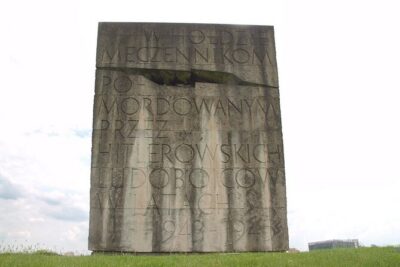
Guided Tour in Kraków-Płaszów Former Concentration Camp
Read our review →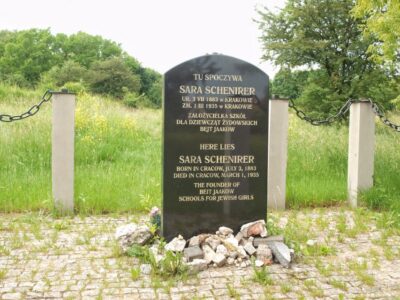
Krakow Schindler’s Factory & Ghetto & Plaszow Camp Guided Tour
Read our review →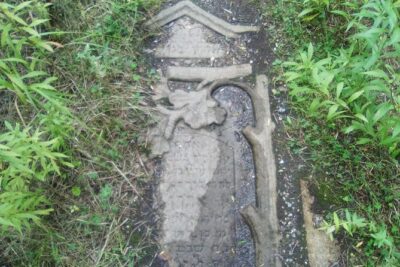
TOUR AL CAMPO DE CONCENTRACIÓN DE PLASZOW. El campo de la Lista de Schindlert.
Read our review →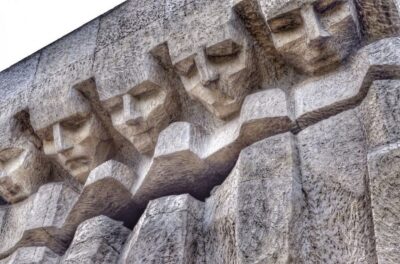
River Cruise & Guided Visit to Former Plaszow Camp
Read our review →Browse the lists this tour appears in