
Reviewed · PLASZOW CAMP TOURS
TOUR AL CAMPO DE CONCENTRACIÓN DE PLASZOW. El campo de la Lista de Schindlert.
Plaszow is not a polished museum visit. It is a broad, open site where ruins, memorials, grass, and silence mark the remains of one of the Second World War’s most brutal camps. The tour brings the scattered places together, from Amon Göth’s Grey House to the former execution grounds and the quarry where prisoners were forced to work.
I like two things here. First, a native Spanish-speaking guide gives the site a clear human story instead of leaving you to guess what each ruin meant. Second, the tour uses old photographs to help you compare the present ground with the camp as it once was. The main drawback is that you walk outdoors for about four hours, with little shelter from bad weather.
Key points at a glance
- A four-hour walk through the full Plaszow site, only about 3 kilometers from central Krakow.
- Spanish-language guiding, with David often praised for his care, strong knowledge, and willingness to take extra time.
- Schindler’s List locations, including the camp setting used during filming and the former residence of Amon Göth.
- Powerful remains and memorials, from the Grey House and SS buildings to Jewish cemetery ruins and execution sites.
- Small groups of up to 20 people, useful on a sensitive tour where clear explanations matter.
- Outdoor conditions and uneven access, with comfortable shoes required and no wheelchair access.
Why Plaszow deserves a full four hours
Many Krakow visitors know Plaszow through Steven Spielberg’s Schindler’s List. The film brought the camp to a worldwide audience, but the real place is more demanding than a movie location. You are not simply checking off a famous film site. You are walking through a former concentration camp where the remains are spread across a large area and where many important places are easy to miss without guidance.
The camp is about 3 kilometers from central Krakow, close enough for a straightforward trip by public transport. The transport cost is not included and is approximately 2 euros. That small extra expense matters less than the time you save by meeting a guide who can explain how the different parts of Plaszow fit together.
The four-hour length is appropriate. A shorter visit could show you a memorial and one or two recognizable places, but it would not give enough time for the camp’s wider story. You need time to move between the former administrative buildings, prisoner areas, cemetery ruins, quarry, memorials, and execution grounds.
This is a serious visit, not a casual afternoon walk. I would avoid packing it between several light sightseeing stops. Give yourself room afterward to process what you have seen.
More Plaszow camp tours in Krakow:
- Krakow: Plaszow Concentration Camp Walking Tour
★ 4.8 · 39 reviews - Krakow: Schindler’s Factory & Ghetto & Plaszow Camp Guided Tour
★ 4.5 · 28 reviews - Guided Tour in Kraków-Płaszów Former Concentration Camp
★ 5.0 · 19 reviews
Starting at Sienna 2a in Krakow
The tour begins at Sienna 2a, 31-041 Krakow, at 10:30 in the morning. It ends back at the same meeting point. Since public transport is not included, check your route before setting out and allow enough time to arrive without rushing.
The mobile ticket makes the booking side simple. Confirmation is sent by email at the time of reservation, so keep the booking message easy to find on your phone. The exact transport route is not specified, so the practical choice is to use the meeting point as your fixed reference and confirm how you will reach it before the start time.
The advertised group size is capped at 20 people. That is not a private tour, but it is small enough to hear a guide more easily than in a large coach group. On a site with scattered points of interest, group size also affects how smoothly you move from one location to the next.
David is the guide name most closely linked with this experience. If he leads your visit, you can expect a guide who has been praised for using historic photographs, answering questions carefully, and giving the site more time when the group needs it. He has also arranged a nearby meeting point for at least one participant, though you should still treat Sienna 2a as the official starting place.
The Grey House and Amon Göth’s camp administration
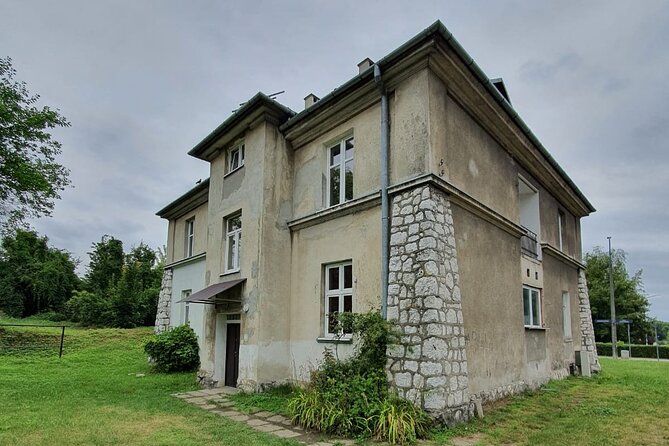
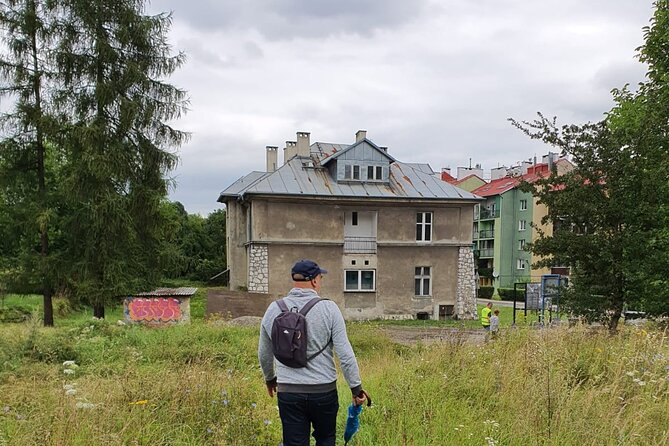
The Grey House is one of the most important early stops. It served as the office of Amon Göth, the camp commandant, and helps explain how the camp was controlled. The building is not presented as a grand museum interior. Its value comes from what happened there and from the guide’s ability to connect the structure to the wider camp system.
You also see the central telephone exchange, the SS headquarters, and the SS barracks. These places show the administrative side of Plaszow. Camps were not run only through fences and guard towers. They depended on offices, communications, staff quarters, and a chain of command.
That is one reason a guide matters here. A casual walk can leave you with a general sense of sadness but little understanding of how the site functioned. The stops around the Grey House give you a clearer picture of the people who managed the camp and the machinery that supported imprisonment and forced labor.
The tour also includes Amon Göth’s former residence. Seeing the place connected with the camp commandant can be unsettling, especially when set against the nearby prisoner areas and execution sites. It is an important reminder of the close physical relationship between ordinary domestic life and the violence carried out at Plaszow.
Jewish cemetery ruins and the camp’s earlier victims
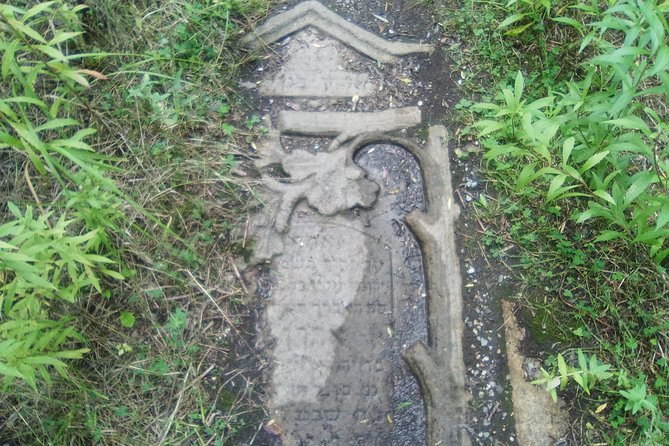
The ruins of the Jewish cemetery are among the most affecting parts of the walk. The tour also reaches the remains of the Jewish mortuary. These fragments do not offer the neat, labeled experience of a conventional museum. You may see only partial structures and traces, which makes the guide’s explanation especially important.
The cemetery sites connect Plaszow to the Jewish community that existed in Krakow before the camp was established. They also show how Nazi persecution attacked not only living people but sacred places and communal memory.
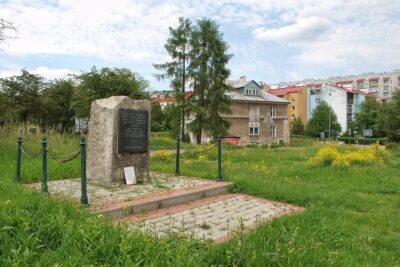
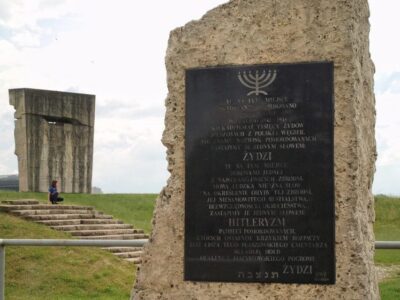
Another stop is the monument to victims of September 10, 1939. Including it widens the story beyond the camp’s best-known years. You are reminded that violence and persecution affected the area before Plaszow became the concentration camp shown in popular memory.
Take your time at these locations. They can appear modest at first glance, yet their meaning is much larger than the amount of surviving masonry. This is a place where the absence of buildings is part of what you are seeing.
Same city, a completely different sort of day:
- From Krakow: Auschwitz-Birkenau Guided Tour & Hotel Pickup
★ 4.5 · 33,358 reviews - From Krakow: Auschwitz-Birkenau Guided Tour & Hotel Pickup
★ 4.5 · 29,340 reviews - Krakow: Auschwitz Guided Tour with Optional Hotel Pickup
★ 4.5 · 15,280 reviews - Krakow–Zakopane: Cable Car, Chocholow Baths, Cheese & Vodka
★ 5.0 · 10,720 reviews
Polish prisoners, Jewish prisoners, and the camp center
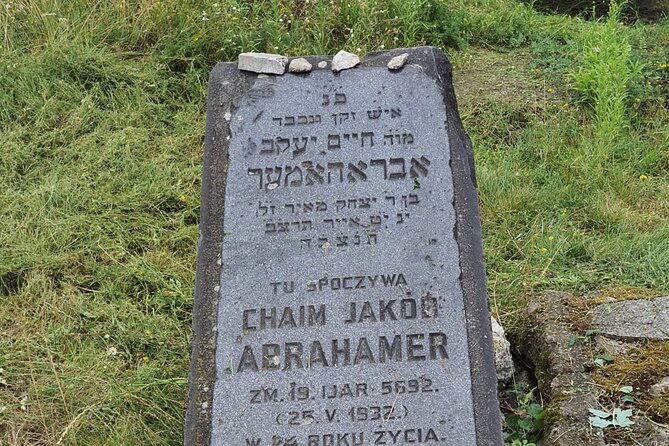
Plaszow included an area for Polish prisoners as well as barracks for Jewish prisoners. The tour covers the central square, prisoner barracks, and the camp’s functional buildings. Together, these stops help you picture how the camp was organized and how different groups were held within it.
The barracks are largely remembered through ruins, traces, and explanation rather than intact rooms. Do not expect a fully reconstructed compound. This is one of the tour’s strengths and one of its limits. The open site leaves room for reflection, but you need the guide to understand where buildings stood and what their roles were.
The central square gives you a useful point of reference. From there, the guide can place the different parts of the camp in relation to one another. That orientation is valuable because Plaszow does not reveal its structure all at once.
The memorial to the camp’s victims provides another pause. I would treat this section as more than a checklist of buildings. The point is to understand how people were confined, controlled, worked, and killed within an organized system.
Execution sites and Hujowa Gorka
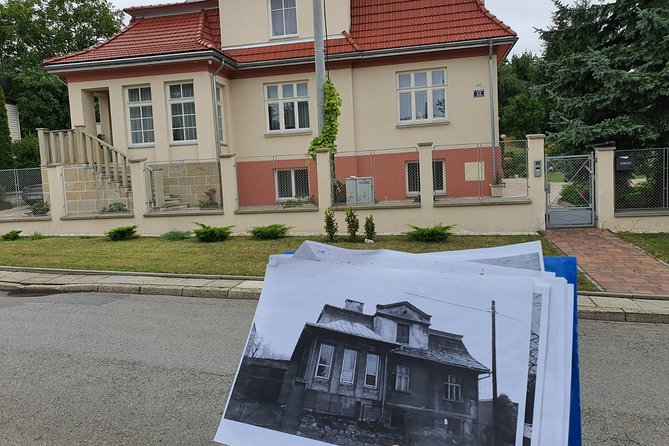
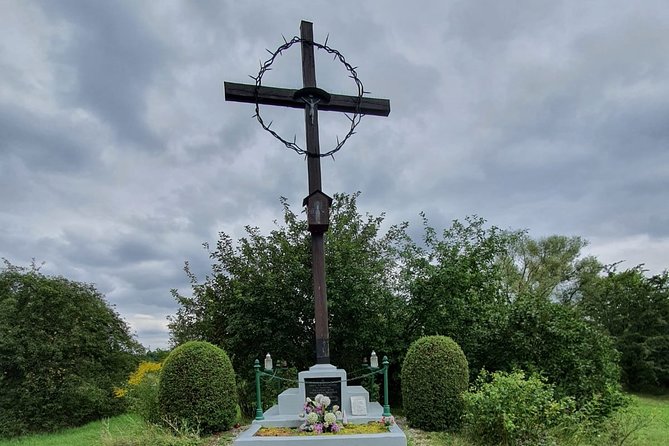
The tour visits the main site of mass executions and Hujowa Gorka, another mass execution location. These are among the most difficult stops, and they should be approached with care and respect.
The names may sound like simple map references, but they mark places of murder. A guide can explain their role without turning the visit into a sensational story. David is particularly praised for his serious approach and for helping participants understand the site rather than treating it as just another Krakow attraction.
You may find these locations less visually dramatic than the famous buildings. That is exactly why a guided visit has value. A bare area, a memorial, or a quiet stretch of ground can carry enormous meaning when you know what took place there.
The tour’s age recommendation of 14 and older is sensible. The subject matter is severe, and younger children may not be ready for the details discussed. Parents should make the final decision based on the child, but this is not a light historical outing.
The quarry and forced labor at Plaszow
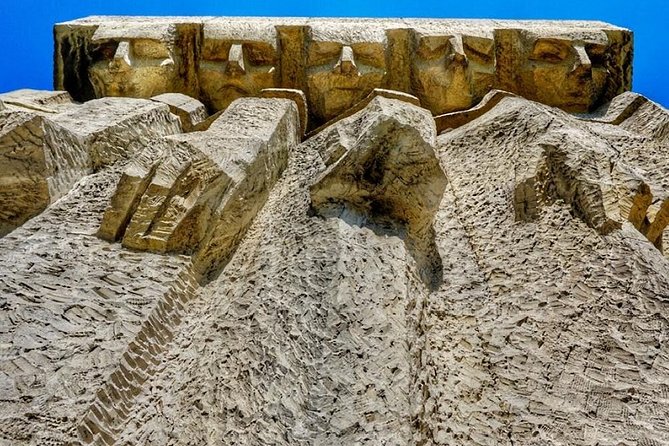
The former quarry shows the labor side of the camp. Prisoners were forced to work there, and the site adds an economic dimension to the story. Plaszow was not only a place of imprisonment. Prisoners were also exploited for work under brutal conditions.
This stop helps explain why the tour lasts four hours. The camp’s story is spread across different functions: administration, housing, punishment, religious and community spaces, executions, and labor. Leaving out the quarry would make the visit less complete.
The ground is described as easy to walk for the most part, but easy walking does not mean comfortable in every season. Weather can affect the surface, and you will spend much of the tour outside. Wear sturdy, comfortable shoes and clothing suited to the forecast.
The experience is not recommended for people using wheelchairs, and it is not recommended for pregnant women. The tour is also subject to cancellation in poor weather. If conditions make the visit unsafe or impractical, you are offered another date or a full refund.
Schindler’s List filming locations, with care
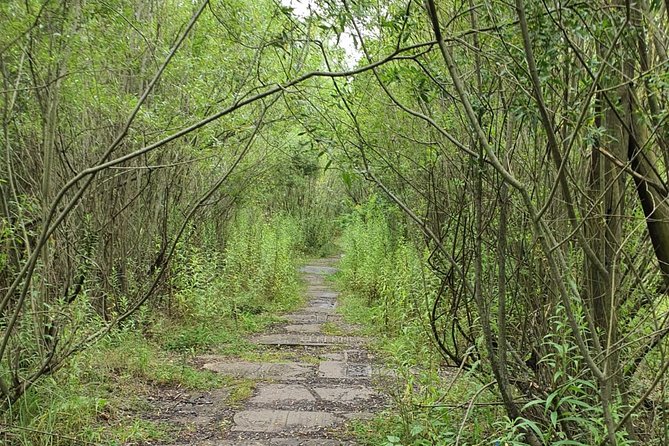
The tour includes the location used to represent the concentration camp during filming of Schindler’s List. This is useful for visitors who know the film, since it connects familiar scenes with the real place and its surroundings.
Still, the movie connection should be a doorway into the history, not the main reason to visit. The real Plaszow camp is not a film set, and the people imprisoned and killed there should remain at the center of your attention.
The guide’s use of old photographs is especially helpful here. You can compare the site as it appears today with the historical setting shown in images and with the way the film recreated parts of the story. That comparison adds context without reducing Plaszow to cinema tourism.
If you have not seen the movie, you can still take the tour. The main content is the camp’s history and physical layout. Knowing the film may make certain locations more recognizable, but it is not required.
Is $40.49 a fair price?
At $40.49 per person, the cost is reasonable if you want a detailed, Spanish-language explanation of a large and emotionally difficult site. The admission ticket to Plaszow itself is free, so you are paying mainly for the guide, the structure of the visit, and the ability to understand places that are not always obvious on their own.
The value depends on how you like to travel. If you prefer to read a plaque and walk independently, you may find the price high for an outdoor site without a conventional entrance ticket. If you want the camp explained in Spanish, with historic photographs and a route that covers its major areas, the fee is easier to justify.
A maximum of 20 participants keeps the tour from becoming a huge group experience. It does not promise a private tour, but the guide can still speak to a manageable group. If you are lucky enough to be in a very small group, the guide may be able to give extra time and answer more questions, as happened for a couple who received a longer visit with David.
The tour’s strongest value is not the number of places visited. It is the connection between them. Without that connection, Plaszow can look like a scattered open area. With a good guide, the Grey House, cemetery ruins, prisoner barracks, quarry, memorials, and execution sites form a much clearer story.
Who should book this Plaszow visit?
I would choose this tour if you want to understand Plaszow beyond its connection to Schindler’s List. It suits adults and mature teenagers who are comfortable with difficult wartime history and who want a serious, guided walk in Spanish.
It is also a good match if you prefer a smaller group and direct explanations. David’s careful style, use of photographs, and willingness to spend extra time are strong reasons to hope for him as your guide, though a particular guide cannot be guaranteed from the details provided.
I would think twice if you have limited time in Krakow, dislike outdoor walking, or want an indoor museum with extensive displays. The site has no promise of shelter or a fully preserved camp complex. You need to accept that much of the experience comes through the guide’s words, the remaining ruins, memorials, and your own attention.
Free cancellation is available up to 24 hours before the 10:30 start time for a full refund. Changes or cancellations inside that window are not accepted, and poor weather can also cause the tour to be moved or refunded.
Should you book it?
Book this tour if you want a careful Spanish-language visit that covers the full Plaszow site rather than only one film location. The four-hour route, historic photographs, and attention to places such as Hujowa Gorka, the Jewish cemetery ruins, the quarry, and Amon Göth’s residence give you a fuller understanding of the camp.
Skip it if you are looking for a quick attraction or a light movie-themed stop. Plaszow is solemn, open-air, and demanding. For the right visitor, though, this is a worthwhile way to face an important part of Krakow’s wartime past with context and respect.
FAQ
Where does the Plaszow tour begin?
The tour begins at Sienna 2a, 31-041 Krakow, Poland.
What time does the tour start?
The start time is 10:30 in the morning.
How long does the tour last?
The visit lasts approximately four hours.
Is public transport included?
No. Public transport is not included. The estimated cost is approximately 2 euros.
Is the tour offered in Spanish?
Yes. The tour includes a native Spanish-speaking guide.
Is the tour suitable for children?
The recommended minimum age is 14 years. The subject matter concerns concentration camp imprisonment, forced labor, and mass executions.
What happens if bad weather cancels the tour?
You will be offered an alternative date or a full refund if the tour is canceled because of poor weather.
Just added around Krakow
- From Krakow: Zakopane Full-Day Tour with Lunch Option★ 4.4 · 62 reviews
- From Krakow: Zalipie and Painted Village Guided Tour★ 4.0 · 4 reviews
- From Krakow: Zakopane and Dunajec River Rafting Tour★ 4.6 · 31 reviews
- From Krakow: Zakopane and the Tatra Mountains★ 4.7 · 36 reviews
- From Krakow: Zakopane and Gubałówka Cable Car Private Tour★ 4.3 · 12 reviews
- From Krakow: Zakopane Tatra Mountains & Hot Springs Tour★ 3.0 · 29 reviews
- Zakopane & Tatra Mountains Private Full-Day Tour from Krakow★ 4.5 · 33 reviews
- From Krakow: Hot Springs and Zakopane with Gubałówka★ 4.7 · 25 reviews
Plaszow Camp Tours, compared.
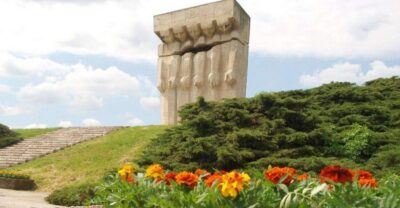
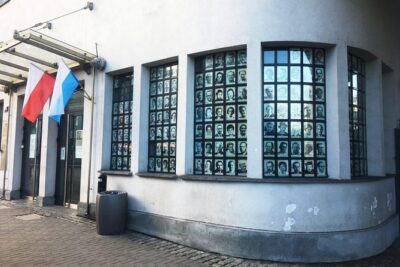
Schindler’s Factory & Ghetto & Plaszow Camp Guided Tour
Read our review →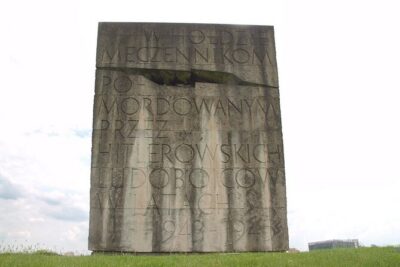
Guided Tour in Kraków-Płaszów Former Concentration Camp
Read our review →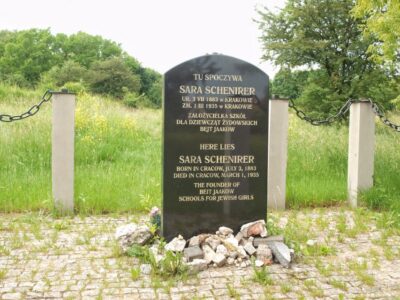
Guided Tour of Plaszow Concentration Camp, Kraków
Read our review →Krakow Schindler’s Factory & Ghetto & Plaszow Camp Guided Tour
Read our review →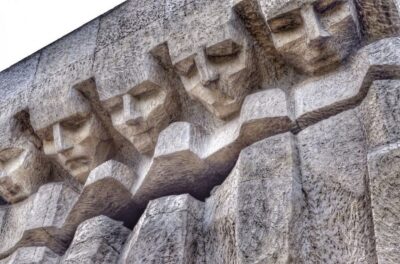
River Cruise & Guided Visit to Former Plaszow Camp
Read our review →Browse the lists this tour appears in