
Reviewed · PLASZOW CAMP TOURS
Krakow: Former Concentration Camp Plaszow Guided Tour
Plaszow is not a polished museum with rooms full of objects and neat labels. It is now a broad public space with memorials, information boards, and scattered ruins, which makes a guide especially useful. Without context, the site can be hard to read. With one, the ground under your feet begins to tell a grim story.
I like that this tour explains both the camp’s history and its link to Oskar Schindler and Schindler’s List. I also like the personal touch offered by guides such as Olga, who has helped visitors catch the correct bus back to Old Town and, on one tour, shared family connections to the camp’s history. The main drawback is that the site is open and spread out, so you should expect a sober outdoor walk rather than a traditional museum visit.
Key points to know before you book
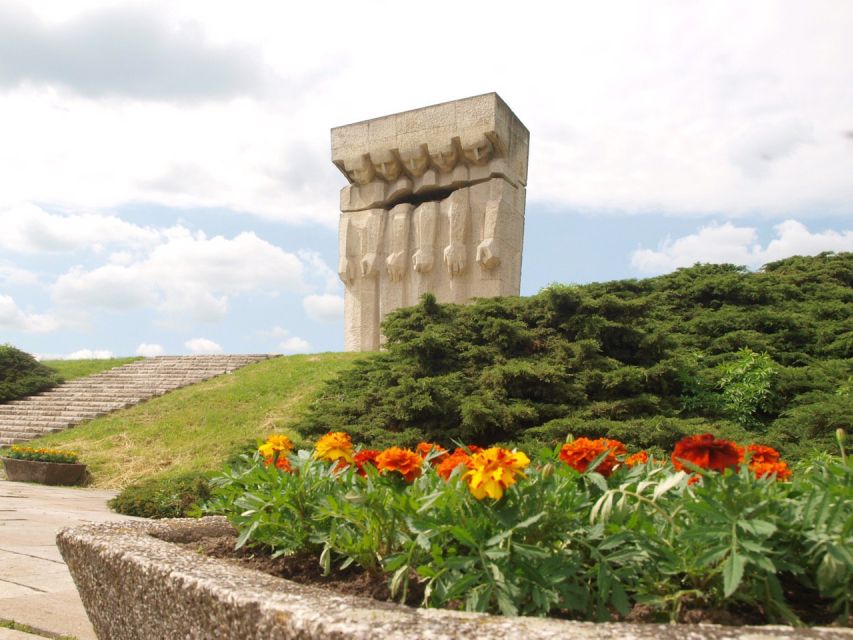
- The site is now an open public space: You’ll see memorials, signs, ruins, and broad areas where the former camp once operated.
- The camp changed over time: It began as a forced labor camp in 1940 and became a concentration camp in 1941.
- The Krakow ghetto is part of the story: Your guide explains how deportations from the ghetto began in 1942.
- The quarry and factories show the camp’s labor system: You’ll learn about forced work at the quarry and military factories.
- The film connection is nearby: The Liban Quarry contains a replica set built for Steven Spielberg’s 1993 film.
- Plan for transport: Tram tickets are not included, and the tour begins and ends at Apteka Pod Orlem.
Why Plaszow needs a guide
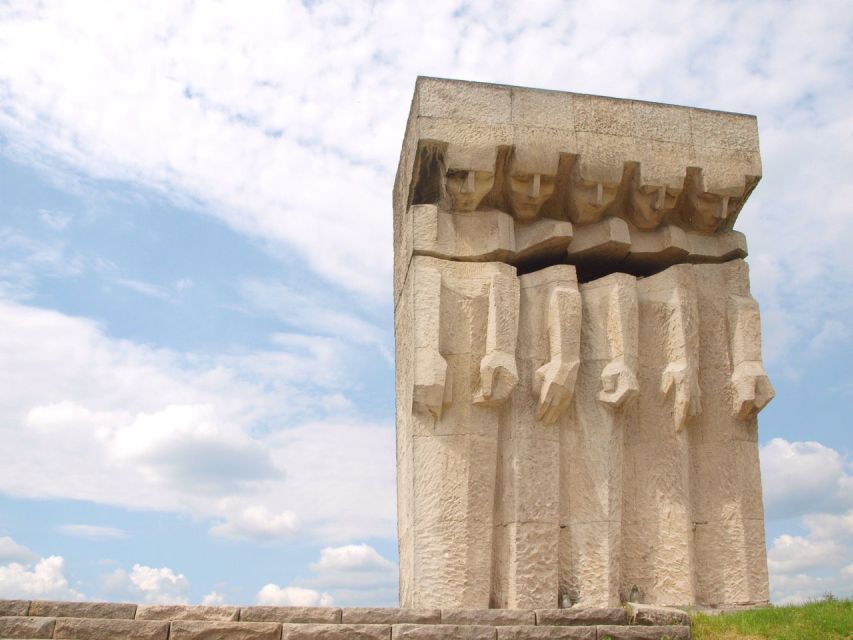
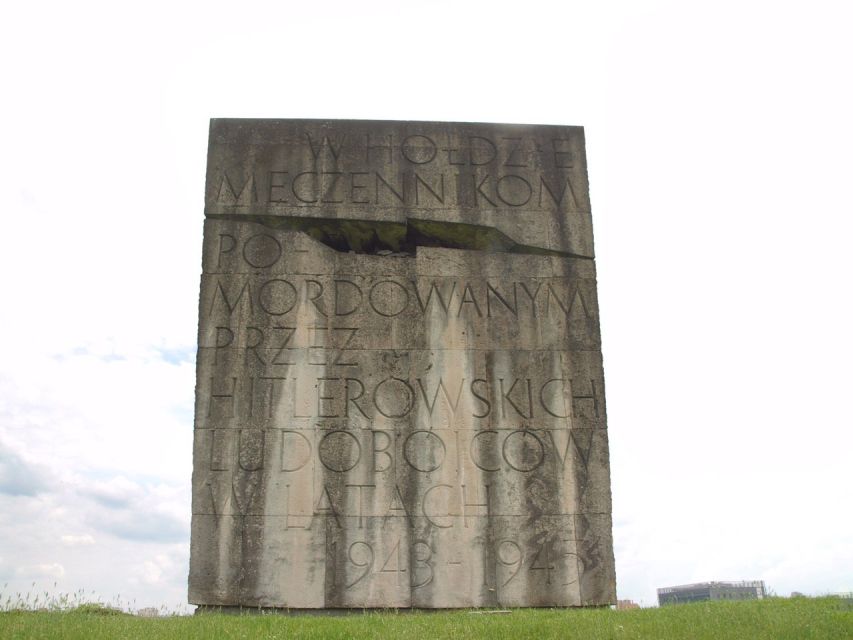
Plaszow is one of those places where the absence of a building is part of the difficulty. The former camp is not presented as a fully formed museum. Instead, the area is now a large public space marked by information boards, memorials, and remnants of the old site.
That can be unsettling in a useful way, but it can also leave you unsure what you are looking at. A wall, open field, quarry, or fragment of a building may look ordinary without an explanation of its wartime use. Your guide supplies the map in your head, connecting separate points into a clear account of how the camp worked.
I like this format because it asks you to pay attention rather than simply move from display case to display case. You are walking through a real place, not a recreated attraction. At the same time, the lack of a formal museum means the quality of the guide matters a great deal.
The English-speaking guide explains the camp’s development, the Nazi occupation of the area, the forced labor system, and the deportation of Jews from the Krakow ghetto. You’ll also hear about daily life inside the camp and the work carried out there. The subject is heavy, but the tour gives the facts a human scale.
More Plaszow camp tours in Krakow:
- Krakow: Plaszow Concentration Camp Walking Tour
★ 4.8 · 39 reviews - Krakow: Schindler’s Factory & Ghetto & Plaszow Camp Guided Tour
★ 4.5 · 28 reviews - Guided Tour in Kraków-Płaszów Former Concentration Camp
★ 5.0 · 19 reviews
Meeting at Apteka Pod Orlem
The tour begins at the entrance of Apteka Pod Orlem, a useful meeting point in Krakow’s wartime story. Look for the guide holding an excursions.city sign. The activity ends back at the same meeting point.
This is important for planning your day. You are not being collected from your hotel, and the tour does not finish at a separate museum entrance. You need to make your own way to the meeting point and arrange your own transport afterward.
The experience lasts two hours. That is enough time to cover the main parts of Plaszow without turning the visit into an all-day history lesson. It also means you should arrive ready to walk outdoors for the full visit. Wear clothing suited to the weather, since the activity takes place outside.
Tram tickets are not included. The supplied details do not specify the exact tram route or ticket type, so check your Krakow transport plan before setting out. If you are unsure how to return to the center, ask your guide. Olga, one guide named in visitor feedback, has walked people to the nearest bus stop and helped them board the correct bus to Old Town.
How the camp’s story unfolds
Plaszow opened in 1940 as a forced labor camp. In 1941, it was converted into a concentration camp. That change matters because it shows how Nazi control expanded and hardened over time. Your guide explains the shift rather than presenting the camp as a fixed place with one unchanging purpose.
The tour also places Plaszow within the story of Krakow’s Jewish population. Deportations from the Krakow ghetto began in 1942, and the camp became part of the wider system of persecution, imprisonment, forced work, and murder under Nazi rule.
You’ll hear how the camp operated and how prisoners were used for intensive labor. The quarry is one of the key places discussed, along with military factories. These stops help explain that forced labor was not an abstract policy. It was built into the daily running of the camp.
The exact sequence of stops can vary with the guide and conditions, but the focus is clear: you visit different parts of the former camp while learning what each area meant. That approach is more useful than simply hearing a timeline in a city-center lecture. You can connect the story to the actual ground where it took place.
Memorials that ask for quiet attention
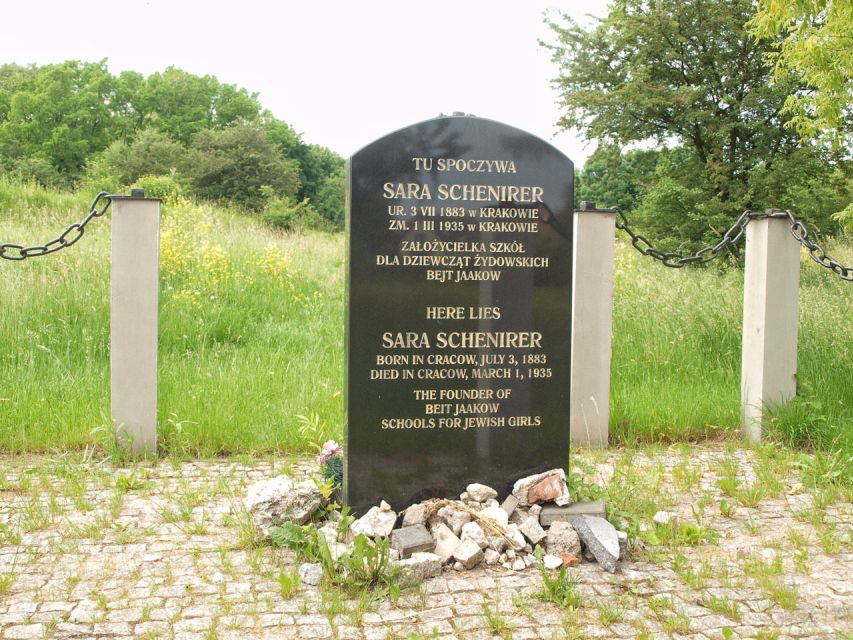
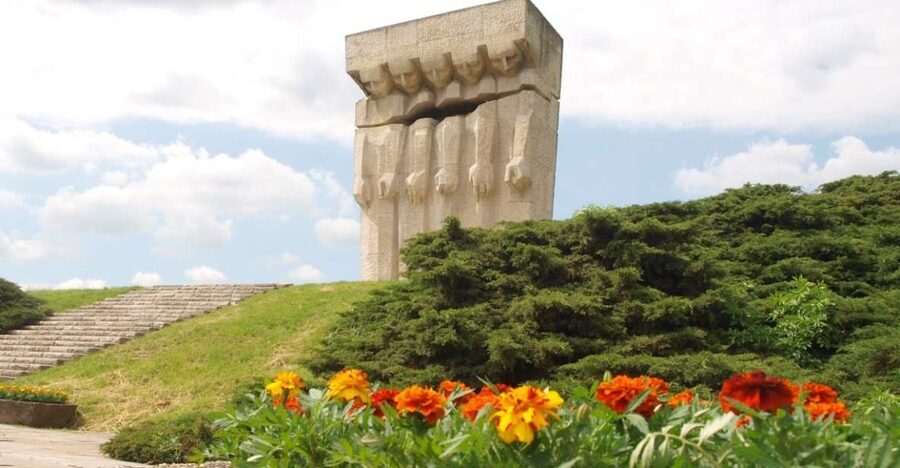
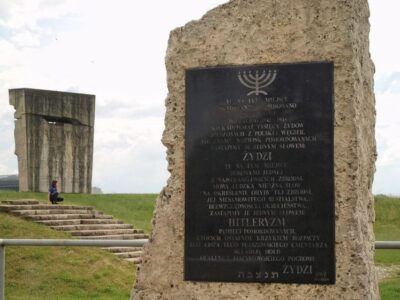
Several memorials at Plaszow honor the victims. The tour gives you time to pause at these places and understand what they commemorate. This is not a light sightseeing stop, and the memorials are not decorative photo opportunities.
I appreciate that the visit treats remembrance as a central part of the experience rather than a short stop between film-related locations. The guide explains the human cost of the camp and the people affected by the deportations and forced labor system.
The open setting can make this part feel especially stark. There are no museum walls to separate you from the weather, the ground, or the surrounding public space. You may find that the ordinary setting makes the history harder to absorb, not easier.
At the same time, you should know what kind of visit you are choosing. If you prefer a formal museum with extensive exhibits, preserved interiors, and a clear indoor route, Plaszow may feel incomplete on its own. The guide fills in much of that gap, but the site remains largely open and understated.
A handful more Krakow trips to weigh up
- From Krakow: Auschwitz-Birkenau Guided Tour & Hotel Pickup
★ 4.5 · 33,358 reviews - From Krakow: Auschwitz-Birkenau Guided Tour & Hotel Pickup
★ 4.5 · 29,340 reviews - Krakow: Auschwitz Guided Tour with Optional Hotel Pickup
★ 4.5 · 15,280 reviews - Krakow: Auschwitz-Birkenau Guided Tour with Pickup & Lunch
★ 4.5 · 9,800 reviews
The quarry and the work behind the camp
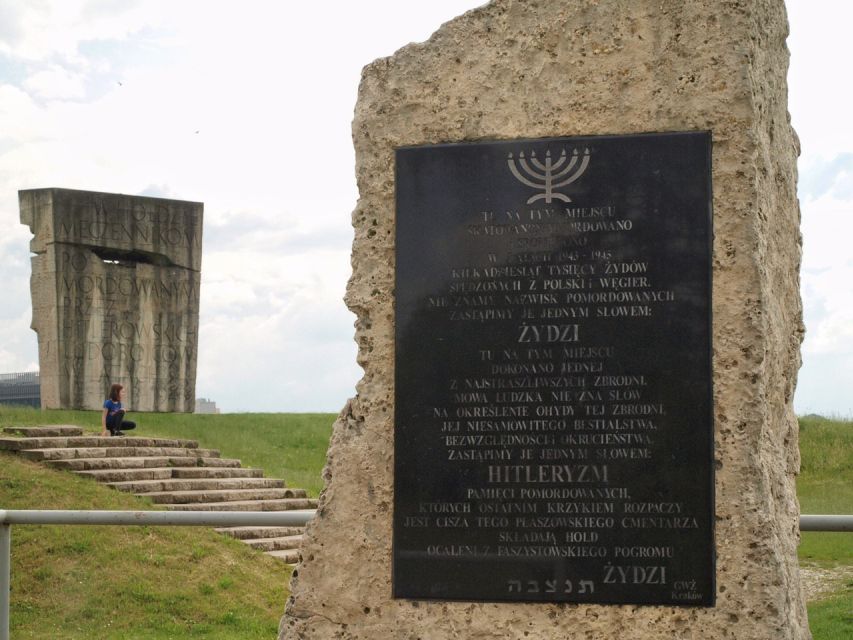
The quarry is one of the most important parts of the tour because it shows the physical demands placed on prisoners. Your guide discusses the intensive labor carried out there and explains how work was also linked to military factories.
This helps you understand Plaszow as a working camp, not only as a place of confinement. Labor was central to the camp system. The quarry and factory story gives the visit a practical focus: you learn what prisoners were forced to do and how the camp functioned.
The tour also addresses camp life. The supplied information does not promise a list of preserved barracks or surviving interiors, so you should not expect to walk through a fully intact camp complex. Instead, you learn about life through the remaining site features, memorials, signs, and your guide’s explanation.
That distinction is worth keeping in mind when comparing this tour with larger former camp museums. Plaszow’s value is in its location, its difficult atmosphere, and the way a guide brings separated traces together. It is not a display-driven visit.
Oskar Schindler and the movie connection
The tour includes the life of Oskar Schindler and explains how Plaszow appeared in the 1993 film Schindler’s List. Schindler is part of Krakow’s wartime story, but the tour does not reduce Plaszow to a movie location. The camp’s history comes first.
That balance matters. The film may be what brings you to the site, but the real people who suffered there should remain the focus. The guide uses the movie connection to help you understand how the camp was portrayed and how the film shaped public awareness.
You’ll also visit a replica of the camp built under Steven Spielberg’s direction in the Liban Quarry, about a hundred meters from the former camp site. This is a separate film-related point, and it gives you a direct link to the production of Schindler’s List.
The replica can be interesting for film fans, but it should not be mistaken for an original section of the camp. The distinction is simple and important: Plaszow is the historic site, while the nearby Liban Quarry includes a set replica made for the film.
What the two-hour format does well
Two hours is a sensible length for this visit. The subject requires concentration, and a much longer walking tour could become tiring, especially in poor weather. The time also works well if you want to pair Plaszow with another Krakow activity on the same day.
The short format has limits. You will not receive an exhaustive account of every event connected with the camp, and you should not expect time for a long independent visit at each memorial. The guide needs to keep the group moving through the main areas.
Still, the tour appears to make good use of its time by joining several themes: the camp’s creation, its change into a concentration camp, deportations from the ghetto, forced labor, memorials, Schindler, and the film site. You get a connected account rather than a single narrow topic.
The English-language format is also straightforward. If you want the tour in another language, this activity is not designed for that. The stated language is English, with a live guide.
Is $23 good value?
At $23 per person, this is a reasonable price for a two-hour guided visit to a site that can be difficult to understand alone. The key value is not transport or admission to a large museum. It is the guide’s interpretation.
You are paying for someone to explain what happened at Plaszow, identify the main areas, discuss the quarry and factories, and connect the site to Krakow’s ghetto and Schindler’s List. That is useful here because the physical remains do not always explain themselves.
The price is less attractive if you only want to walk around and take a quick look at the memorials. You can see an open site more cheaply on your own, but you would lose the organized account and the chance to ask questions during the visit.
The strongest praise for this experience centers on the guides. Olga is singled out for her clear explanations, warmth, and willingness to help with the return journey. Another especially personal account describes a guide sharing stories connected to her own relatives and family. That sort of connection cannot be guaranteed, but it shows why the human quality of the guide can shape the visit.
The tour also allows you to reserve now and pay later, which helps if your Krakow schedule is still changing. You can cancel up to 24 hours in advance for a full refund. These terms make the $23 commitment easier to fit into a busy city break.
Who should book this Plaszow visit?
I would choose this tour if you want to understand Krakow during the Second World War and prefer a guide to help you read an open historic site. It is especially suitable for people interested in the Holocaust, Nazi occupation, forced labor, Oskar Schindler, or the making of Schindler’s List.
It can also suit you if you are not a specialist. The personal and human focus makes the subject accessible, and one guide even connected the story to family history. You do not need to arrive as a history expert.
Families and younger visitors require more thought. The supplied information does not set an age recommendation, so you should decide based on the maturity of the people in your group. The subject is serious and includes persecution, deportation, forced labor, and the Holocaust.
Film fans may enjoy the Liban Quarry replica, but I would not book this solely for a movie set. The replica is one part of a much larger visit, and the main purpose is remembrance and historical understanding.
Practical details for a respectful visit
Wear weather-appropriate clothing. The former camp is an outdoor site, and the tour does not promise indoor shelter or a climate-controlled museum route.
Arrive at the entrance of Apteka Pod Orlem and look for the guide with the excursions.city sign. Since tram tickets are not included, sort out your transport ticket separately before the start.
Keep the tone of the visit in mind. Memorials and former camp grounds call for quiet attention. Photos may be possible in some areas, but the information provided does not set specific photography rules, so follow your guide’s directions and treat the site with care.
The tour returns to the original meeting point. If you want to continue to another attraction, allow a little time to regroup before fixing a tight appointment. The stated duration is two hours, but your onward transport still depends on Krakow’s public transit.
Should you book it?
Book this tour if you want a guided, human explanation of Plaszow rather than a quick walk past memorials. The strongest reasons are the guide’s role, the connection between the former camp and the Krakow ghetto, and the chance to see both the historic site and the nearby film replica.
Skip it if you want a polished indoor museum with many preserved rooms and exhibits. Plaszow is open, quiet, and incomplete in physical terms. For the right visitor, that makes the guide essential and the $23 price worthwhile. For someone seeking only film scenery, it may feel too serious and too history-focused.
FAQ
Where does the Plaszow tour begin?
The tour begins at the entrance of Apteka Pod Orlem. Look for a guide holding an excursions.city sign.
Where does the tour finish?
The activity ends back at the original meeting point at Apteka Pod Orlem.
How long does the tour last?
The tour lasts two hours. Starting times vary, so check availability when booking.
What language is the tour in?
The tour is conducted in English by a live guide.
What is included in the price?
A licensed guide is included.
Are tram tickets included?
No. Tram tickets are not included, so you need to arrange and pay for public transport separately.
What should I wear?
Bring weather-appropriate clothing because the visit takes place outdoors across the former camp site.
Does the tour visit the Schindler’s List film location?
Yes. The tour discusses Oskar Schindler and the 1993 film, and it visits a replica of the camp built under Steven Spielberg’s direction in the Liban Quarry, about a hundred meters away.
Can I cancel the booking?
You can cancel up to 24 hours in advance for a full refund.
Can I reserve the tour without paying immediately?
Yes. The reserve-now-and-pay-later option lets you hold a place without paying at the time of booking.
Just added around Krakow
- From Krakow: Zakopane Full-Day Tour with Lunch Option★ 4.4 · 62 reviews
- From Krakow: Zalipie and Painted Village Guided Tour★ 4.0 · 4 reviews
- From Krakow: Zakopane and Dunajec River Rafting Tour★ 4.6 · 31 reviews
- From Krakow: Zakopane and the Tatra Mountains★ 4.7 · 36 reviews
- From Krakow: Zakopane and Gubałówka Cable Car Private Tour★ 4.3 · 12 reviews
- From Krakow: Zakopane Tatra Mountains & Hot Springs Tour★ 3.0 · 29 reviews
- From Krakow: Zakopane & Tatra Mountains Tour★ 3.8 · 42 reviews
- Zakopane & Tatra Mountains Private Full-Day Tour from Krakow★ 4.5 · 33 reviews
Plaszow Camp Tours, compared.
Schindler’s Factory & Ghetto & Plaszow Camp Guided Tour
Read our review →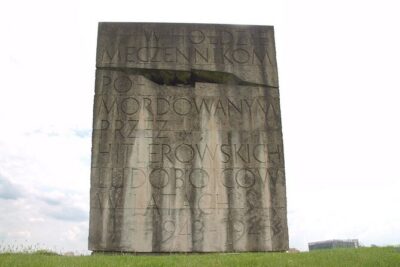
Guided Tour in Kraków-Płaszów Former Concentration Camp
Read our review →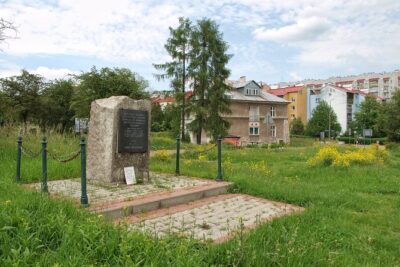
Guided Tour of Plaszow Concentration Camp, Kraków
Read our review →Krakow Schindler’s Factory & Ghetto & Plaszow Camp Guided Tour
Read our review →
TOUR AL CAMPO DE CONCENTRACIÓN DE PLASZOW. El campo de la Lista de Schindlert.
Read our review →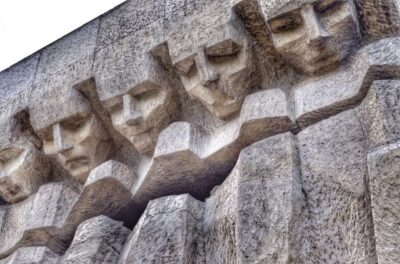
River Cruise & Guided Visit to Former Plaszow Camp
Read our review →Browse the lists this tour appears in