
Reviewed · KRAKOW JEWISH GHETTO TOURS
Krakow: Old Town, Jewish Kazimierz and Ghetto Sightseeing by Electric Golf Cart
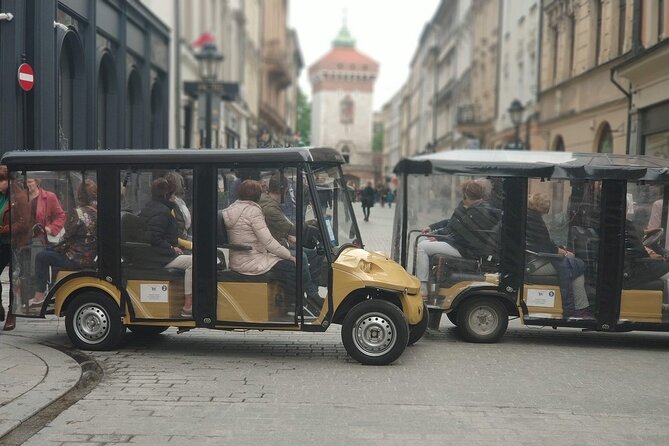
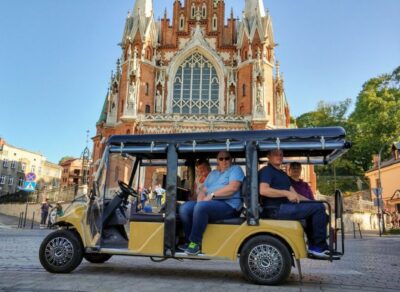
Krakow packs centuries of public squares, churches, Jewish heritage, and wartime memory into a fairly compact center. This electric golf-cart tour gives you a quick look at all three major areas without asking you to walk between them, which is especially useful if you have only a day in town.
I like the small group limit of eight and the mix of live guiding with an audio system. Guides such as Filip, Michael, Peter, and Tom have been praised for clear English, good historical explanations, and a willingness to answer questions. The main drawback is time: two and a half hours covers a lot of ground, but many stops are viewed from the cart rather than explored at length.
Key points to know before booking
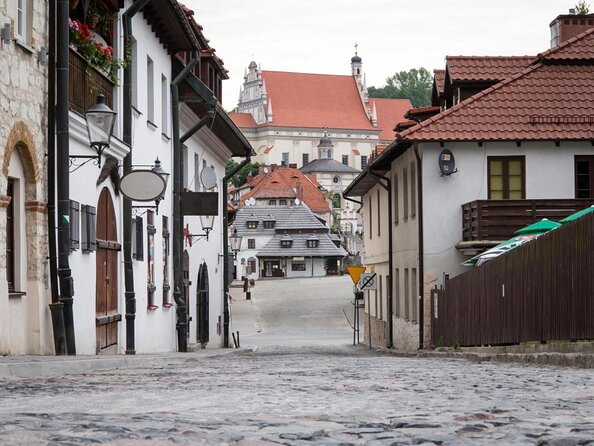
- Three Krakow districts in one ride: See the Old Town, Jewish Kazimierz, and Podgórze, including key former ghetto sites.
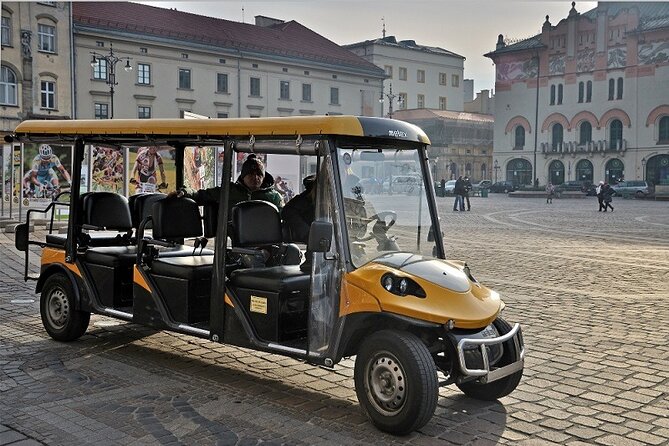
- A maximum of eight people: The small vehicle keeps the outing more personal than a large bus tour.
- A useful choice for short stays: You can cover major sights in roughly 2.5 hours and save your walking for places you want to enter.
- Live guide plus audio system: Guides add context and answer questions, while the vehicle carries recorded sightseeing information.
- Photo stops vary: Some departures pause for about 10 minutes at selected places, but you may not get off at every sight.
- Go early if possible: The Old Town can become crowded with pedestrians and other sightseeing carts later in the day.
Why the golf cart works well in Krakow
Krakow’s center is easy to walk in sections, but the full route from the Old Town to Kazimierz and Podgórze takes time and energy. The electric cart handles the connecting stretches while you sit close to the street scene.
That matters most if you are visiting for one day, arriving on a short city break, or dealing with limited walking stamina. One person specifically found the ride helpful because walking for long periods was difficult. You still need to get to the meeting point and may walk briefly during stops, but this is far less demanding than covering the entire route on foot.
The cart is also quieter and cleaner than a petrol vehicle. You are not getting a private car, though. This is a shared tour, and the vehicle can carry only passengers, so leave large luggage behind.
The departure point is at Mikołaja Zyblikiewicza 2, near public transportation. The tour ends at Mikołaja Kopernika 3. Check the end point before planning a meal, museum visit, or train connection.
More Jewish Ghetto tours in Krakow:
- Krakow: Schindler’s Factory & Ghetto Guided Tour
★ 4.7 · 1,694 reviews - Krakow: Jewish Quarter and Former Ghetto Tour
★ 4.9 · 1,441 reviews - Krakow: Bike Tour of Old Town, Jewish Quarter and the Ghetto
★ 4.9 · 1,155 reviews
Main Market Square and the medieval heart
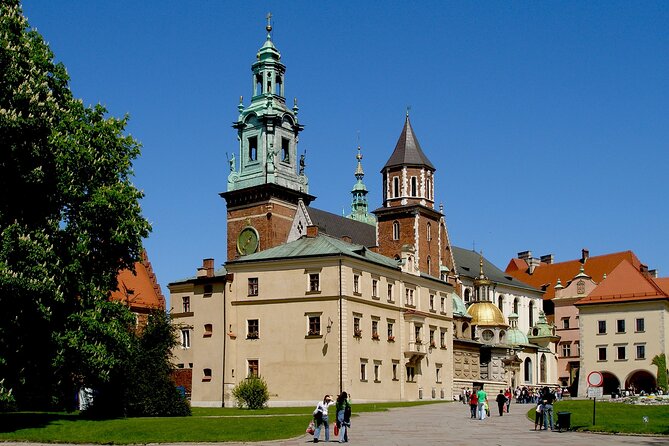
The tour begins with Krakow’s Old Town, centered on the enormous Main Market Square. This is the city’s great orientation point and one of the largest medieval market squares in Europe.
From the cart, you can take in the square’s scale and its mix of church towers, historic commercial buildings, cafés, and pedestrian traffic. The broad space is impressive, but it is also where the tour can feel most crowded. Other sightseeing carts may be parked nearby, and pedestrians can make it hard to get a clear view at every moment.
The experience works best here as a first look rather than a full visit. I would use the guide’s explanation to decide which buildings deserve a later return on foot. If you want careful photographs of every façade, allow extra time after the tour.
Cloth Hall
At the center of the square, the Cloth Hall recalls Krakow’s role as a trading city. Its Renaissance form is one of the city’s most recognizable sights, and the building remains tied to the old commercial life of the square.
The cart gives you a useful exterior view and historical setting. It does not replace time inside the building or a closer look at its details, so treat this stop as an introduction.
Town Hall Tower
The 70-meter Town Hall Tower is the only surviving part of Krakow’s original town hall complex. Its 110 stone steps and former executioner’s dungeons hint at the less polished side of medieval civic life.
You will see the tower as part of the square’s historic group of buildings. The usual tour format does not provide a long visit inside, so anyone wanting to climb should return separately.
More Kazimierz and Jewish Quarter tours in Krakow:
- Krakow: Kazimierz Jewish Quarter Walking Tour
★ 4.8 · 571 reviews - Krakow: Kazimierz, Schindler’s Factory & Ghetto Guided Tour
★ 4.8 · 460 reviews - Full Bike Tour – the Old Town, Jewish Qtr & the Ghetto NEW BIKES
★ 5.0 · 437 reviews - Krakow: Bike Tour of the Old Town, Kazimierz, and the Ghetto
★ 4.9 · 350 reviews
St. Mary’s Basilica
St. Mary’s is one of Krakow’s defining churches, known for its high altar by Veit Stoss, painted decoration associated with Jan Matejko, and the hourly bugle call from its tower.
This is one of the places where the guide’s explanation adds real value. The church is not just another old façade. Its art, sound, and position beside the market square help explain why the center of Krakow feels so distinctive.
You may get a short chance to enter, depending on the group and timing. One departure included about 10 minutes to walk around at selected stops, but you should not assume that every site will receive the same treatment.
Juliusz Słowacki Theatre and the Barbican
The Juliusz Słowacki Theatre has operated continuously since 1893, and its ornate building is among Europe’s notable examples of theatre architecture. It gives the route a different flavor after the medieval square, showing Krakow as a city of performance and public culture.
Nearby, the Barbican offers a look at the city’s defensive past. This rounded brick fortress is one of Krakow’s best-known surviving fortifications and was never captured during a siege. The story of defenders repulsing attackers with a single shot is the sort of compact detail that works well during a moving tour.
These stops are mainly visual unless your guide chooses to pause. You will see more than you could cover on foot in the same time, but you will not study each building at museum pace.
Kazimierz, Krakow’s Jewish quarter
The cart then heads toward Kazimierz, the district south of Wawel that was once an independent town and later became the center of Jewish life in Krakow.
This is where the tour becomes more than a standard Old Town circuit. Kazimierz carries layers of religious, social, and wartime history, and the route points you toward streets and synagogues that still shape the district’s identity.
Tempel Synagogue
Tempel Synagogue is noted for its preserved stained-glass windows and its non-Orthodox character. Those details matter because they show that Jewish life in Krakow was not a single, uniform tradition.
From the cart, you should expect an exterior view and an explanation rather than a guaranteed interior visit. If entering a synagogue is important to you, ask the guide at the start whether the schedule allows time to get out and walk inside.
Szeroka Street
Szeroka Street is the center of Jewish Kazimierz and one of the most meaningful stops on the route. Four synagogues once stood along this street, an unusual concentration that points to its former role as a religious and community center.
It is also associated with the Jewish Culture Festival and its final concert. Today, the street is a key place to pause and understand Kazimierz as a living district, not just a collection of old buildings.
The Old Synagogue
One of the oldest synagogues in Poland preserved in good condition stands on Szeroka Street. Its presence helps anchor the story of Jewish Krakow in a real place rather than a general historical summary.
The tour can show you where the synagogue fits within the wider quarter. If you want a slower look at its interior or exhibits, plan a separate visit. The cart’s strength is connecting this synagogue with the wider Kazimierz story in a short time.
The Remuh Synagogue
The Remuh Synagogue is the smallest of Krakow’s seven synagogues and has a notably modest appearance compared with the others. After restoration completed in April 2016, it became the main prayer site for members of Krakow’s Jewish community.
That contrast makes it worth noticing. The tour does not treat every synagogue as an interchangeable stop. It points out differences in size, decoration, and present use, giving you a better sense of the quarter’s character.
Podgórze and the former Krakow Ghetto
The route continues across the river to Podgórze, a district incorporated into Krakow only in the 20th century. In 1941, the Nazis turned this area into the Krakow Ghetto.
This section changes the mood. The Old Town and Kazimierz show civic and religious life across many centuries. Podgórze confronts you with forced confinement, deportation, and the destruction of a community during the Second World War.
St. Joseph’s Church
St. Joseph’s Church dominates Podgórze Market Square. Its distinctive form makes it easy to recognize, and its location helps you understand the district as a separate town center rather than simply an extension of the Old Town.
The church provides a calmer architectural pause before the route reaches the former ghetto sites. As with the other churches, you may see it from the cart or have a brief opportunity to walk around, depending on the timing.
The surviving ghetto wall
A small fragment of the original wall around the former ghetto remains. A plaque records the fate of the people who were confined there.
It is a modest physical remnant, but that is part of its force. You are not looking at a grand monument. You are seeing a surviving piece of the boundary that controlled daily life for the ghetto’s residents.
Ghetto Heroes Square
The former Plac Zgody, now known as Ghetto Heroes Square, served as the Umschlagplatz during the Nazi occupation. This was where Jewish residents had to gather before deportation.
The site deserves quiet attention. A golf cart is not the same as a private memorial visit, and the group may not linger as long as you would like. Still, having a guide connect the square to the wider ghetto route gives the place needed context.
The Eagle Pharmacy
Tadeusz Pankiewicz ran the pharmacy inherited from his father and became part of the story of the Krakow Ghetto. The pharmacy is closely linked to the wartime experience of the district and to the people who tried to maintain everyday life in terrible conditions.
This stop brings the history down to a human scale. It connects the large events of occupation and deportation with a local business, a pharmacist, and the ordinary decisions made under extraordinary pressure.
The wartime memorial setting
The final part of the route brings together the Second World War, personal lives, and the wider tragedy that affected Europe. It is a serious ending, not a sightseeing flourish.
I appreciate that the tour includes this section rather than stopping with the attractive streets of Kazimierz. You get a fuller picture of Krakow, including the places where history is painful and unresolved.
Guides, audio, and the small-group format
The tour includes an audio system, but the live guide can make the difference between a basic ride and a useful introduction to Krakow. Guides named in the available feedback include Radic, Filip W, Michael, Peter, and Tom.
Filip was praised for adding information beyond the audio commentary. Tom was noted for clear English, answering questions, and stopping for photographs and short visits. Michael was described as taking time to explain the city, while Peter was praised for an entertaining account of the route.
Those individual strengths cannot be guaranteed on every departure, but they show what to look for. Ask questions, tell the guide if you want a photo stop, and clarify when you may leave the cart. One passenger found that the guide stopped at selected places for about 10 minutes, while another wished for more time at each sight.
The maximum of eight people is a real advantage. It is easier to hear, easier to ask a question, and less awkward when the group gets out. Some departures may be smaller if other bookings do not arrive, but you should book on the assumption that it is a shared group tour.
Is $56.47 good value?
At $56.47 per person, this is not the cheapest way to see Krakow’s center. You are paying for the vehicle, the driver, the audio equipment, the guide, and the ability to connect three important districts without a long walk.
For a short stay, the price can make sense. You see the Main Market Square, Cloth Hall, Town Hall Tower, St. Mary’s Basilica, the theatre, Barbican, several Kazimierz synagogues, and the main former ghetto sites in around 2.5 hours. That is a lot of orientation in one sitting.
The value is weaker if you want long interior visits or careful photography. You may pass many stops without getting out, and crowded streets can limit your view. I would think of the tour as a city introduction, then choose two or three places to revisit on foot.
Timing, comfort, and practical details
The tour operates in English and includes a mobile ticket. Confirmation is provided at booking, and the meeting point is close to public transportation.
Arrive before the stated departure time. The cart leaves at the specified time, and it is a group tour. Late arrival could mean missing the start.
Try to choose an earlier time slot. The Old Town gets more congested later, with pedestrians and other sightseeing carts competing for space. Earlier departures should also make it easier to see façades and hear the guide.
Do not bring large baggage. The vehicle has room for people to sit, not for bulky cases or large day bags.
Most people can take part, but this is not a fully stop-free activity. You may need to step out for a short visit or photo stop, and walking remains part of getting to the meeting point and moving around selected sights.
Free cancellation is available up to 24 hours before the local start time. Within 24 hours, the fare is not refunded, and last-minute changes are not accepted.
Who should book this Krakow tour?
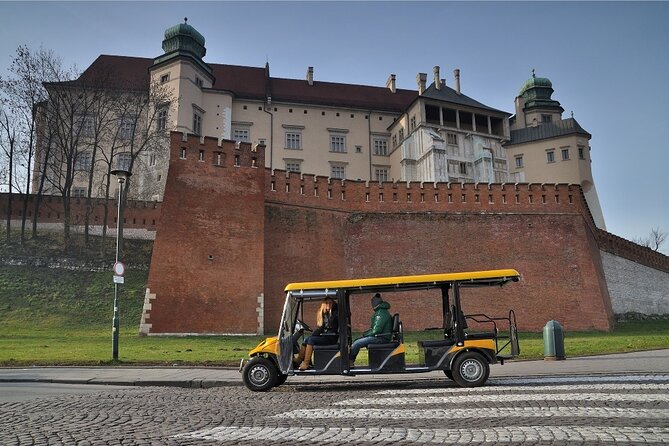
I would choose it for a first visit, a one-day stay, a cruise or rail stop, or anyone who wants an overview before exploring independently. It also suits people who want to limit long walks while still seeing the Old Town, Kazimierz, and Podgórze.
It is a good fit if you enjoy hearing a guide explain what you are seeing and do not mind viewing some sights from the vehicle. The small group and live commentary make it more useful than simply riding around without context.
I would not choose it as your only activity if you want to enter several churches and synagogues, spend time at memorials, or take detailed photographs. In that case, use the cart to get oriented, then return to Kazimierz and Podgórze on foot.
Should you book it?
Book this tour if your Krakow schedule is tight and you want the city’s main historical zones in one efficient ride. The route is broad, the electric cart is comfortable, and the best guides add warmth and detail beyond the audio system.
Skip it if you prefer slow museum visits or dislike seeing major sights from a moving vehicle. For most short-stay visitors, though, it offers a practical first look at Krakow, with the important advantage of including both Jewish Kazimierz and the former ghetto rather than focusing only on the postcard center.
FAQ
How long does the Krakow golf-cart tour last?
The tour lasts approximately 2 hours and 30 minutes.
What areas of Krakow does the tour visit?
It covers Krakow’s Old Town, Jewish Kazimierz, and Podgórze, including sites connected with the former Krakow Ghetto.
How many people can join the tour?
The tour has a maximum group size of eight people.
Is the tour offered in English?
Yes. The experience is offered in English and includes an audio system.
Where does the tour begin and end?
It begins at Mikołaja Zyblikiewicza 2, 31-029 Kraków, and ends at Mikołaja Kopernika 3, 31-034 Kraków.
Can I bring large luggage?
No. The vehicle has enough room for passengers to sit but does not have space for large baggage.
Can I cancel for a refund?
Yes, if you cancel at least 24 hours before the local start time. Cancellations made within 24 hours are not refunded.
More electric golf cart tours in Krakow
- Krakow: City Sightseeing Tour by Electric Golf Cart
★ 4.5 · 3,264 reviews - Krakow: City Sightseeing Tour Eco Electric Buggy Golf Cart
★ 4.7 · 3,143 reviews - Krakow: Extended City Sightseeing Tour – Eco Buggy Golf Cart
★ 4.7 · 794 reviews - Krakow: Electric Car Sightseeing Tour
★ 4.4 · 450 reviews
More Old Town walking tours in Krakow
- Old Town Krakow & Wawel Castle Walking Tour
★ 5.0 · 1,508 reviews - Krakow: The Old Town Walking Tour
★ 4.8 · 794 reviews - Krakow: Old Town Guided Segway Tour
★ 4.7 · 756 reviews - Kraków: Old Town & Wawel Castle Walking Tour in English
★ 4.8 · 532 reviews
Just added around Krakow
- From Krakow: Zakopane Full-Day Tour with Lunch Option★ 4.4 · 62 reviews
- From Krakow: Zalipie and Painted Village Guided Tour★ 4.0 · 4 reviews
- From Krakow: Zakopane and Dunajec River Rafting Tour★ 4.6 · 31 reviews
- From Krakow: Zakopane and the Tatra Mountains★ 4.7 · 36 reviews
- From Krakow: Zakopane and Gubałówka Cable Car Private Tour★ 4.3 · 12 reviews
- From Krakow: Zakopane Tatra Mountains & Hot Springs Tour★ 3.0 · 29 reviews
- Zakopane & Tatra Mountains Private Full-Day Tour from Krakow★ 4.5 · 33 reviews
- From Krakow: Hot Springs and Zakopane with Gubałówka★ 4.7 · 25 reviews
Krakow Jewish Ghetto Tours, compared.
Bike Tour of Old Town, Jewish Quarter and the Ghetto
Read our review →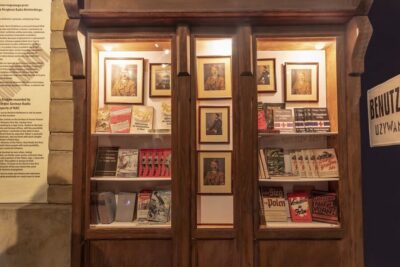
Kazimierz, Schindler’s Factory & Ghetto Guided Tour
Read our review →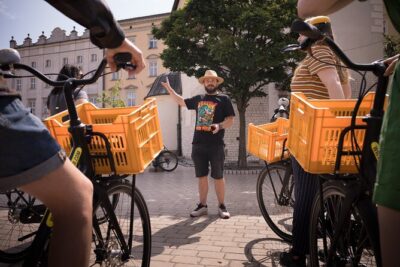
Full Bike Tour – the Old Town, Jewish Qtr & the Ghetto NEW BIKES
Read our review →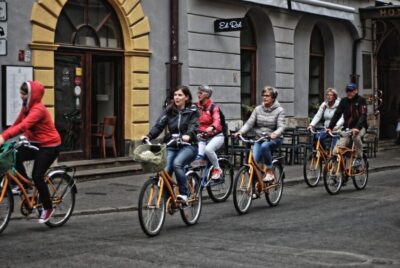
Bike Tour of the Old Town, Kazimierz, and the Ghetto
Read our review →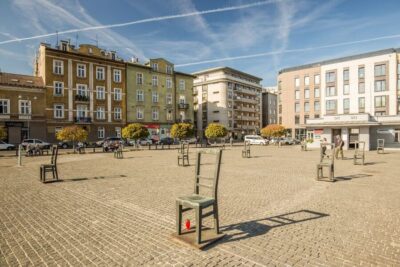
Jewish Quarter and Ghetto Electric Golf Cart Tour
Read our review →Browse the lists this tour appears in