
Reviewed · KRAKOW JEWISH QUARTER TOURS
The Jewish Quarter – Walking Tour
Krakow’s Kazimierz is far more than a pretty district of cafés and restored buildings. This two-hour walking tour connects Jewish life, Christian life, wartime destruction, and the film locations of Schindler’s List in one compact route. It also explains how Poland once became home to most of the world’s Jewish population.
I like the way the tour links the two communities instead of treating Kazimierz as a separate Jewish island. I also like the mix of major sights and small historical details, from synagogues and a 16th-century mikveh to Helena Rubinstein’s birthplace. The main consideration is pace: two hours is enough for a strong introduction, but not enough for long visits inside every site.
Key points to know before you book
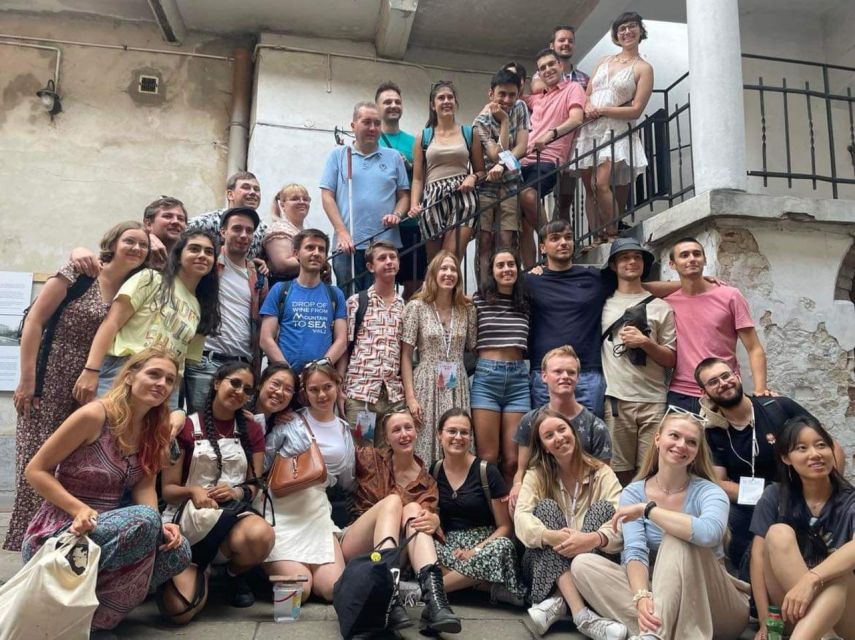
- A guide named Z or Zee leads the walk: The provider identifies its guide as Zee, and the three supplied guest comments refer to the guide as Z. Expect a personal, guide-led experience rather than an audio tour.
- Kazimierz is presented as a shared neighborhood: The route covers Jewish and Christian connections, not only Jewish landmarks.
- The tour includes several Schindler’s List filming locations: This adds a useful film connection to the wartime history.
- You see synagogues, a cemetery, memorials, and a former mikveh: The stops cover religious life, daily life, memory, and loss.
- The price is $33 per person for two hours: That is reasonable if you want historical context from a licensed guide, though admission tickets are extra.
- The tour is in English and wheelchair accessible: No public transportation is needed for the listed walking route.
Why Kazimierz needs a guided introduction
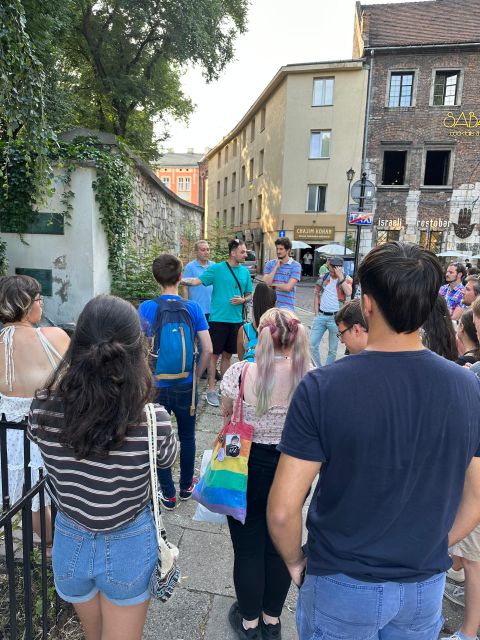
If you walk through Kazimierz alone, you can see attractive streets, old walls, synagogues, and memorials. What you may miss is how tightly Jewish and Christian life were connected here over many centuries.
This tour begins with that wider story. It traces Jewish settlement in Poland back to the 11th century and explains why Poland became such an important home for Jewish communities. By the 16th century, around 75 percent of the world’s Jewish population lived in Poland, according to the historical context presented on the tour.
That figure gives the neighborhood a larger meaning. Kazimierz is not simply a district with a few old religious buildings. It is part of the story of how Jewish culture developed in Poland, how communities lived beside Christian neighbors, and how the Second World War destroyed much of that world.
I appreciate this approach because it gives you a framework before the details begin. You are not just collecting names of synagogues. You are learning why they were built, how the quarter functioned, and what changed.
More Kazimierz and Jewish Quarter tours in Krakow:
- Krakow: Jewish Quarter and Former Ghetto Tour
★ 4.9 · 1,441 reviews - Krakow: Bike Tour of Old Town, Jewish Quarter and the Ghetto
★ 4.9 · 1,155 reviews - Krakow: Kazimierz Jewish Quarter Walking Tour
★ 4.8 · 571 reviews
Starting at Kazimierz’s Main Square
The walk takes you through Kazimierz’s Main Square, a natural place to begin because it sets the neighborhood’s scale and character. From here, the guide can place the surrounding streets within the old city of Kazimierz rather than presenting each stop as an isolated monument.
This opening section is especially useful if you have just arrived in Krakow. You get your bearings quickly, while the guide introduces the long coexistence of Jewish and Christian communities.
The tour does not treat the past as a simple before-and-after story. It shows that Kazimierz changed over time, and that the modern district reflects only part of what once existed. You should expect historical explanation here rather than a long stop at one building.
Miodowa Street and the old city walls
Miodowa Street follows the route toward the former city walls of Kazimierz. This stop helps explain the shape of the old district and the fact that Kazimierz once had its own civic identity.
For me, this is the kind of detail that makes a walking tour worthwhile. A wall is easy to pass without a second thought. With a guide, it becomes evidence of how the city was organized and where the old boundaries lay.
You will not need public transportation for the route described. Wear comfortable shoes, since the experience is built around moving from one historical point to another rather than remaining in a single museum.
Tempel, Kupa, and Izaak’s synagogues
The route includes three important synagogues: Tempel, Kupa, and Izaak’s. Seeing several religious buildings in one walk allows you to compare their place in the neighborhood and understand that Jewish life in Krakow was not represented by one single institution.
The Tempel Synagogue is part of the story of Jewish worship and community life in Kazimierz. Kupa Synagogue adds another stop to that religious map, while Izaak’s Synagogue brings the route to a third major building with its own place in the quarter’s past.
Admission tickets are not included, so you should think of the tour mainly as a guided outdoor introduction with possible visits depending on access and ticket arrangements. The supplied details do not promise entry into every synagogue. If seeing interiors is your top priority, ask ZeeTour about current admission arrangements before booking.
Even from outside, these buildings matter because they help you see the district as a functioning community rather than a collection of preserved façades. The guide’s explanations are the key part here.
More Old Town walking tours in Krakow:
- Old Town Krakow & Wawel Castle Walking Tour
★ 5.0 · 1,508 reviews - Creepy Krakow: 2-Hour City Walking Tour
★ 4.7 · 1,131 reviews - Krakow: The Old Town Walking Tour
★ 4.8 · 794 reviews - Kraków: Old Town & Wawel Castle Walking Tour in English
★ 4.8 · 532 reviews
A 15th-century building and a 16th-century mikveh
The itinerary includes the oldest building inside the Jewish Quarter, dating from the 1400s. It also includes a mikveh, a ritual Jewish cleansing and bath house for females from the 16th century.
These are two of the most distinctive stops on the walk. A synagogue may be familiar to many visitors, but a mikveh reveals a different side of community life. It points to religious practice, family life, and the way Jewish traditions shaped the use of private and communal spaces.
The age of the buildings also changes your sense of time. Krakow’s Jewish Quarter is not a recent reconstruction of an old idea. Some of the physical evidence reaches back hundreds of years.
The wording of the tour specifies a female mikveh, which is a useful detail for anyone interested in religious history. You should not expect a large museum display or a long interior visit based on the information provided. The value is in seeing the site and hearing its purpose explained.
Szeroka Street and the people behind the place
Szeroka Street is one of the key parts of the route. It connects several important Jewish landmarks and helps you picture the quarter as a place where religious, family, and commercial life met.
The walk also points out Helena Rubinstein’s birthplace. That personal detail adds a human face to the neighborhood. Instead of hearing only about institutions and wartime events, you encounter the origins of a well-known individual connected with Kazimierz.
I like stops like this because they prevent the history from becoming too abstract. A neighborhood is made up of buildings, but also of people who were born, worked, worshipped, and raised families there.
Memorials to courage, rescue, and loss
The route includes the Nissenbaum Family Foundation monument and a statue honoring a man who tried to stop the Holocaust. These memorials shift the focus from the life of the prewar community to the moral choices and immense suffering of the Second World War.
That transition is important. A good tour of Kazimierz cannot stop with old synagogues and picturesque streets. You also need to understand what happened to the people who made the district what it was.
The tour’s wartime section is one reason I would recommend taking it early in a Krakow visit. It can give you context for later visits to other sites connected with the city’s occupation and the Holocaust. The route itself is not presented as a substitute for every Krakow war museum or memorial, but it gives you a clear starting point.
Expect serious subject matter. The guide is taking you through religious history, persecution, and destruction, not simply showing film scenery.
Remuh Cemetery and the old synagogues
The Remuh Synagogue and Jewish Cemetery are among the most important stops. They bring together religious practice, burial traditions, and the physical memory of Krakow’s Jewish community.
The cemetery can be especially meaningful because it shows how remembrance is built into the neighborhood itself. Alongside the synagogue, it helps you understand the connection between worship, family, and the long-term life of the community.
The route also includes Popper’s Synagogue and the Old Synagogue. Having these sites together gives you a sense of the number and variety of Jewish institutions that once served Kazimierz.
The Old Synagogue is a particularly useful stop for understanding the age of the district’s Jewish presence. Still, remember that this is a two-hour walk. You are likely to receive a concise explanation at each location, not an extended architectural lecture.
If you want detailed time inside each synagogue, a museum visit or separate entry ticket may be needed. If you want the larger story and a route that connects the main places, the format works well.
Seeing Schindler’s List through the real streets
The tour includes numerous filming locations from Schindler’s List. This is a strong draw for film fans, but the locations matter even if you have never watched the movie.
Film can make a historical setting familiar. It can also flatten real events into a dramatic story. The value of this tour is that the guide places the filming locations alongside actual Jewish sites, wartime history, and memorials.
You will see where parts of the movie were filmed while learning that Kazimierz is not merely a film set. The district has its own history, and the movie offers only one way into it.
I would suggest watching Schindler’s List before the tour if you have time, but the supplied information does not require it. The film connection is an added layer, not the entire purpose of the walk.
What the guide adds to the experience
The tour is led in English by a licensed guide. The provider identifies the guide as Zee, while guest comments refer to the guide as Z. Those comments consistently praise the guide’s historical knowledge, enthusiasm, and willingness to show more than expected.
One person specifically described the experience as a strong way to begin learning about Jewish history in Poland and the Second World War. Another called it the best tour they had taken in Krakow so far. A couple also noted that the guide went beyond the basic plan to show them additional sights they wanted to see.
That last point is useful. The published route is clear, but it also invites you to share other ideas. If you have a particular interest in synagogues, wartime history, Schindler’s List, or family history, tell the guide at the start.
Do not expect a silent, self-guided stroll. The main value comes from the explanations and connections made as you walk. Four supplied bookings received five-star ratings, which supports the picture of a consistently well-received guide-led experience, though the sample is small.
Is $33 a fair price?
At $33 per person, the tour sits in a reasonable range for a two-hour guided walk in a major historic city. You are paying for a licensed English-speaking guide and a planned route through a complicated subject.
The value is strongest if you are new to Krakow or want the history explained in a logical order. The tour combines Jewish settlement, Christian and Jewish coexistence, religious buildings, wartime events, memorials, and film locations. Reaching all those points on your own would be possible, but the connections would be harder to build.
The price does not include admission tickets or public transportation. Since the experience is a walking tour, transportation should not be necessary for the listed route, but you may pay extra if you choose to enter sites that charge admission.
For a short first look at Kazimierz, I consider the price fair. For someone who wants long interior visits and detailed architectural study, the cost is only part of the budget. You may need separate tickets and extra time afterward.
Meeting point and practical details
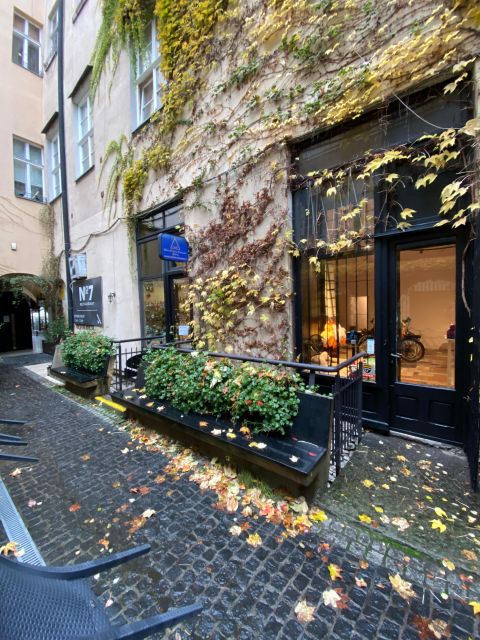
The meeting point is at Restaurant No7. Enter the building and continue into the courtyard, where ZeeTour’s office is the second shop on the left.
That detail matters because the meeting point is not simply a street corner. Give yourself a little time to find the restaurant and courtyard before the start.
The tour lasts two hours, uses English, and is wheelchair accessible. Starting times vary, so you need to check availability when booking. You can cancel up to 24 hours in advance for a full refund, and the reserve-now-pay-later option lets you hold a place without paying immediately.
These policies are useful, but the bigger planning point is timing. You will get the most from the walk if you are ready to listen and move steadily. Two hours passes quickly with this many stops.
Who should book this walk?
I would choose this tour if you want a clear first introduction to Jewish Krakow, especially if you are interested in the Second World War or Schindler’s List.
It also suits visitors who prefer history explained on location. The route includes enough religious and personal detail to avoid becoming only a wartime tour, while the memorials keep the story grounded in what happened to the community.
Families, film fans, and first-time visitors may all find an entry point here. The English-language format and wheelchair accessibility make it easier to plan for a broad range of visitors.
I would think twice if you want a slow, highly specialized study of synagogue interiors. The walk covers many places in two hours, admission is not included, and the available details do not promise extended access inside every building.
Should you book The Jewish Quarter Walking Tour?
Book it if you want the big picture of Kazimierz, delivered by a licensed guide who can connect the streets, synagogues, memorials, and wartime story. The strongest reason to go is the way the tour joins Jewish and Christian history instead of presenting the district as a museum zone frozen in time.
The tour is also a good first activity in Krakow. It gives you names, places, and historical questions to carry into later visits.
Skip it only if you already know Kazimierz well and want a narrow subject with long stops at individual sites. For most first-time visitors, $33 buys a useful two-hour foundation, with the option to return later for the interiors and museums that deserve more time.
FAQ
How long does The Jewish Quarter Walking Tour last?
The tour lasts two hours.
What language is the tour offered in?
The tour is offered in English with a live guide.
Who leads the tour?
ZeeTour provides licensed guides. The guide is identified as Zee, and the supplied guest comments refer to the guide as Z.
Are admission tickets included?
No. Admission tickets are not included in the $33 tour price.
Is public transportation included?
No. Public transportation is not included. The experience is described as a walking tour.
Where is the meeting point?
Meet at Restaurant No7. Enter the building, go into the courtyard, and find the ZeeTour office as the second shop on the left.
Just added around Krakow
- From Krakow: Zakopane Full-Day Tour with Lunch Option★ 4.4 · 62 reviews
- From Krakow: Zalipie and Painted Village Guided Tour★ 4.0 · 4 reviews
- From Krakow: Zakopane and Dunajec River Rafting Tour★ 4.6 · 31 reviews
- From Krakow: Zakopane and the Tatra Mountains★ 4.7 · 36 reviews
- From Krakow: Zakopane and Gubałówka Cable Car Private Tour★ 4.3 · 12 reviews
- From Krakow: Zakopane Tatra Mountains & Hot Springs Tour★ 3.0 · 29 reviews
- Zakopane & Tatra Mountains Private Full-Day Tour from Krakow★ 4.5 · 33 reviews
- From Krakow: Hot Springs and Zakopane with Gubałówka★ 4.7 · 25 reviews
Krakow Jewish Quarter Tours, compared.
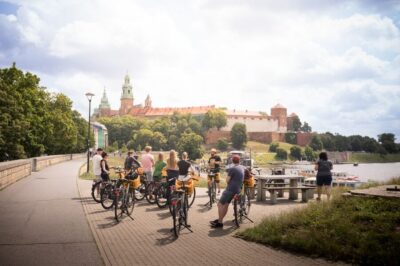
Bike Tour of Old Town, Jewish Quarter and the Ghetto
Read our review →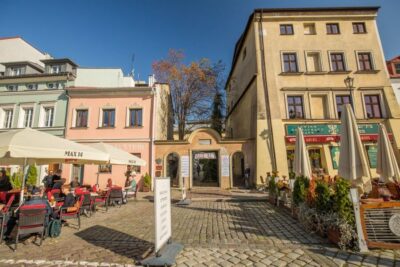
Kazimierz, Schindler’s Factory & Ghetto Guided Tour
Read our review →
Full Bike Tour – the Old Town, Jewish Qtr & the Ghetto NEW BIKES
Read our review →
Bike Tour of the Old Town, Kazimierz, and the Ghetto
Read our review →
Jewish Quarter and Ghetto Electric Golf Cart Tour
Read our review →
Browse the lists this tour appears in