
Reviewed · NOWA HUTA COMMUNIST TOURS
Trip Around Nowa Huta – Krakow
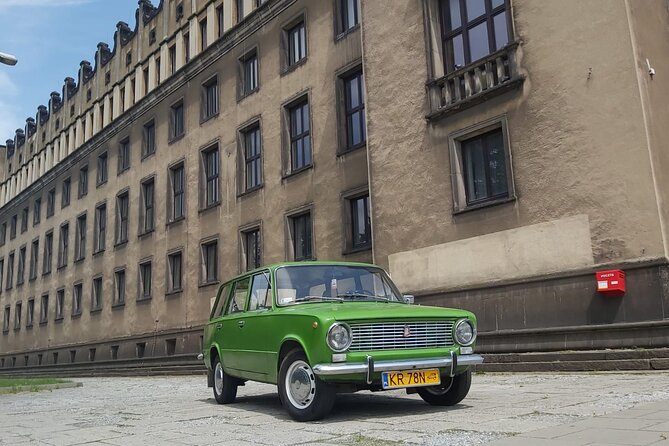
Nowa Huta was built as a model socialist city, and this tour lets you see it from inside a vintage Lada or Polski Fiat. You’ll visit the broad Central Square, former steelworks buildings and Cold War shelters, then hear how daily life and political resistance shaped the district.
I especially like the private format, which gives you time to ask questions, and the chance to enter places most city tours skip. Guides such as Mateusz bring personal family stories, while the car, shelter rooms, control-room details, and even small period touches make the past feel close at hand.
The main drawback is cost: at $102.12 per person, this is not a cheap way to spend three hours. The small vintage cars can also be cold or smoky, and exact car availability should be confirmed after booking.
Key points to know before booking
- Ride through Nowa Huta in a vintage communist-era car, usually a Lada or Polski Fiat, with the specific vehicle subject to availability.
- Enter former steelworks administration buildings and shelters, including rooms normally closed to casual visitors.
- Hear personal stories about socialist Poland from guides such as Mateusz, Matt, or Matheo.
- Visit Central Square, the Lord’s Ark church, and a WWII IS-2 tank in one compact route.
- Enjoy a private tour for your own group, with hotel pickup and drop-off available if you choose that option.
- Allow about three hours, wear comfortable shoes, and dress for changing weather and cool interiors.
Why Nowa Huta deserves a place on your Krakow plans
Krakow’s Old Town gets the attention, but Nowa Huta explains a different part of Poland. Built after World War II as an industrial district and planned socialist city, it was designed around a huge steelworks and wide public spaces. The tour gives you a way to read the district as more than a collection of apartment blocks.
The setting helps explain the politics. Nowa Huta was meant to represent a modern workers’ city, yet the Catholic faith and local independence remained strong. The route connects grand planning, industrial power, underground shelters, religious resistance, and the ordinary business of getting through the communist years.
That mix is the real reason to book. This is not just a ride in an old car, and it is not just a lecture about Poland. You move between physical places where the story happened, while the guide explains what those places meant.
The private setup is useful here. You can stop for questions, ask about family life, and spend more time on the parts that interest you. Guides named Mateusz, Matt, and Matheo are associated with the experience, and the strongest impressions come from their personal approach and clear enthusiasm for Nowa Huta.
More Nowa Huta communist-era tours in Krakow:
- Krakow: Nowa Huta Guided Tour in Vintage Car
★ 4.9 · 277 reviews - Legendary Private Nowa Huta Communism Tour with Crazy Guides
★ 5.0 · 262 reviews - Nowa Huta: Steelworks Administration Buildings/Shelters Tour
★ 4.9 · 160 reviews
The vintage car is part of the lesson
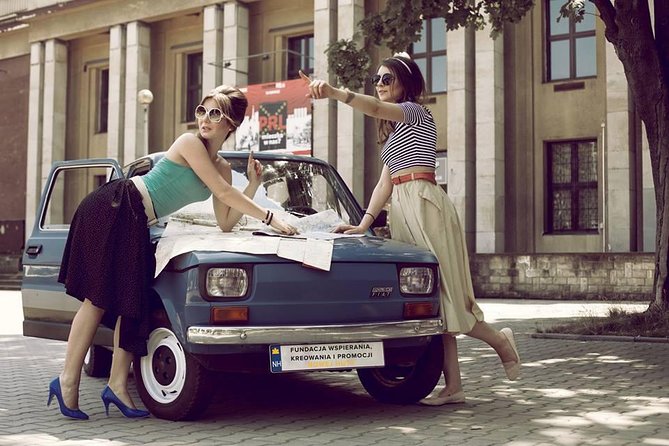
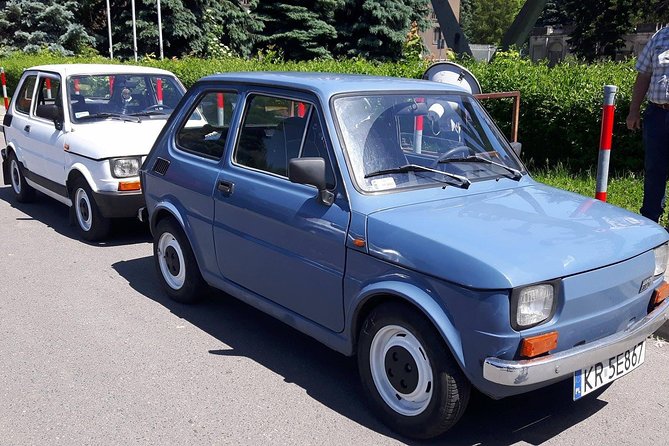
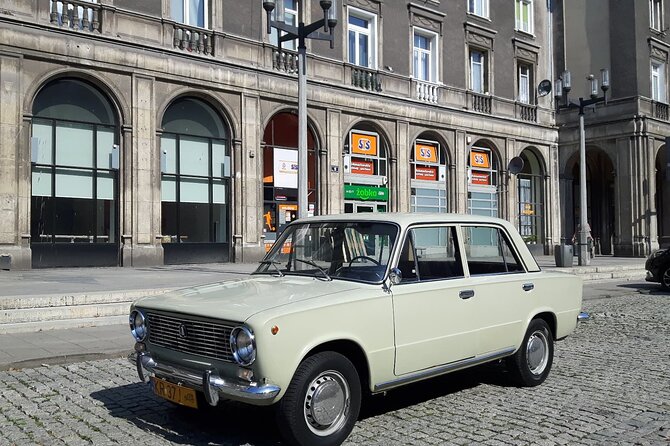
The tour begins with transport in a vintage car from Krakow. Depending on availability, this may be a Lada or Polski Fiat, including the small Fiat 126 style of car associated with the period. The vehicle is not simply decoration. It sets the mood before you reach the first stop and gives you a feel for the cramped, basic transport of the time.
I like this touch because it makes the tour distinct from a standard minibus outing. You are not only looking at socialist-era buildings through a modern vehicle window. You are moving through the district in something that belongs to that period.
Still, keep expectations sensible. These cars are old. One account describes needing to open the windows because of fumes, while another found the Fiat cold. The small interior may not suit everyone, especially if you prefer roomy, quiet transport. Ask about the car available when you contact the operator after booking.
The private vehicle also limits the group size. That is good for conversation, but it helps explain the higher price. If your main goal is the guide’s explanation rather than the car itself, a larger group tour in ordinary transport could offer better value. This experience is aimed at people who see the vehicle as part of the story.
Plac Centralny and the planned socialist city
The first main stop is Plac Centralny imienia Ronalda Reagana, or Ronald Reagan Central Square. You spend about 20 minutes here, using the square as your introduction to Nowa Huta.
This is where the planning becomes easiest to understand. The open space, broad avenues, and surrounding buildings reflect the grand civic style favored by the socialist state. Your guide can explain how the district was intended to function and how its public spaces fit into the larger industrial project.
The square also helps place the district in time. Nowa Huta was not an old village that slowly grew into a suburb. It was planned around the steelworks and built to house workers. That makes the layout part of the political story.
Do not expect a long museum visit at this stop. The admission is free, and the visit lasts roughly 20 minutes. Its value comes from the explanation and the way it prepares you for the buildings and institutions that follow.
Inside the steelworks administration buildings and shelters
The longest part of the tour takes place at Ujastek 1. You spend about an hour visiting the former directors’ buildings of the steelworks and their shelters. This is the section that gives the tour its strongest sense of access.
The steelworks was central to Nowa Huta’s identity. It provided work, shaped the district, and represented the industrial strength that communist Poland wanted to display. The administration buildings add another layer: this is where the system was managed, not just where labor took place.
The shelters are especially effective because they turn broad political subjects into physical spaces. You can see the rooms, move through the areas used for protection, and ask questions as the guide explains why such facilities existed. The experience has a direct, concrete quality that a history talk alone cannot provide.
Small details make a difference here. The tour may include period-style touches such as control-room lights and a vodka reference connected with the era. These details are not the main attraction, but they help show how the organizers are trying to make the location understandable rather than leaving you with empty rooms.
The condition of the buildings is part of the appeal and part of the limitation. They are maintained for the tour, but this is not a polished modern museum with displays at every turn. You should expect a more raw visit through former offices and shelters. That suits the subject, though anyone wanting a formal exhibition may find the presentation simple.
The one-hour stop is also why comfortable walking shoes matter. You will be moving through several spaces, and the tour operates in all weather. Dress for the day, not just for the car ride.
Same city, a completely different sort of day:
- From Krakow: Auschwitz-Birkenau Guided Tour & Hotel Pickup
★ 4.5 · 33,358 reviews - From Krakow: Auschwitz-Birkenau Guided Tour & Hotel Pickup
★ 4.5 · 29,340 reviews - Krakow: Auschwitz Guided Tour with Optional Hotel Pickup
★ 4.5 · 15,280 reviews - Krakow–Zakopane: Cable Car, Chocholow Baths, Cheese & Vodka
★ 5.0 · 10,720 reviews
The Lord’s Ark church and the clash of ideas
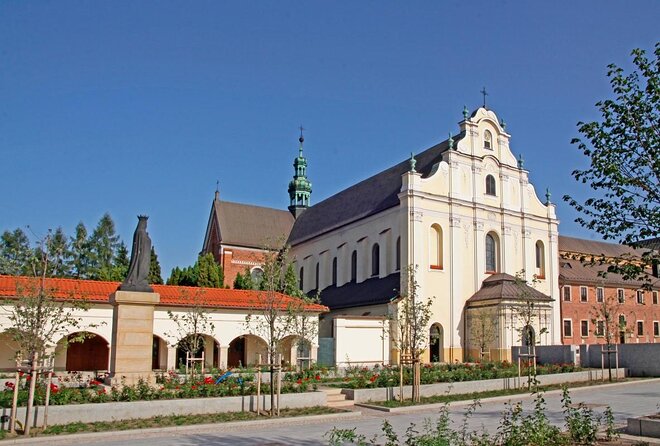
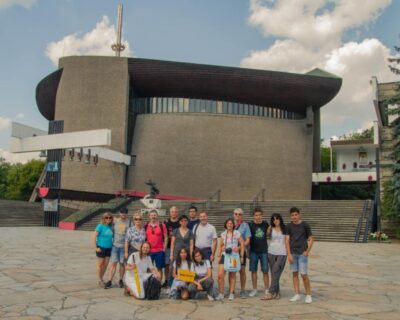
The Church of Our Lady Queen of Poland, commonly called the Lord’s Ark, is the next stop. The visit lasts about 15 minutes and includes the exterior and interior.
This church matters because it reflects the tension between the officially secular socialist state and the strength of Catholic life in Poland. In a district created to embody the workers’ state, a major church became a powerful sign of local identity and religious persistence.
The stop is short, but it changes the tone of the tour. After the steelworks offices and shelters, you see a place connected to belief, community, and resistance. Your guide can link the church to the wider story of protests and opposition in the 1970s and 1980s.
Since the visit is only around 15 minutes, do not expect a long religious tour or extended time for quiet viewing. It works best as one part of the larger Nowa Huta story.
The IS-2 tank at Osiedle Górali
At Osiedle Górali, you stop for about 10 minutes to see an IS-2 tank from World War II. It is a compact stop, but it adds a military reminder to a tour otherwise focused on industry, politics, and religion.
The tank helps connect Poland’s postwar story with the war that came before it. It also gives the route a memorable visual marker. You can examine it, take photos, and hear how it fits into the area’s public history.
This is not a tank museum visit. The value is the context supplied by your guide and the way the object adds another layer to the district. If military history is your main interest, the stop alone will not fill much time. As part of the three-hour route, it works well.
What the guide adds to the experience
The guide is the most important part of this tour. The car attracts attention, but the meaning comes from the person explaining the district.
Mateusz is frequently associated with the experience, and the guide may also be called Matt or Matheo. The strongest descriptions focus on his clear explanations, personal family stories, friendly manner, and enthusiasm for Nowa Huta. That personal angle matters because communist Poland can otherwise feel like a list of dates and slogans.
You can ask about daily life, resistance, work, religion, and the changes that followed the communist period. A guide with family connections to the era can make those subjects easier to picture. The experience may be operated by a multilingual guide, but English is the advertised language, so confirm language arrangements after booking.
Because this is private, the guide can adjust the conversation to your interests. A family with teenagers might focus on the car, shelters, and tank. A history-minded couple may want more time on the steelworks and political opposition. You are not locked into a fixed group discussion.
Is $102.12 per person good value?
The price is high for a three-hour Krakow activity, especially if you compare it with a general walking tour. The cost covers a private guide, private transport, and access to a more unusual route. Hotel pickup and drop-off are included only if you select that option, so check the booking choice carefully.
I see the value in three parts. First, you get a private experience rather than a large group. Second, the vintage car is a rare way to move through Nowa Huta. Third, the former steelworks offices and shelters offer access that you are unlikely to arrange on your own.
The price makes less sense if you are mainly looking for cheap transport or a quick overview. You may also feel you are paying for the car when the guide’s explanations are what interest you most. The best fit is someone willing to pay extra for a personal route, period vehicle, and access to unusual sites.
Booking about six weeks ahead is common, with the average booking made 42 days in advance. After reserving, contact the operator to confirm the meeting point, time, language, and car availability. That step is important because the tour can begin with hotel pickup or at Plac Centralny if you make your own way to Nowa Huta.
Practical details that affect your day
The tour lasts approximately three hours. Hotel pickup and drop-off are offered if you select that option, while independent arrival means meeting at Plac Centralny.
Wear comfortable walking shoes. The route includes streets, buildings, offices, and shelters, and the experience operates in all weather. Bring suitable clothing for the forecast, since the vintage car and former underground spaces may not be as comfortable as a modern vehicle or heated museum.
Food and drinks are not included. Souvenir photographs may be available to purchase, but you should not count on meals or refreshments being part of the tour.
The activity is private, so only your group participates. Most people can take part, and the area is near public transport. Free cancellation is available up to 24 hours before the start time. Cancellations or changes made within 24 hours are not refunded or accepted.
Who should book this Nowa Huta tour?
I would choose this experience if you want to understand Krakow beyond the medieval center. It suits people interested in Poland’s communist period, Cold War shelters, industrial history, Catholic resistance, old cars, or unusual access.
Families with older children and teenagers may find the tank, car, and bunker more engaging than a conventional museum. Couples and small groups will appreciate being able to ask questions without keeping pace with a large party.
I would think twice if you dislike cramped vintage vehicles, want a low-cost tour, or prefer polished museums with extensive displays. The car may be cold or smoky, and the former industrial spaces have a rougher, less formal feel.
Should you book it?
Book it if you want a personal, story-led look at socialist Krakow and you like the idea of reaching the steelworks offices and shelters in a vintage Lada or Polski Fiat. The strongest parts are the guide, the private access, and the way the route connects industry, religion, war, and daily life.
Skip it if the vehicle is only a novelty to you and price matters more than privacy. In that case, a less expensive group option might suit you better. For anyone who wants a different side of Krakow and is willing to pay for a distinctive half-day outing, this is a strong choice.
FAQ
How long does the Nowa Huta tour last?
The tour lasts approximately three hours.
What language is the tour offered in?
The tour is offered in English. It may be operated by a multilingual guide, so confirm language details after booking.
Is the tour private?
Yes. Only your group participates in the private tour.
Is hotel pickup available?
Hotel pickup and drop-off are available if you select that option. If you travel to Nowa Huta independently, the meeting point is Plac Centralny.
What kind of vehicle is used?
Transport is provided by a private vintage car, commonly described as a Lada or Polski Fiat. Car availability should be confirmed after booking.
What places are visited?
The route includes Ronald Reagan Central Square, former steelworks directors’ buildings and shelters at Ujastek 1, the Church of Our Lady Queen of Poland, and a WWII IS-2 tank at Osiedle Górali.
Are food and drinks included?
No. Food and drinks are not included in the tour price.
Can I cancel for a full refund?
Yes, if you cancel at least 24 hours before the experience start time. Cancellations or changes made less than 24 hours before the start time are not refunded or accepted.
Just added around Krakow
- From Krakow: Zakopane Full-Day Tour with Lunch Option★ 4.4 · 62 reviews
- From Krakow: Zalipie and Painted Village Guided Tour★ 4.0 · 4 reviews
- From Krakow: Zakopane and Dunajec River Rafting Tour★ 4.6 · 31 reviews
- From Krakow: Zakopane and the Tatra Mountains★ 4.7 · 36 reviews
- From Krakow: Zakopane and Gubałówka Cable Car Private Tour★ 4.3 · 12 reviews
- From Krakow: Zakopane Tatra Mountains & Hot Springs Tour★ 3.0 · 29 reviews
- Zakopane & Tatra Mountains Private Full-Day Tour from Krakow★ 4.5 · 33 reviews
- From Krakow: Hot Springs and Zakopane with Gubałówka★ 4.7 · 25 reviews
Nowa Huta Communist Tours, compared.
Legendary Private Nowa Huta Communism Tour with Crazy Guides
Read our review →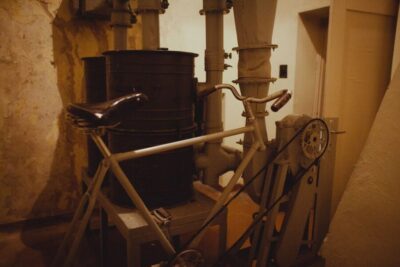
Steelworks Administration Buildings/Shelters Tour
Read our review →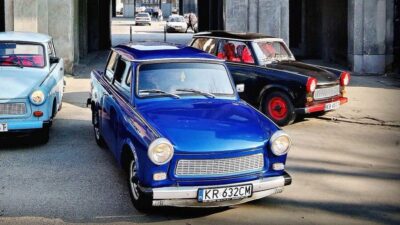
Private Nowa Huta Adventure Tour in Communist Cars
Read our review →
Communist Krakow – Nowa Huta Walking Tour in English
Read our review →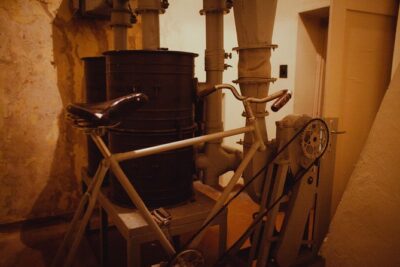
Nowa Huta Steel Mill Administration Buildings and Shelters with local NGO
Read our review →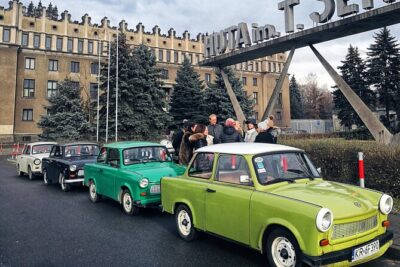
1.5h Crazy Guides’ Communism Tour of Nowa Huta in Classic Car
Read our review →Browse the lists this tour appears in