
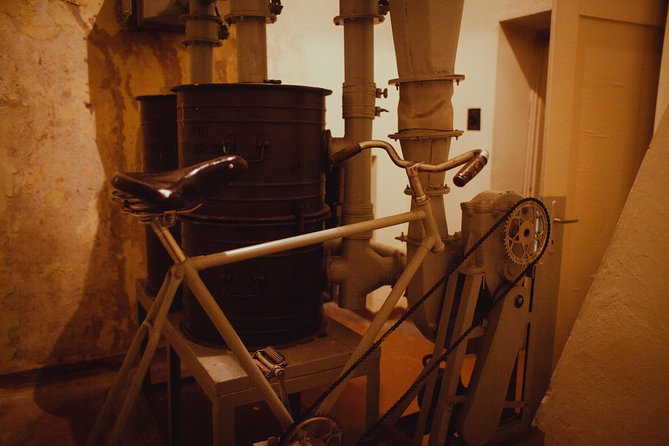
Reviewed · NOWA HUTA COMMUNIST TOURS
Nowa Huta Steel Mill Administration Buildings and Shelters with local NGO
Nowa Huta’s former steelworks administration buildings offer a rare look at communist Poland from inside the system’s polished front office. You’ll walk through Socialist Realist rooms, preserved offices, and an underground Cold War shelter, while old radio recordings bring the factory’s daily life back into the building.
I like the nearly untouched interiors, where grand meeting rooms and worn offices show both ambition and neglect. I also like the local guides, including Mateusz, who connect the plant’s story to family experience and explain details such as the buildings’ design, the workers’ theater, and the shelter network.
The main drawback is that this is an abandoned, aging complex rather than a tidy museum. You’ll walk for up to two hours, see objects gathered into informal displays, and need a moderate level of fitness. Some exhibits come from different periods, reaching from the 1950s into the 2000s.
Key points to know before you go
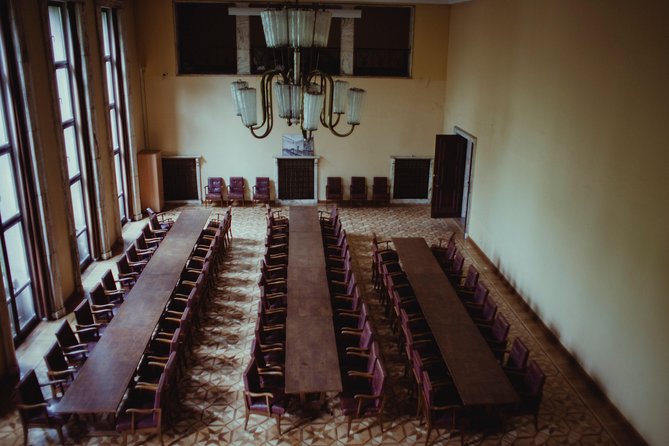
- Socialist Realist architecture: See the grand administrative style built to project power and order around the Nowa Huta steelworks.
- Underground Cold War shelter: Walk through tunnels and bunker rooms beneath the former offices.
- Old steelworks radio recordings: Historic broadcasts help explain how information and daily routines moved through the plant.
- Small local group: The tour accepts a maximum of 15 people, which suits detailed questions and close access to the rooms.
- A working site turned time capsule: Offices, meeting rooms, artifacts, and film-used spaces show several decades of industrial life.
- Practical value: At $27.63 per person, the tour costs less than many major Krakow attractions and offers a specialized experience you cannot get from the Old Town alone.
Entering Nowa Huta’s former steelworks offices
This tour takes you beyond Krakow’s medieval center and into Nowa Huta, the planned industrial district created around the Lenin Steelworks. The meeting point is Ujastek 1, 31-752 Kraków, and the tour returns to the same place. The directions specify the opposite side of the street, so check the exact meeting position carefully before setting off.
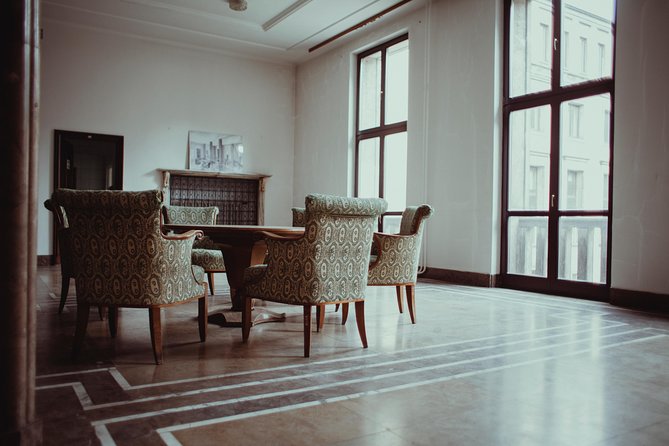
The steelworks administration buildings are the main event. Their architecture was not meant to be modest. Socialist Realist design used formal entrances, broad corridors, heavy decoration, and carefully ordered rooms to present the industrial state as powerful and permanent.
Inside, you can see how that message worked. The grander spaces were designed for administration and official business, while other areas feel more practical and worn. The contrast between elegant public rooms and ordinary working spaces gives you something more useful than a simple architectural tour. You begin to see how the plant tried to present itself, and how people actually used it.
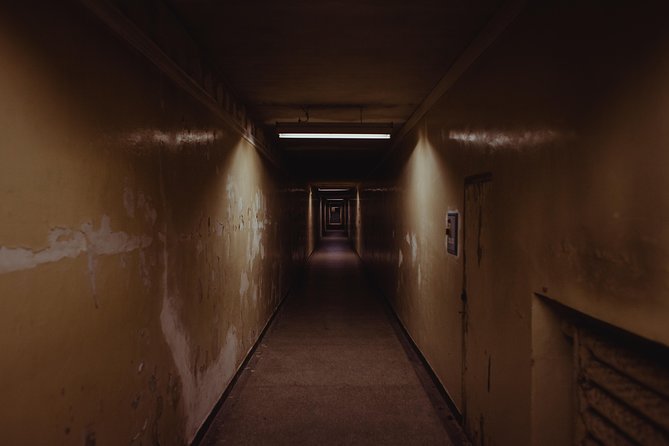
The buildings were used into the 2000s, then parts of the complex were left empty for more than a decade. That history explains the atmosphere. This is not a restored palace where every surface has been polished for visitors. It is an aging place with rooms that still carry the look of an office, meeting space, or institutional building.
I find that roughness valuable, but you should know what you are booking. The experience is closer to guided urban exploration than to a conventional museum visit. Some walls and fittings show their age, and the rooms do not always form a carefully arranged exhibition.
More Nowa Huta communist-era tours in Krakow:
- Krakow: Nowa Huta Guided Tour in Vintage Car
★ 4.9 · 277 reviews - Legendary Private Nowa Huta Communism Tour with Crazy Guides
★ 5.0 · 262 reviews - Nowa Huta: Steelworks Administration Buildings/Shelters Tour
★ 4.9 · 160 reviews
What the Socialist Realist design tells you
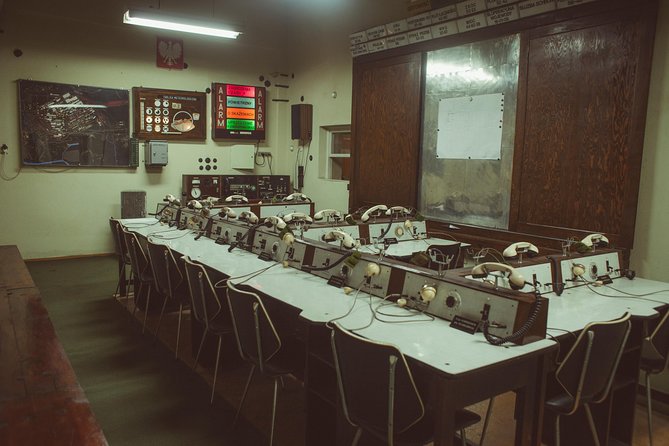
The buildings make most sense when your guide explains why they look the way they do. You’ll hear about the role of architecture in communist Poland and the way Nowa Huta was planned around heavy industry and the workers who powered it.
Look closely at the difference between the administration building and the workers’ facilities. One review raised an important caution: it can be too easy to blame every difference in quality or style on communism without comparing the plant with similar factories in Western Europe. That is a fair point, and it is one reason to listen actively rather than accept every historical judgment as a complete answer.
The strongest guides do not only identify objects and dates. They explain how the plant operated, how life in Nowa Huta changed across several decades, and why the buildings were designed to send a political message. Guides such as Mateusz have a personal connection to the factory through family ties, which can make the story feel less like a textbook account and more like local memory.
The tone is enthusiastic but not necessarily heavy-handed. You’ll hear about the strengths and failures of the system, the working life connected to the steelworks, and the role of the factory in communist Poland. If you prefer a purely architectural tour, the political discussion may feel extensive. If you want context, it is a major part of the value.
Offices, meeting rooms, and objects left behind
The walk takes you through administrative rooms and meeting spaces in both the S and Z buildings. Old furniture and other objects remain, while additional artifacts have been gathered by the local nonprofit that runs the experience.
That distinction matters. You will see a large collection of period material, but not every object necessarily belonged in the exact room where it now appears. The organization has assembled displays to help tell the story. Think of the setting as a preserved industrial complex with an informal museum layer, not a perfectly frozen scene from one specific year.
The result is still highly effective. A room with old office equipment, a formal conference setting, or a neglected corridor can say more than a glass case in a standard museum. You get scale and atmosphere together. You can understand how a large institution was arranged, and you can see the wear left by later decades.
Some rooms have also been used as movie locations. That adds a small piece of film history, but the stronger reason to visit is the building itself. You can walk through spaces that have not been turned into a glossy attraction. The appeal comes from the combination of architecture, decay, and the traces of several eras.
Allow time to stop and look. The tour lasts around 1 hour 30 minutes to 2 hours, and the guide covers a lot of material. If you rush from room to room, you may miss the small details that make the visit work: a preserved fitting, a change in room design, or an object that reveals how the building continued to function after the communist period.
The underground shelter and Cold War atmosphere
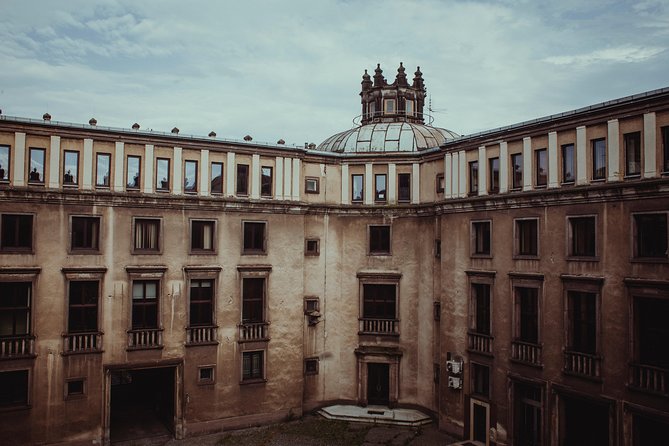
The underground shelter is one of the most memorable parts of the visit. You’ll go below the administration buildings into tunnels and bunker spaces built for the Cold War era.
The shelter gives the political story a physical shape. Above ground, the administration rooms project order and confidence. Below ground, the bunker reflects fear, military planning, and the possibility that ordinary civilian life could be disrupted without warning.
The route requires a moderate level of physical fitness. Exact access details are not specified, but you should expect underground passages and walking through an older complex rather than a step-free attraction. Wear sensible shoes and be ready for a setting that may feel uneven or less comfortable than a standard museum.
I especially like the shelter because it moves the discussion beyond speeches and architecture. You are no longer only looking at how the state wanted to be seen. You are seeing how the same society prepared for danger. The space also helps explain why Cold War shelters were built into so many large public and industrial sites.
The shelter is not presented as a separate attraction with a long list of modern installations. Its power comes from its original purpose and its connection to the steelworks offices above. Give it time, listen to the explanations, and let the change from formal office space to underground bunker do some of the storytelling.
Same city, a completely different sort of day:
- From Krakow: Auschwitz-Birkenau Guided Tour & Hotel Pickup
★ 4.5 · 33,358 reviews - From Krakow: Auschwitz-Birkenau Guided Tour & Hotel Pickup
★ 4.5 · 29,340 reviews - Krakow: Auschwitz Guided Tour with Optional Hotel Pickup
★ 4.5 · 15,280 reviews - Krakow–Zakopane: Cable Car, Chocholow Baths, Cheese & Vodka
★ 5.0 · 10,720 reviews
Radio recordings and the sound of factory life
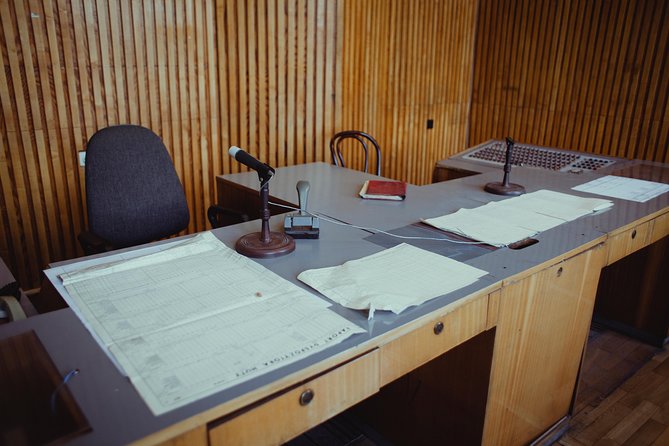
Historic tapes from the steelworks’ radio station add a welcome sound element. Instead of relying only on walls, photographs, and spoken explanation, the tour uses old recordings to suggest how communication worked inside the plant.
This is a small detail, but it changes the mood. A silent office can feel like an empty shell. A period radio recording gives you a sense of the institution as an active workplace, with announcements and information moving through a large industrial community.
The recordings also help connect the rooms to the people who used them. The building was not only an administrative symbol. It was part of a huge workplace with its own routines, messages, and internal culture.
Because the visit is guided in English, ask questions if a recording or historical point moves quickly. The stated language is English, and the small group limit of 15 should make it easier to follow the explanations and speak with the guide.
A worker’s theater and the human side of the plant
The tour includes more than offices and shelters. You’ll hear about the workers’ theater and other parts of the steelworks complex, which broaden the picture of life around the factory.
That matters because a steelworks was not simply a place where people clocked in, produced metal, and went home. It shaped a district and supported social, cultural, and political life. The theater points toward the organized community built around industrial work.
The experience is strongest when it connects such places to daily life. The administrative rooms show authority. The factory radio shows communication. The shelter shows fear and preparation. The theater shows a social world built around the workforce. Together, these pieces make Nowa Huta easier to understand than a single monument would.
The available information does not promise a full tour of every part of the steel plant. The stated stop is the administration buildings and their underground shelter, with related historical features explained along the way. You should book this for access to the former offices and shelter, not as a general tour of the entire steelworks.
How much the $27.63 price buys you
At $27.63 per person, this is a good-value specialist tour if communist history, industrial architecture, or abandoned buildings interests you. The price includes a local guide and a professional guide, while souvenir photos cost extra. Hotel pickup and drop-off are not included.
You are paying for access to a place that is not an ordinary public museum, plus a guided explanation that gives the rooms meaning. Without a guide, you might notice the grand corridors and worn offices but miss the political purpose behind the design, the history of the plant, or the significance of the bunker.
The value is less clear if your main goal is Krakow’s royal history, art, or polished sightseeing. Nowa Huta is a specialist choice, and the experience asks you to spend up to two hours with industrial buildings rather than famous city-center landmarks.
Group discounts are available, which may improve the price for families or larger parties. The maximum group size is 15, so you get a more focused visit than you would on a large coach excursion. The tour is usually booked about 19 days ahead, a useful sign that you should not leave it until the final day of a short Krakow stay.
Who will enjoy this most
I would choose this tour if you have an interest in:
- Communist-era Poland and the Cold War
- Industrial history and steel production
- Socialist Realist architecture
- Abandoned or partly preserved buildings
- Local stories connected to Nowa Huta
- Film locations and unusual Krakow attractions
It also suits repeat visitors who have already seen the Old Town, Wawel, and the main museums. Nowa Huta gives you a different view of Krakow, one shaped by postwar planning and heavy industry.
Families can book, but children must be accompanied by an adult. The subject matter and walking route may suit older children and teenagers better than very young ones, though the supplied details do not set a minimum age.
You do not need to be an architecture expert. A basic interest in how people lived and worked under communism is enough. The guide’s explanations provide the background, and the physical setting supplies the visual evidence.
Timing, meeting point, and practical advice
Plan on 1 hour 30 minutes to 2 hours at the site. The published itinerary lists two hours, while the overall duration is given as approximately 1.5 to 2 hours. Either way, this is not a quick photo stop.
The meeting and return point is Ujastek 1, 31-752 Kraków. It is near public transportation, but hotel transfers are not provided. Pay attention to the note that the meeting point is on the opposite side of the street, since arriving at the address alone may not place you in the right spot.
Wear comfortable shoes and bring the level of mobility you would use for a long guided walk. The tour requires moderate physical fitness, and the shelter and older buildings are not presented as a fully modernized visitor facility.
Confirmation is provided at booking. Free cancellation is available up to 24 hours before the start time. If you cancel or change the booking inside that 24-hour window, you should not expect a refund.
Should you book the Nowa Huta steelworks tour?
Book it if you want a close look at communist Poland through architecture, workplaces, and Cold War planning. The underground shelter, old radio recordings, preserved offices, and personal knowledge brought by guides such as Mateusz give the visit real substance.
Skip it if you want a polished museum, a short attraction near the Old Town, or a tour with little walking. The buildings are aging, some displays combine objects from several periods, and the historical interpretation may sometimes feel strongly critical of communism.
For the right visitor, this is one of Krakow’s most distinctive history experiences. It shows a side of the city that grand churches and medieval squares cannot explain. At $27.63, I think it earns its place in a Krakow plan, especially for anyone willing to trade polish for atmosphere and direct contact with the past.
FAQ
Where does the Nowa Huta steelworks tour begin?
The tour begins at Ujastek 1, 31-752 Kraków, Poland. The directions note that the meeting point is on the opposite side of the street.
Where does the tour end?
The tour ends at the same location, Ujastek 1, 31-752 Kraków.
How long does the experience last?
The experience lasts approximately 1 hour 30 minutes to 2 hours. The listed itinerary allows two hours for the visit.
What language is the tour offered in?
The tour is offered in English.
What is included in the price?
The price includes a local guide and a professional guide. Souvenir photos are not included but are available to purchase.
Is hotel pickup included?
No. Hotel pickup and drop-off are not included. The meeting point is near public transportation.
Is the tour suitable for children?
Children must be accompanied by an adult. The activity also recommends a moderate level of physical fitness.
What happens if I need to cancel?
You can cancel up to 24 hours before the experience start time for a full refund. Cancellations or changes made less than 24 hours before the start time are not accepted for a refund.
Just added around Krakow
- From Krakow: Zakopane Full-Day Tour with Lunch Option★ 4.4 · 62 reviews
- From Krakow: Zalipie and Painted Village Guided Tour★ 4.0 · 4 reviews
- From Krakow: Zakopane and Dunajec River Rafting Tour★ 4.6 · 31 reviews
- From Krakow: Zakopane and the Tatra Mountains★ 4.7 · 36 reviews
- From Krakow: Zakopane and Gubałówka Cable Car Private Tour★ 4.3 · 12 reviews
- From Krakow: Zakopane Tatra Mountains & Hot Springs Tour★ 3.0 · 29 reviews
- Zakopane & Tatra Mountains Private Full-Day Tour from Krakow★ 4.5 · 33 reviews
- From Krakow: Hot Springs and Zakopane with Gubałówka★ 4.7 · 25 reviews
Nowa Huta Communist Tours, compared.

Legendary Private Nowa Huta Communism Tour with Crazy Guides
Read our review →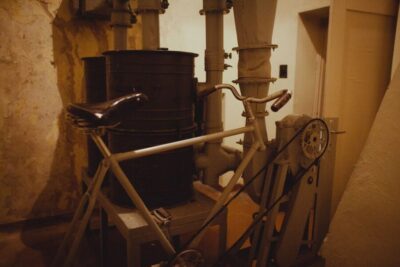
Steelworks Administration Buildings/Shelters Tour
Read our review →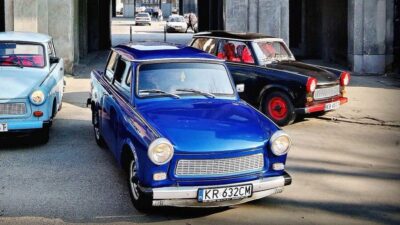
Private Nowa Huta Adventure Tour in Communist Cars
Read our review →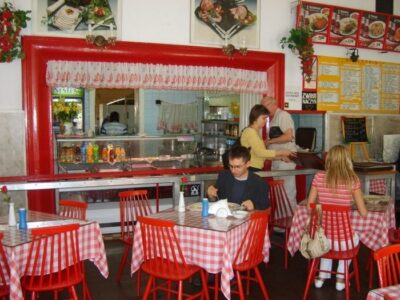
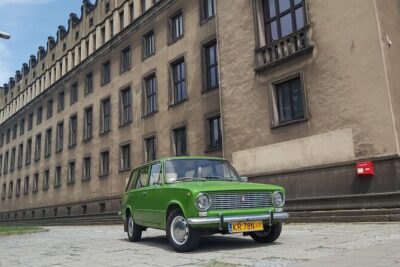
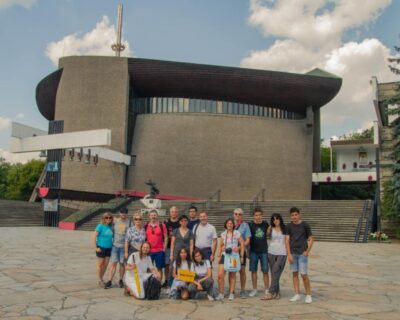
Communist Krakow – Nowa Huta Walking Tour in English
Read our review →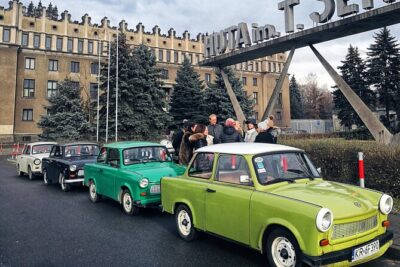
1.5h Crazy Guides’ Communism Tour of Nowa Huta in Classic Car
Read our review →Browse the lists this tour appears in