
Reviewed · PLASZOW CAMP TOURS
Krakow: Plaszow Concentration Camp Guided Walking Tour
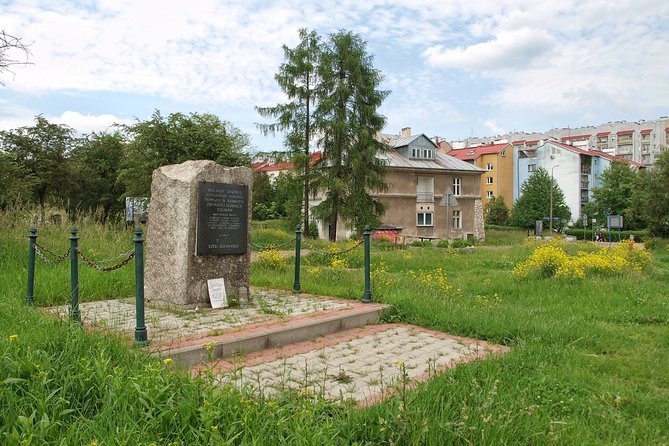
Plaszow is not a neatly preserved camp with gates, barracks, and signs at every turn. It is a more demanding place: an open area where mass graves, memorials, cemetery fragments, and scattered remains must be pieced together with help from a good guide.
I like the route from Ghetto Heroes Square because it connects the camp to the Krakow ghetto, and I like the use of old photographs to show what has disappeared. The drawback is equally important: you’ll walk outdoors for about two hours, and much of Plaszow requires imagination rather than a line of intact buildings.
Key points to know before booking
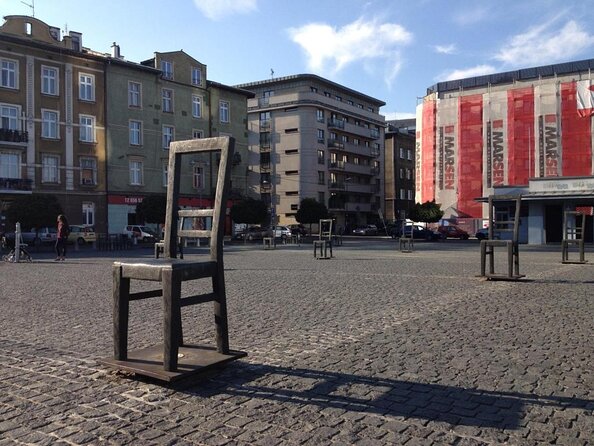
- The route begins at Ghetto Heroes Square, once the Krakow ghetto’s main point for registration, control, and deportations.
- Plaszow is largely an open site, so the guide’s explanations and historic photographs are central to understanding it.
- The walk covers Jewish cemetery remains, the Grey House, the roll-call square, memorials, and execution sites.
- Oskar Schindler’s role is explained in place, including how his factory workers were registered through Plaszow and later moved to Brunnlitz.
- The experience lasts about two hours, with a maximum group size of 25 and English as the available language.
- Wear comfortable shoes and arrive 10 minutes early. Late arrivals cannot join once the group has left.
Why Plaszow needs a guided walk
A visit to Auschwitz can feel brutally direct because so much of the site remains recognizable. Plaszow is different. The camp was dismantled, altered, and absorbed into the modern outskirts of Krakow, leaving you with memorials, earthworks, fragments, and a few surviving structures.
That makes an informed guide unusually important. Without one, you could walk past the Grey House or a former cemetery area without understanding what happened there. The guide gives the site its shape, pointing out where the living, hospital, administrative, and industrial sections once stood.
Plaszow was created by the Nazi German occupiers in October 1942 on the grounds of two Jewish cemeteries. It first served as a forced-labor camp for Jews from the liquidated Krakow ghetto. From July 1943, it also held Poles in a penal-labor section. In January 1944, it was redesignated as a concentration camp.
More than 35,000 people were imprisoned at Plaszow during its existence, and around 6,000 were murdered. Executions happened at several places within the camp, and mass graves are now marked by memorials. The figures are large, but the walk works best when you focus on the physical locations and the stories connected to them.
More Plaszow camp tours in Krakow:
- Krakow: Plaszow Concentration Camp Walking Tour
★ 4.8 · 39 reviews - Krakow: Schindler’s Factory & Ghetto & Plaszow Camp Guided Tour
★ 4.5 · 28 reviews - Guided Tour in Kraków-Płaszów Former Concentration Camp
★ 5.0 · 19 reviews
Starting at Ghetto Heroes Square
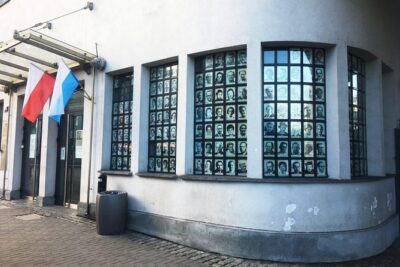
The tour begins at Apteka pod Orłem, at Plac Bohaterów Getta 18. The meeting point sits on Ghetto Heroes Square, the place formerly known as Plac Zgody.
During the German occupation, the square was the logistical center of the Krakow ghetto. It was used for control, registration, and the departure of transports. The square’s modern name honors the Jewish people who lived, suffered, and were deported from the ghetto.
I appreciate starting here because it prevents Plaszow from feeling like an isolated site. You first see the place where people were processed and sent away, then follow the story toward the forced-labor camp that received many of them.
Allow a little extra time to find Apteka pod Orłem. The instructions ask you to arrive 10 minutes before departure, and this matters. Once the group has left, latecomers cannot join and the ticket is not refunded.
From the ghetto to Plaszow
The route connects Ghetto Heroes Square with the Plaszow site. One account of the tour describes the guide taking the group by tram from Heroes Square to Plaszow, so you should be prepared for the route to include local public transport rather than a continuous walk from the meeting point.
The tour information gives a total duration of about two hours, with roughly 15 minutes at the square and about an hour and 45 minutes at Plaszow. The exact balance can depend on the guide and the pace of the group.
This transition is useful. It lets you move from the ghetto’s central square to the camp area while the guide explains how people, paperwork, forced labor, and transports linked the two sites. It also means you should wear practical shoes and be ready to walk outside for most of the experience.
Seeing a camp that no longer fully survives
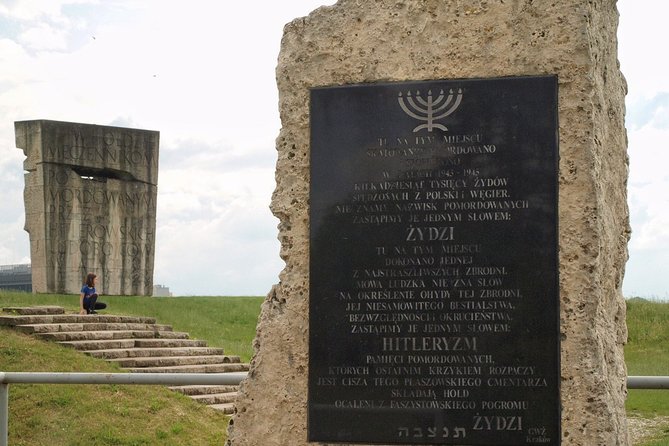
At Plaszow, the guide reconstructs the camp from what remains. You can expect to see the Grey House, ruins of the former pre-burial hall, traces of the Jewish cemeteries, the roll-call square, and routes where fragments of gravestones were once used to pave roads.
That last detail is especially hard to absorb. The cemetery remains are not simply background scenery. They show how Nazi authorities destroyed Jewish burial places and reused pieces of the cemetery as building material and road paving.
Historic photographs help fill in the gaps. The guide may show you what the site looked like when the camp was operating, then point to the same location as it appears today. This method is essential at Plaszow because many of the camp’s original structures are gone.
You should not book this expecting a preserved museum complex. The open setting and missing buildings can make the visit less immediately understandable, but they also force you to listen closely. This is a place where the explanation matters as much as the view.
More Old Town walking tours in Krakow:
- Old Town Krakow & Wawel Castle Walking Tour
★ 5.0 · 1,508 reviews - Creepy Krakow: 2-Hour City Walking Tour
★ 4.7 · 1,131 reviews - Krakow: The Old Town Walking Tour
★ 4.8 · 794 reviews - Krakow: Kazimierz Jewish Quarter Walking Tour
★ 4.8 · 571 reviews
Memorials, executions, and the Monument of Torn-Out Hearts
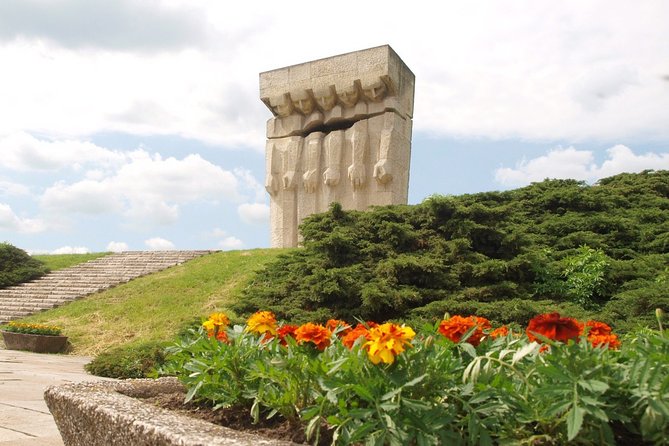
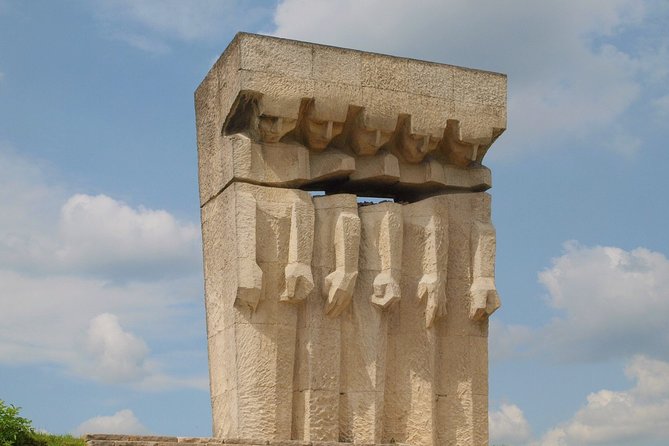
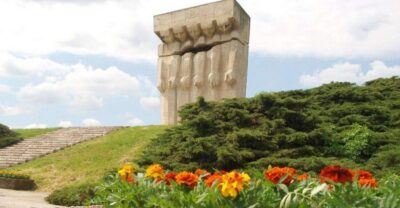
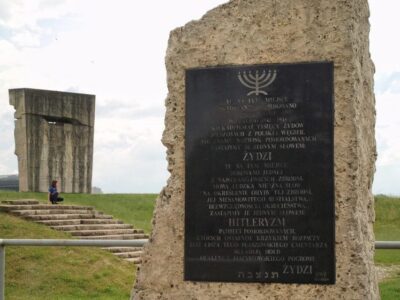
The walk pauses at major memorials, including the Monument of Torn-Out Hearts. These stops give the tour a clear emotional and physical structure.
You’ll also learn about the different execution sites within Plaszow and the mass graves that now mark the area. The subject is painful, and the guide’s role is to explain what happened without reducing the place to a list of dates and numbers.
The tour is educational, but it is also deliberately sobering. You may find the open setting unsettling because ordinary paths and present-day surroundings sit alongside places of murder. The experience asks you to pay attention rather than offering a polished, easy-to-read memorial site.
Understanding how the camp operated
Plaszow was not one simple enclosure with one purpose. The guide explains its living, hospital, administrative, and industrial sections, along with the forced-labor system that shaped daily life there.
The camp’s function changed over time. It began as a forced-labor camp for Jews from the Krakow ghetto, later included a penal-labor section for Poles, and was redesignated as a concentration camp in 1944. Later that year, it also served as a transit camp for Hungarian Jews being sent onward to Auschwitz.
This timeline helps you understand why Plaszow matters beyond its connection to one famous film. It was part of a wider system of imprisonment, labor, deportation, and murder. The guide ties those stages to the ground beneath you, which is far more useful than hearing the dates in isolation.
Oskar Schindler’s connection to Plaszow
The Oskar Schindler section is one of the main reasons people choose this walk, especially after watching Schindler’s List. The film connection is genuine, but the tour places it inside the wider history rather than treating Plaszow as a movie set.
Through his enamelware enterprise, Schindler sought work permits for Jewish prisoners registered through Plaszow. Those permits helped protect workers from further transports. Later, he arranged their transfer to his wartime plant in Brunnlitz, where he saved more than 1,000 lives.
The guide explains how Schindler’s factory and Plaszow were linked. This gives you a clearer picture of what a work permit meant in practice and why being assigned to a particular factory could affect a prisoner’s chances of survival.
You’ll also see areas connected with the filming of Schindler’s List. The film can provide a useful starting point, but the real value of the visit is seeing the actual places and people’s stories beyond the movie’s dramatic structure.
The guides make the difference
The quality of this tour depends heavily on the person leading it. Bartholomew, Barbara, and Phil are among the guides associated with this experience. Their strengths, as reflected in the available feedback, include clear explanations, patience, historic photographs, and willingness to answer questions.
Barbara is described as guiding the group from Heroes Square to the labor camp while explaining the site throughout the route. Phil is noted for taking time at the main locations and explaining what happened in detail. Bartholomew is praised for making the visit informative and memorable.
You may not receive a particular guide, so treat those names as examples rather than a guarantee. The important point is that this tour needs a guide who can explain a largely altered site and handle a difficult subject with care.
The group limit is 25 people. That is not a private tour, but it is small enough for questions to be possible, especially if the group stays together. The tour operates in one language, and you choose English when booking.
Is the $30.04 price good value?
At $30.04 per person, this is a fair price for a two-hour guided experience, especially because Plaszow is difficult to interpret alone. The value is not in admission to a grand museum. Admission to the listed sites is free. You are paying for the guide’s research, route planning, explanations, historic images, and help connecting the locations.
I would see the price as worthwhile if you want to understand Plaszow rather than simply walk through it. A solo visit can show you memorials and open ground, but it may not tell you which area was the roll-call square, where the cemetery traces fit into the camp, or how the sections were organized.
The price may feel less attractive if you prefer indoor museums, preserved buildings, or a self-guided visit at your own pace. This tour is about interpretation, not a large collection of exhibits.
Practical details for the walk
The tour starts at Apteka pod Orłem, Plac Bohaterów Getta 18, and ends at a bus stop at 57 Kamieńskiego Street. The ending point is not the starting square, so plan for the group to finish elsewhere in Krakow.
The experience is near public transportation, and the route may include a tram connection between Heroes Square and Plaszow. The listed end point is Henryka Kamieńskiego 57, so check your onward route before setting out.
You need a moderate level of physical fitness. The tour includes substantial outdoor walking, and comfortable shoes are strongly advised. There is no reason to treat this as a casual stroll through a city center.
Free cancellation is available up to 24 hours before the start time. Changes or cancellations made less than 24 hours before departure are not accepted for a refund, and all cut-off times use local Krakow time.
Who should book this experience?
I would choose this tour if you want a serious look at Krakow’s wartime history, have seen Schindler’s List and want to understand the real locations, or prefer learning from a guide rather than reading scattered memorial signs.
It suits adults and older teenagers who can manage a sober subject and an outdoor walk. It is also useful for anyone who has already visited Ghetto Heroes Square or Schindler’s factory and wants to connect those places with Plaszow.
I would think twice if you have limited mobility, dislike uneven outdoor routes, or want a compact museum visit with many preserved objects. The site is demanding both physically and emotionally.
Should you book the Plaszow walk?
Book it if you want context, not spectacle. The tour gives you a direct link between Ghetto Heroes Square and Plaszow, explains a camp that can otherwise be hard to read, and places Schindler’s story inside the larger system of forced labor and deportation.
Go with comfortable shoes, arrive early, and expect a quiet, serious walk rather than a conventional sightseeing outing. For the price, the guide’s interpretation is the main value, and at Plaszow that interpretation is not optional. It is what makes the site understandable.
FAQ
How long does the Plaszow guided walk last?
The experience lasts approximately two hours. About 15 minutes are allocated to Ghetto Heroes Square, followed by about an hour and 45 minutes at Plaszow.
Where does the tour begin?
It begins at Apteka pod Orłem, Plac Bohaterów Getta 18, 33-332 Krakow, Poland.
Where does the tour finish?
The tour ends at the bus stop at 57 Kamieńskiego Street, Krakow.
Is the tour offered in English?
Yes. English is offered, and group tours operate in only one language. Select your preferred language when booking.
How many people can join the group?
The group has a maximum of 25 participants.
Do I need to be physically fit?
You should have a moderate level of physical fitness because the experience includes an outdoor walking route. Comfortable shoes are recommended.
What places are visited at Plaszow?
The walk includes the Grey House, the ruins of the pre-burial hall, traces of the Jewish cemeteries, the roll-call square, major memorials, and locations connected with the camp’s living, hospital, administrative, and industrial sections.
Can I cancel for a full refund?
Yes. You can cancel up to 24 hours before the experience begins for a full refund. Cancellations or changes made less than 24 hours before the start time are not accepted for a refund.
Just added around Krakow
- From Krakow: Zakopane Full-Day Tour with Lunch Option★ 4.4 · 62 reviews
- From Krakow: Zalipie and Painted Village Guided Tour★ 4.0 · 4 reviews
- From Krakow: Zakopane and Dunajec River Rafting Tour★ 4.6 · 31 reviews
- From Krakow: Zakopane and the Tatra Mountains★ 4.7 · 36 reviews
- From Krakow: Zakopane and Gubałówka Cable Car Private Tour★ 4.3 · 12 reviews
- From Krakow: Zakopane Tatra Mountains & Hot Springs Tour★ 3.0 · 29 reviews
- Zakopane & Tatra Mountains Private Full-Day Tour from Krakow★ 4.5 · 33 reviews
- From Krakow: Hot Springs and Zakopane with Gubałówka★ 4.7 · 25 reviews
Plaszow Camp Tours, compared.
Schindler’s Factory & Ghetto & Plaszow Camp Guided Tour
Read our review →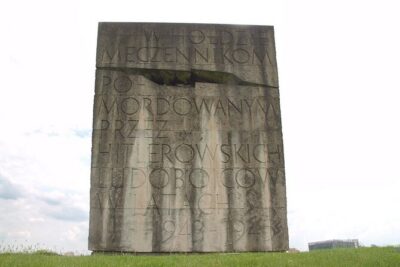
Guided Tour in Kraków-Płaszów Former Concentration Camp
Read our review →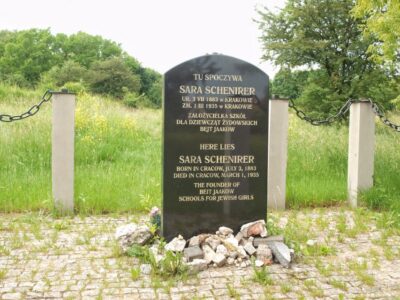
Guided Tour of Plaszow Concentration Camp, Kraków
Read our review →Krakow Schindler’s Factory & Ghetto & Plaszow Camp Guided Tour
Read our review →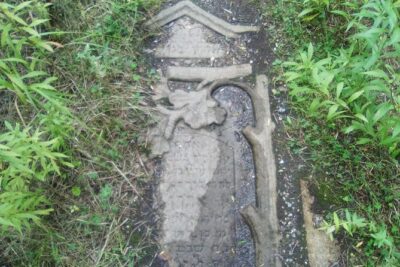
TOUR AL CAMPO DE CONCENTRACIÓN DE PLASZOW. El campo de la Lista de Schindlert.
Read our review →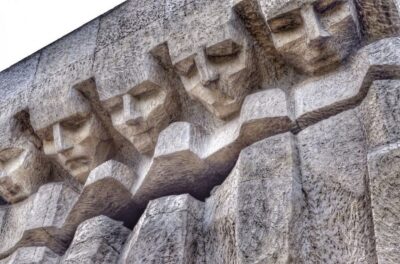
River Cruise & Guided Visit to Former Plaszow Camp
Read our review →Browse the lists this tour appears in